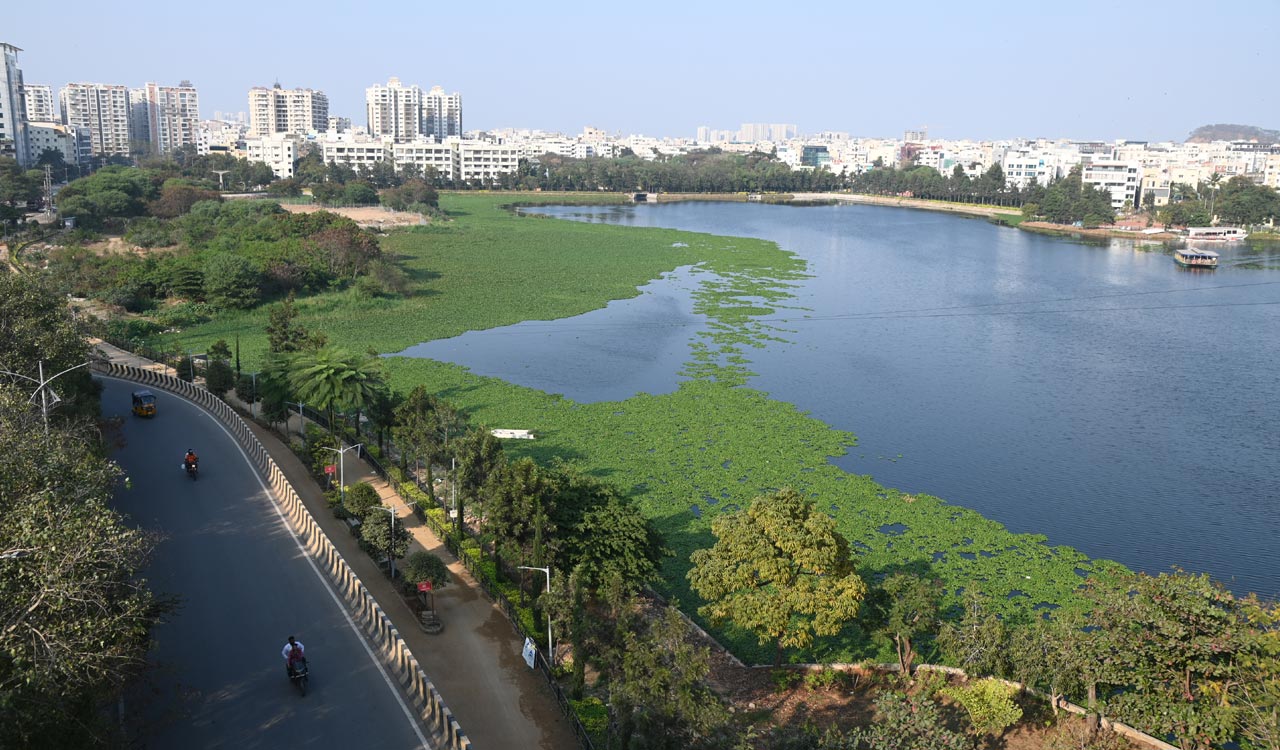
HYDERABAD: Durgam Cheruvu, one of Hyderabad’s best-known urban water bodies, is facing renewed concerns over floating waste and visible pollution. The issue has drawn public attention through videos circulating online, putting the spotlight on the condition of a lake that sits within a rapidly urbanising part of the city and is closely linked to the area’s recreational economy.
Located near Hyderabad’s major technology and commercial districts, Durgam Cheruvu has become both an ecological feature and a prominent public destination following the development of the cable-stayed bridge across the lake. Its surroundings have undergone significant commercial and residential growth, increasing the importance of maintaining the water body’s environmental health. Recent images and videos shared online appear to show accumulated debris and waste on portions of the lake. While the extent and source of the pollution require assessment by civic and environmental authorities, the visibility of waste raises concerns about how effectively the water body is being monitored and maintained. Urban lakes perform functions that extend beyond their appearance. They can retain stormwater, support local biodiversity and provide ecological buffers within heavily built-up areas. When waste enters these systems, it can affect water quality and aquatic life while reducing the lake’s ability to function as a healthy urban ecosystem.
The problem also highlights the pressure created by development around natural assets. Durgam Cheruvu attracts substantial pedestrian and visitor activity, while surrounding neighbourhoods contain offices, housing, restaurants and commercial establishments. Without effective waste collection, sewage controls and regular water-quality monitoring, increased activity can place additional pressure on the lake. Authorities have responded to pollution concerns at the water body in the past, including cleaning operations following complaints. However, recurring pollution suggests that periodic removal of visible waste may not be enough. Environmental specialists say durable lake management requires identifying pollution sources, preventing sewage or solid waste from entering the water and maintaining surrounding drainage infrastructure. There is also a public-access dimension. A clean and well-maintained lake provides an open recreational space in a city where development has reduced the availability of accessible natural areas. Keeping Durgam Cheruvu healthy therefore has implications for both environmental quality and the everyday experience of residents.
The renewed attention presents an opportunity for Hyderabad to move from reactive clean-up exercises towards continuous monitoring. Water-quality testing, transparent maintenance schedules, stronger waste controls and protection of lake buffers could provide a more durable framework for managing the water body. Durgam Cheruvu’s future will ultimately depend on whether its ecological role receives the same attention as its value as a landmark. For a city facing rapid construction and increasing climate pressures, protecting existing water bodies is becoming an essential part of resilient urban planning rather than a cosmetic exercise.