Hyderabad Uppal Waterbody Set For November Opening
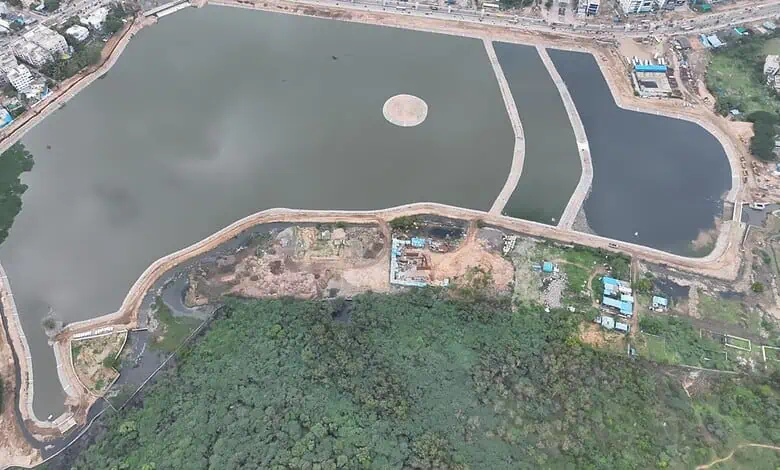
HYDERABAD: Uppal Nalla Cheruvu, a degraded water body once associated with waste and industrial pollution, is nearing a major restoration milestone, with its redevelopment expected to be completed within the next two months. The project could give eastern Hyderabad a new public waterfront while restoring an urban ecological asset that has long faced environmental pressure.
Located near Uppal along the Warangal Highway, the lake is being redeveloped under the Hyderabad Disaster Response and Asset Protection Agency (HYDRAA). Officials expect the rejuvenation work to be completed ahead of a proposed inauguration in November. The transformation is significant for an area experiencing continued residential and infrastructure growth. As eastern Hyderabad expands, functioning water bodies can provide more than recreational value. They can support local drainage, retain stormwater and contribute to the ecological balance of densely built neighbourhoods. The lake’s earlier condition illustrates the cost of poor urban water-body management. Water bodies that become dumping grounds can lose their ecological function while creating risks for surrounding communities. Restoration therefore needs to extend beyond removing waste and filling the lake with water. Long-term protection from sewage, solid waste and encroachment will determine whether the improvements remain effective.
The redevelopment is also expected to introduce recreational and visitor-oriented facilities around the lake. If managed well, these could create a new public destination for residents who currently have limited access to large open spaces in the eastern part of the city. There is an economic dimension as well. A functioning public waterfront can support small businesses and generate employment in areas such as maintenance, hospitality and leisure services. However, visitor growth will need to be matched with adequate parking, public transport, pedestrian access and waste-management systems to prevent tourism-related activity from placing fresh pressure on the restored ecosystem. From an urban resilience perspective, the lake’s restoration is particularly relevant as Hyderabad faces increasingly intense rainfall events and rapid land-use change. Preserving and improving natural water-retention areas can help cities manage stormwater more effectively, although the actual flood-mitigation benefit will depend on the lake’s storage capacity, catchment management and connections with surrounding drainage infrastructure.
The project also raises the question of how Hyderabad can protect other degraded water bodies. Restoration efforts are most valuable when followed by consistent monitoring, pollution controls and clearly defined maintenance responsibilities. For Uppal, the proposed November opening could mark the shift of Nalla Cheruvu from an environmental liability to a public asset. Its longer-term success, however, will be measured not by the inauguration but by whether the restored lake remains clean, accessible and ecologically functional as the surrounding city continues to grow.