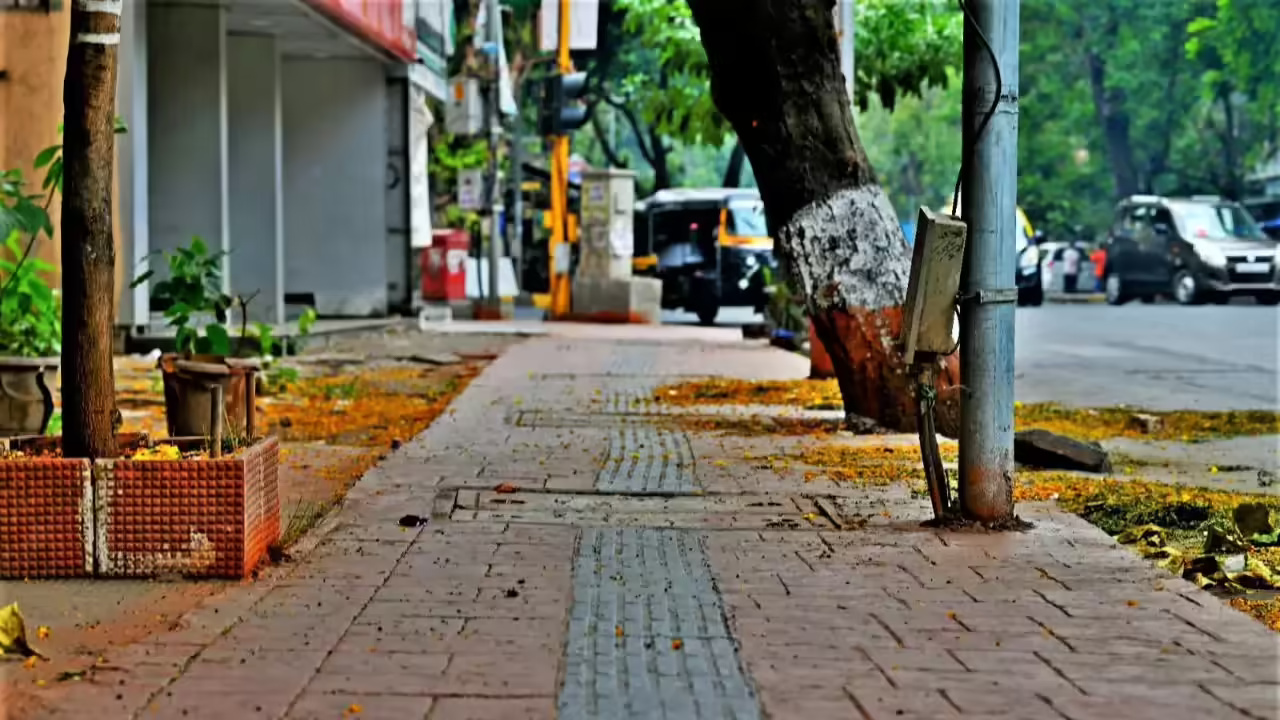
Mumbai Pedestrian First Drive Enters Enforcement Phase
Mumbai’s push to reclaim obstructed footpaths is entering a more resource-intensive phase, with the BMC planning vehicle contracts worth about ₹10.25 crore to support enforcement across the city and suburbs. The vehicles will transport material removed during clearance operations, giving the civic body dedicated logistics capacity as it expands action against obstructions on pedestrian routes. The spending is tied to the BMC’s Pedestrian First campaign, which focuses on footpaths serving transport hubs, schools, hospitals, government offices, religious sites and other high-footfall destinations. The underlying policy is not new: BMC’s pedestrian guidelines describe footpaths as part of the city’s transport system and call for continuous, safe pedestrian movement separated from vehicular traffic.
The proposed contracts cover 27 vehicles for the island city and 49 for the western suburbs. The city-area contract is estimated at ₹3.12 crore, while the western suburban requirement is valued at about ₹5.65 crore. A further ₹1.48 crore provision is proposed for similar services in the eastern suburbs, taking the combined requirement to roughly ₹10.25 crore. The vehicles are intended to move materials cleared during enforcement, including items occupying pedestrian space. This makes logistics a crucial part of the operation. Removing an obstruction is only the first step; material must then be loaded, transported and disposed of or stored through an authorised process. Without that chain, cleared stretches can quickly become congested again.
BMC’s own tender records show that vehicle-based enforcement is already being commissioned at ward level. A K/South ward tender published in August specifically sought vehicles for demolition action under the Pedestrian First campaign. This indicates that implementation is being distributed across municipal wards rather than treated solely as a central enforcement exercise. For pedestrians, the economic value of a usable footpath is easy to overlook. Continuous walking space improves access to suburban rail and Metro stations, schools and commercial areas while reducing the need for people to enter traffic lanes. It can also improve the functioning of neighbourhood retail streets by making them easier to reach on foot. Yet enforcement alone cannot resolve Mumbai’s footpath problem. Urban planners point out that hawker activity, parking, construction material, utility works and poorly designed streets often compete for limited public space. The BMC’s own guidelines recognise the need for footpaths to provide smooth and safe passage while separating pedestrian and vehicular movement.
The next measure of the Pedestrian First campaign will therefore be permanence. If cleared footpaths remain accessible, properly maintained and connected to public transport, the expenditure can translate into a lasting improvement in urban mobility. If not, repeated clearance operations could become an ongoing operational cost rather than a structural solution.