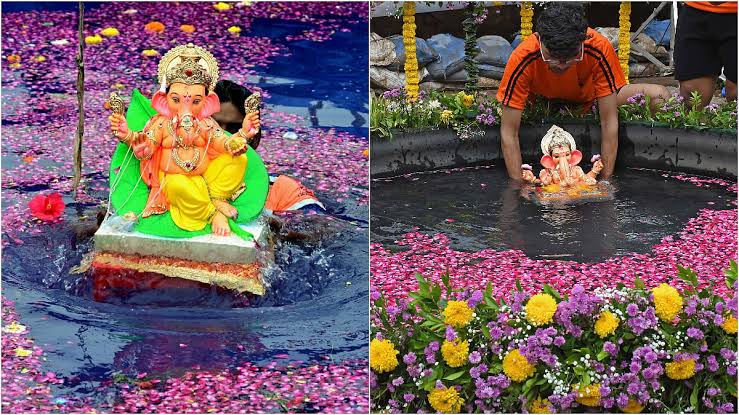
Mumbai is shifting more Ganesh idol immersions towards controlled facilities this year, with idols up to six feet being directed to artificial ponds under the applicable court directions. The move places greater emphasis on managing festival waste and protecting natural water bodies as the city prepares for Ganeshotsav from September 14. The arrangement also adds a significant logistical task for the civic administration, which must provide safe, accessible and adequately staffed immersion facilities across neighbourhoods. Artificial ponds are not new to Mumbai’s festival planning. The municipal corporation has been developing such facilities across its administrative wards for several years, while its current arrangements include temporary artificial lakes in locations across the city. Official civic records also show that these facilities are being expanded for the 2026 festival.
The environmental case is straightforward. Direct immersion can introduce clay, paint, decorative material and other residue into natural water bodies. Moving smaller idols to designated ponds gives civic authorities greater control over the water and the material recovered after immersion. The BMC has previously reported growing use of artificial ponds, indicating that the system is becoming an established part of Mumbai’s festival infrastructure. The change is particularly relevant for residential societies and households, where smaller idols make up a substantial part of festival participation. Locally available immersion points can reduce the need for long-distance travel to beaches or other natural sites, while potentially easing pressure on major immersion corridors. The success of this approach, however, will depend on whether facilities are distributed close enough to communities and remain easy to access during peak hours.
The operational challenge is considerable. Immersion sites require water, lighting, sanitation, crowd management and arrangements for retrieving idols and other material. Recent BMC procurement records show that the corporation has been commissioning temporary artificial lakes and related festival infrastructure in individual wards, reflecting the decentralised nature of the operation. Mumbai is also combining immersion planning with other environmental measures. The civic administration has continued to support the use of shadu clay and eco-friendly colours, while its festival planning includes dedicated facilities for managing floral offerings and other organic material. Such measures can reduce the quantity of festival waste entering drains and natural water systems. For the Ganeshotsav immersion rules to deliver their intended environmental benefit, enforcement will need to be matched by convenient alternatives. Clear information on locations, consistent staffing and efficient post-immersion waste handling will determine whether citizens can comply without added difficulty.
As Mumbai approaches its busiest festival period, the Ganeshotsav immersion rules will therefore test more than regulatory compliance. They will test the city’s ability to manage cultural activity while protecting fragile urban waterways and keeping public infrastructure usable for everyone.