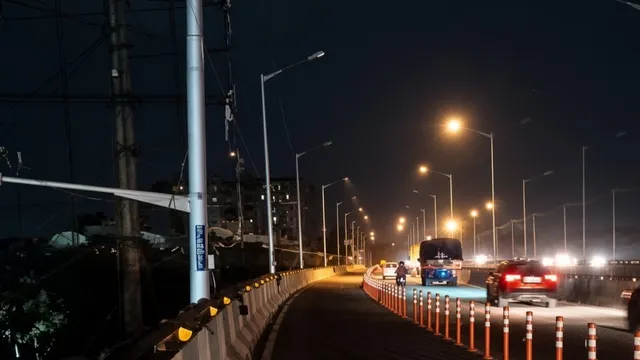
Bengaluru Streetlights Fail As Night Safety Comes Under Scrutiny
Bengaluru’s streetlighting network has come under renewed scrutiny after an inspection found around 140 lights not functioning across parts of the city, prompting disciplinary action against an engineer. The episode highlights a basic but often overlooked element of urban infrastructure: reliable lighting is closely linked to pedestrian safety, public mobility and the usability of streets after dark.
The inspection identified non-functioning lights along several stretches, with officials directing the civic administration to restore them. The disciplinary response also places greater focus on how the city monitors routine infrastructure rather than waiting for failures to become visible during high-level inspections. For Bengaluru residents, streetlighting is particularly important on roads used by pedestrians, cyclists, two-wheeler riders and public transport users during early morning and evening hours. Poorly illuminated stretches can reduce visibility around junctions, crossings, footpaths and roadside obstacles, making already difficult journeys more challenging. The problem becomes more significant when viewed alongside Bengaluru’s efforts to improve pedestrian infrastructure. The city has been reclaiming footpaths from encroachments and expanding its focus on walkability. But a clear footpath can only function effectively as public infrastructure if residents feel safe using it after sunset.Lighting, crossings, drainage and pavement quality therefore need to be treated as interconnected components of street design. The incident also raises questions about maintenance systems. Streetlights are distributed across a large and complex urban network, making periodic inspection alone insufficient.
A responsive maintenance system needs regular fault detection, quick complaint resolution, clear contractor accountability and reliable records showing when individual lights were repaired.Energy efficiency is another consideration. Bengaluru has been expanding LED streetlighting, which can reduce electricity consumption compared with conventional lighting when properly operated and maintained. However, the environmental benefits of efficient lighting are lost if fixtures remain out of service or if maintenance systems do not keep the network operational. There is also a public-service dimension to the issue. Reliable street lighting benefits all residents, but it can be particularly important for people commuting outside conventional working hours, including women, shift workers, students and public transport users. Well-lit streets can support safer access to transit and local services without requiring additional private-vehicle use. The reported outage therefore points to a broader need for Bengaluru streetlights to be managed as essential urban infrastructure rather than a secondary streetscape feature. Transparent maintenance standards and faster fault response can improve both safety and public confidence.
As Bengaluru invests in pedestrian corridors and sustainable mobility, Bengaluru streetlights will need to keep pace. The immediate task is to restore failed lights, but the longer-term priority is building a maintenance system that identifies and fixes faults before residents are left navigating dark stretches.