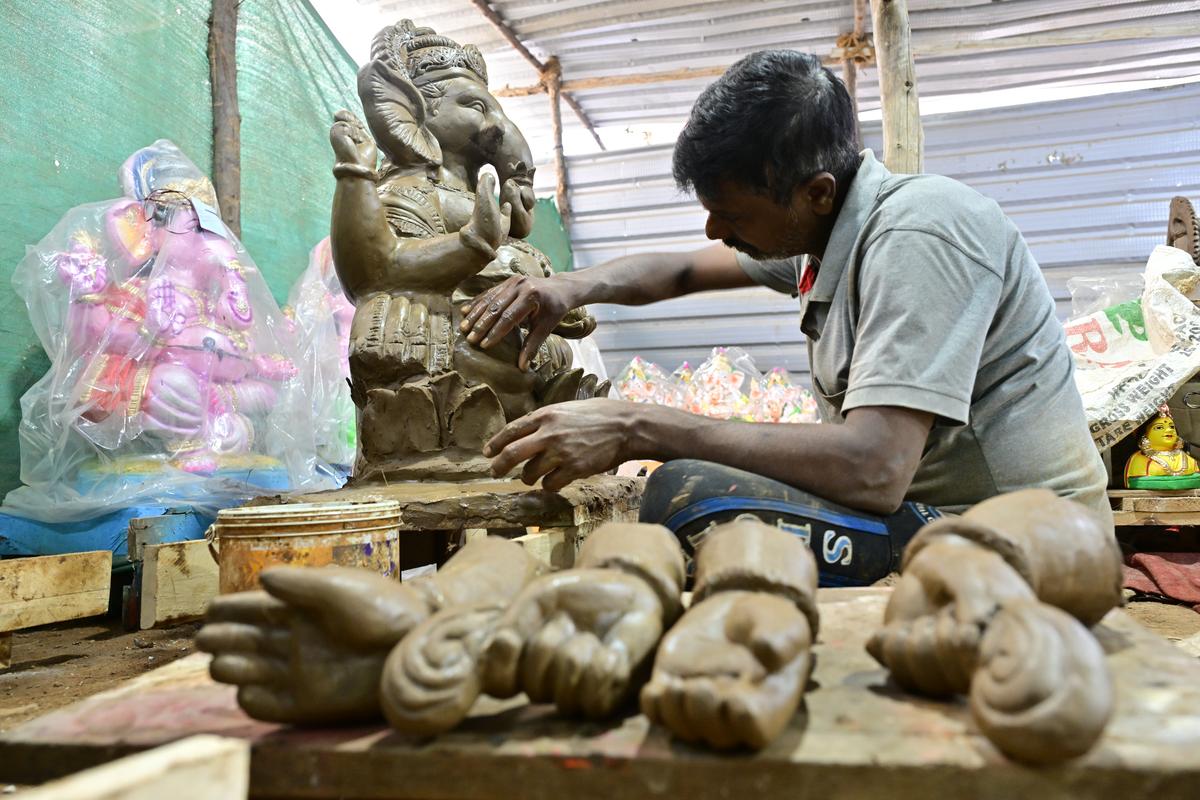
Bengaluru Eco Friendly Idols Gain Ground This Festival
Bengaluru is seeing a renewed push for clay Ganesh idols ahead of Ganesh Chaturthi, with workshops helping residents make idols using natural, biodegradable materials. The initiative comes as the city seeks to reduce the environmental impact of festival celebrations, particularly pollution and waste associated with non-biodegradable idols and immersion practices.
The workshops are giving participants an opportunity to learn traditional idol-making techniques while using natural clay.Organisers are conducting sessions in different parts of the city, allowing families, children and community groups to create smaller idols for personal celebrations. The shift towards clay is closely linked to Bengaluru’s concerns over the condition of its lakes and other water bodies. Idol immersion can introduce paints, plaster and other materials into water when idols are made using substances that do not readily break down. Natural clay, by contrast, can dissolve more easily when immersed, reducing the amount of persistent solid material entering aquatic environments. The issue is particularly relevant for Bengaluru because the city’s lakes already face multiple pressures, including pollution, sewage inflows, invasive growth and encroachment. Reducing festival-related waste is therefore one relatively manageable part of protecting urban water ecosystems. The workshops also demonstrate how sustainability measures can be integrated into cultural practices without removing the social character of festivals. Rather than relying entirely on post-event waste management, encouraging biodegradable materials shifts part of the responsibility towards the production stage.
For households, the availability of locally organised workshops could make environmentally conscious celebrations easier. Smaller clay idols also require less material and can be suitable for home immersion, reducing the need for residents to transport idols to crowded public immersion points. However, material choice is only one part of sustainable festival management. Authorities and communities also need adequate immersion facilities, waste collection, water-quality monitoring and clear guidance on acceptable materials. Effective implementation matters because even biodegradable materials can create local waste-management challenges when large quantities enter drainage systems or water bodies simultaneously. The growing interest in Bengaluru eco friendly idols also has an economic dimension. Local artisans who work with traditional clay techniques can benefit from increased demand, while community workshops can create opportunities for craft-based livelihoods and cultural learning. As Ganesh Chaturthi approaches, the city’s festival preparations offer an opportunity to connect cultural traditions with responsible urban practices.
Bengaluru eco friendly idols cannot solve the wider pressures facing the city’s lakes, but wider adoption of natural materials can reduce one avoidable source of pollution. The longer-term priority will be making sustainable choices convenient, affordable and widely available, so that environmentally responsible celebrations become a normal part of Bengaluru’s urban culture rather than a niche alternative.