Mumbai Airport Land Could Reshape Local Development
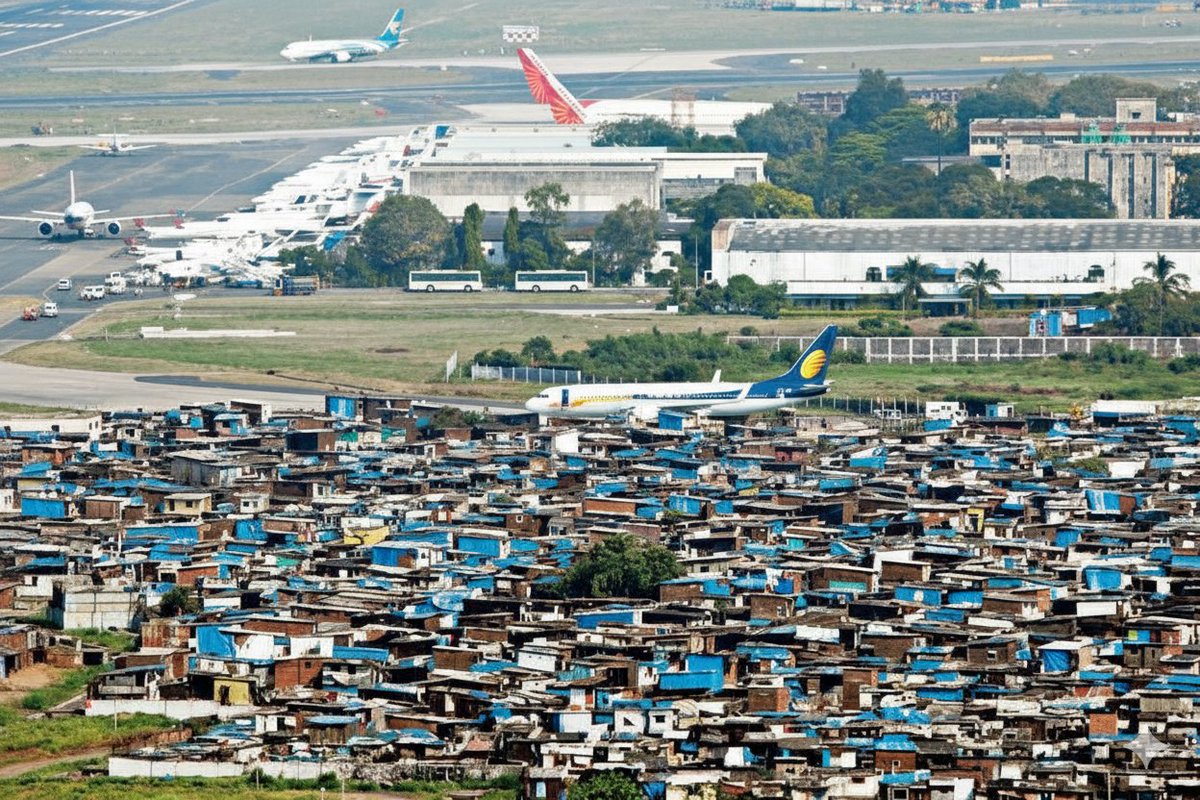
A long-running redevelopment proposal around Mumbai’s Chhatrapati Shivaji Maharaj International Airport is being reconsidered, potentially releasing land for future aviation infrastructure while requiring the rehabilitation of thousands of residents in adjoining informal settlements. The plan involves roughly 275 acres of Airports Authority of India land and could eventually make about 100 acres available for airport use. Its revival brings aviation capacity, housing rights and land-use planning into the same urban equation. The settlements around Kurla and Santacruz have developed over decades, creating a difficult planning interface between residential communities and a major international airport. Their proximity to operational areas has also raised concerns around aviation safety and security.
The proposed Mumbai airport redevelopment would first require an updated survey of the affected population. Earlier estimates put the number of residents at approximately 85,000 to 90,000, but officials are expected to establish current eligibility and household numbers before determining the rehabilitation requirement. A key change under consideration is rehabilitation within the existing locality. Urban planners say this approach can reduce the social and economic disruption associated with relocating established communities to distant parts of the metropolitan region. Keeping residents closer to existing employment, schools, healthcare and transport networks can also reduce the hidden costs of displacement. However, airport-related height restrictions could complicate the redevelopment itself. High-rise rehabilitation models used elsewhere in Mumbai may not be directly transferable to land near the airport because building heights are governed by aviation requirements. The result could be a more complex balance between the amount of housing that can be created and the land ultimately released for aviation purposes.
Under the emerging proposal, around 100 acres could eventually be transferred for airport-related infrastructure after rehabilitation. Combined with land expected to become available through the redevelopment of Terminal 1, this could provide additional room for future operational facilities. The economic implications are substantial. Airport land is strategically valuable in a dense metropolitan region, while improved aviation infrastructure can support passenger movement, logistics and employment. Yet land released through rehabilitation cannot be treated simply as an expansion opportunity. The process must establish clear eligibility rules, transparent land records and adequate housing before any transfer takes place. The Mumbai airport redevelopment plan also illustrates the broader challenge of Mumbai’s constrained land market. Infrastructure expansion increasingly competes with established communities for scarce urban land. Sustainable redevelopment therefore depends on sequencing: rehabilitation, infrastructure planning and environmental safeguards must progress together.
The proposal remains at an early stage, with a fresh survey and formal planning work still required. For residents, the immediate issue is certainty over their future homes. For the city, the larger test will be whether additional airport capacity can be created without reproducing the displacement and planning conflicts that have shaped Mumbai’s urban growth.