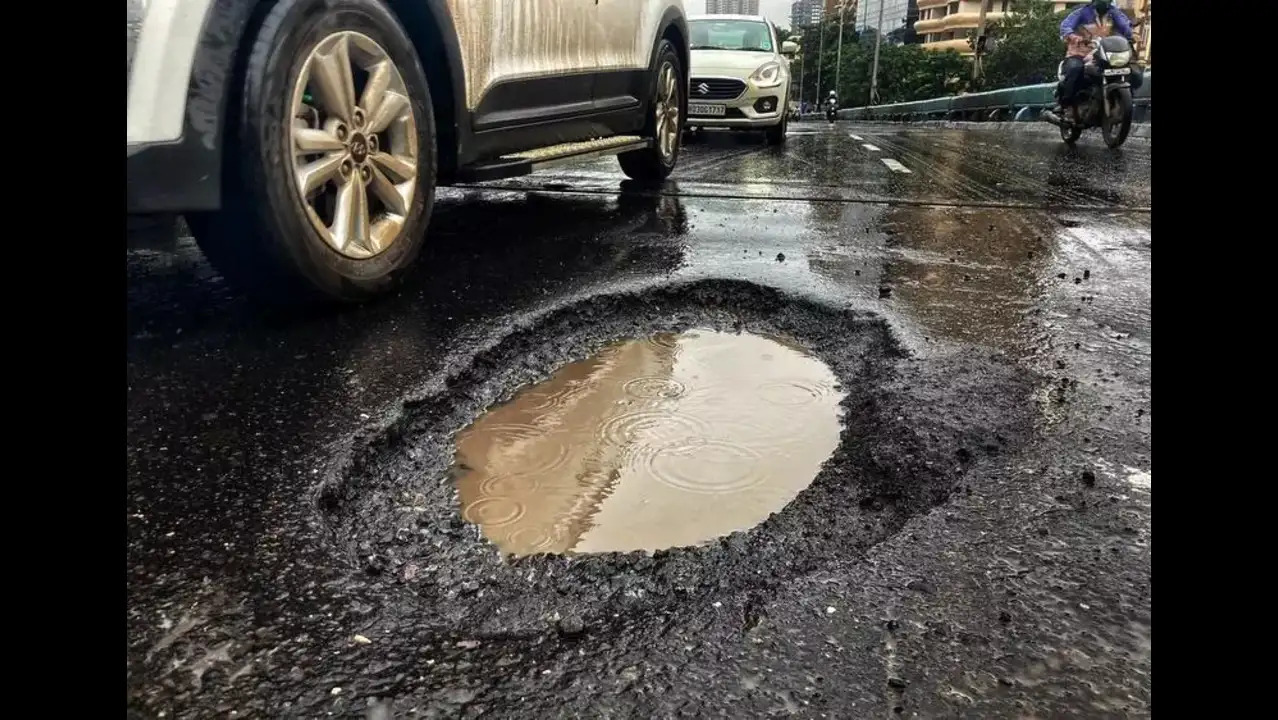
The Mumbai-Goa highway is heading into the Ganpati travel season with a key repair contract still awaiting award, leaving commuters on the Panvel-Indapur section facing continued road-quality concerns. The National Highways Authority of India (NHAI) issued an ₹8.27 crore tender on August 18 for repairs across 84.6 km, but bids are scheduled to close only on September 1 and open on September 2, just days before Ganeshotsav begins on September 14. The tender covers defect rectification, pothole repairs, patchwork and maintenance between Panvel and Indapur. It has a contract period of 365 days, meaning the procurement is structured as a longer maintenance programme rather than a rapid festival-season resurfacing exercise.
That timing matters because NH66 is one of the principal road links between Mumbai and the Konkan region. During Ganeshotsav, traffic volumes rise sharply as families travel towards towns and villages across Raigad, Ratnagiri and Sindhudurg. Poor road surfaces can increase journey times, vehicle damage and crash risks while placing additional pressure on emergency and traffic-management systems. The immediate concern is not simply whether a contractor can be appointed before the festival. After the September 2 bid opening, the authority still needs to evaluate bids, complete contractual formalities and mobilise equipment and workers. The tender itself provides for a year of work, making it unlikely that the entire 84.6-km stretch can be comprehensively restored before the festival rush. Government infrastructure data also shows that the wider Panvel-Indapur corridor has faced prolonged construction challenges. A January 2026 monitoring report put the physical progress of the balance four-laning work between Kasu and Indapur at 81%, against a revised target completion date of March 2026.
For the region’s economy, the highway’s condition has consequences beyond festival travel. NH66 supports passenger movement, tourism, local commerce and freight between Mumbai and the Konkan belt. Repeated disruption increases logistics uncertainty and can raise the effective cost of reaching smaller markets and communities. The repair strategy also needs to consider the road’s monsoon exposure. Temporary patching can deteriorate quickly under intense rainfall and heavy traffic. A more durable maintenance cycle, combined with stronger construction supervision and timely defect monitoring, would reduce repeated emergency interventions. For this year’s Ganpati movement, the practical priority is clear communication, traffic management and targeted treatment of the most hazardous stretches before passenger volumes peak. Longer term, the Mumbai Goa Highway requires a maintenance system that keeps pace with construction rather than responding only after road conditions become critical.
The Mumbai Goa Highway remains an essential regional connector. Its reliability should be treated as an ongoing infrastructure requirement, not a seasonal repair exercise.