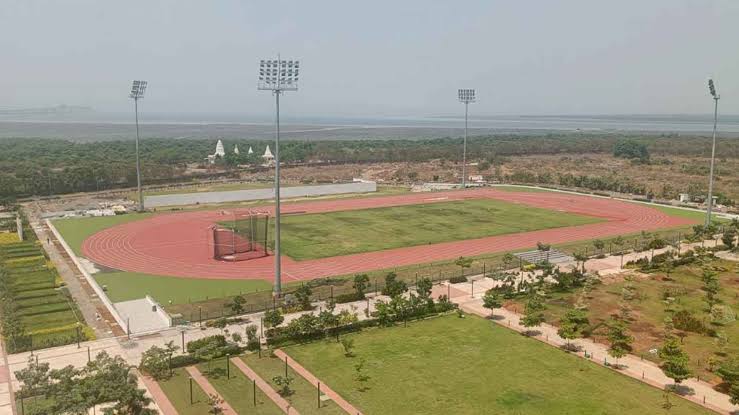
Navi Mumbai used National Sports Day to turn attention towards a less visible part of urban infrastructure: access to spaces where children can play, train and develop sporting skills. A programme held at Ghansoli School on August 29 brought students into sporting demonstrations and fitness activities, while also highlighting the need for better grounds, equipment and training facilities across the planned city. The programme was organised through coordination between Maharashtra’s sports administration, the Thane district sports office and the Navi Mumbai civic body. Students took part in outdoor games, fitness sessions and demonstrations across several sporting disciplines, including Mallakhamb. The event also marked the birth anniversary of hockey legend Major Dhyan Chand, on whose memory National Sports Day is observed.
Beyond the ceremonial purpose, the programme points to a broader urban planning question. As residential development expands and land values rise, open areas that can support recreation and organised sport become increasingly important. For a growing city such as Navi Mumbai, maintaining accessible sporting spaces is therefore linked not only to athletic development but also to public health and the quality of neighbourhood life. Sports infrastructure does not necessarily require large, specialised stadiums. Urban planners often distinguish between major competition venues and everyday facilities such as school grounds, community courts, running tracks and multipurpose play areas. The latter can reach far more residents when they are distributed across neighbourhoods and remain safe and affordable to use. That makes the condition and availability of local facilities particularly important for young people. Schools can serve as natural anchors for community sports, especially where municipal planning allows grounds and indoor spaces to be used beyond school hours. Such an approach can improve the utilisation of existing public assets without requiring every neighbourhood to build a separate facility.
The economic dimension is also significant. Consistent investment in sports infrastructure can support coaches, local sporting organisations, equipment suppliers and small recreational businesses. It can also contribute to healthier communities, potentially reducing the longer-term social costs associated with inactivity. However, access remains a key measure of whether investment is delivering public value. Facilities need safe pedestrian approaches, adequate lighting, accessible toilets, changing areas and provisions for people with disabilities. Maintenance is equally important, since poorly managed grounds can quickly become unusable despite substantial initial spending.
The National Sports Day programme has consequently brought a practical infrastructure issue into sharper focus. For Navi Mumbai, the next challenge is to translate interest generated through school-level activities into a sustained network of neighbourhood facilities. If planning keeps recreation alongside housing, transport and other civic needs, sports infrastructure can become a routine part of healthier and more inclusive urban development.