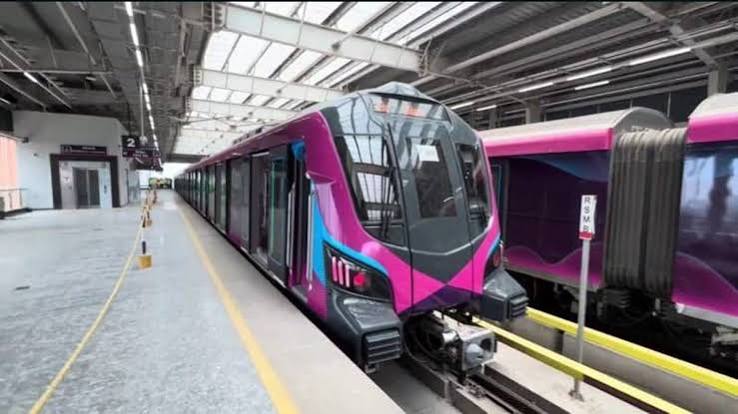
Pune, August 28: Pune is moving closer to adding a new rail option to one of its busiest employment corridors, with the first operational section of Metro Line 3 expected to open before the end of September, subject to the final inauguration schedule. The planned service between Hinjawadi and Balewadi could reshape daily travel for thousands of workers while testing whether mass transit can keep pace with the region’s expanding western development belt.
The initial 13-km stretch runs from Maan in Hinjawadi to R K Laxman Museum in Balewadi and includes 12 stations. It received provisional safety authorisation from the Commissioner of Metro Rail Safety on July 23, clearing the section for passenger operations. The remaining step is the formal launch, with the inauguration date yet to be confirmed. The opening is particularly significant for Hinjawadi, where rapid growth in offices, housing and supporting commercial activity has placed sustained pressure on road infrastructure. The corridor has become heavily dependent on private vehicles, contributing to congestion and longer commuting times. Urban planners say a reliable metro service could give workers a more predictable alternative while reducing pressure on key road links. The wider Line 3 project is planned as a 23.3-km elevated corridor linking Hinjawadi with Civil Court through 23 stations. Unlike Pune’s existing metro corridors, which were developed by Maharashtra Metro Rail Corporation, Line 3 is being implemented through a public-private partnership involving Pune IT City Metro Rail Ltd.
Authorities are also working towards safety approval for the District Court station. If that clearance and other operational requirements are completed in time, officials are considering whether services could offer a more direct Hinjawadi-Shivajinagar connection rather than restricting the initial network to the currently authorised section. The proposed opening comes as Pune seeks to expand its broader public transport capacity. Authorities are considering further metro extensions, including the Swargate-Katraj corridor and a proposed elevated connection towards Nigdi. Recent festival-period ridership has also highlighted the network’s ability to attract large passenger volumes when services connect major activity centres.
For the western corridor, however, the long-term value of Line 3 will depend on more than commissioning the infrastructure. Station access, pedestrian links, last-mile connectivity and service frequency will determine whether commuters can realistically shift from cars and two-wheelers. If delivered with these supporting systems, the corridor could help align Pune’s economic expansion with more efficient and lower-emission urban mobility. The immediate focus remains on completing approvals and starting safe, dependable passenger operations.