Kolkata Metro Delays Expose Cost Of Slow Execution
Kolkata’s experience with delayed infrastructure projects is highlighting a wider urban challenge: public investment delivers value only when projects are completed and integrated on time. From metro corridors held up by utility conflicts to development approvals stuck in administrative processes, delays can raise costs, disrupt neighbourhoods and postpone benefits for commuters, residents and businesses.
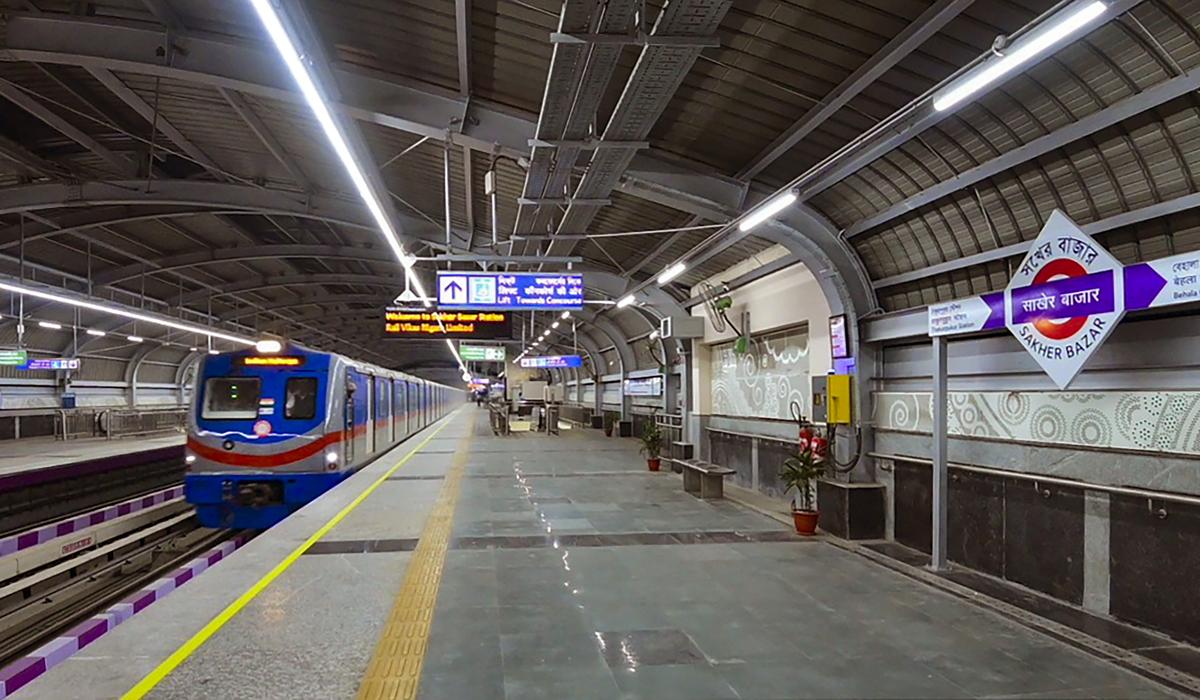
The issue has become particularly visible across Kolkata’s expanding metro network. The city’s Green Line became fully operational only in August 2025 after the Esplanade–Sealdah section was completed. Official data shows daily ridership subsequently increased from about 78,000 to 2.04 lakh, illustrating how quickly completed links can translate into greater public use.Yet other corridors show how unresolved coordination problems can stretch project timelines. The proposed Baranagar–Barrackpore Pink Line, first sanctioned in 2010, remained stalled for years partly because its alignment conflicted with major underground water pipelines along BT Road. The project has now moved towards construction, but the episode demonstrates the cost of planning transport infrastructure without fully resolving existing utility networks.Similar bottlenecks affected the Orange Line at Chingrighata.
A 366-metre viaduct gap remained unresolved for years because construction required major traffic-management arrangements at one of the city’s busiest junctions. The gap was finally bridged in August 2026, clearing a significant obstacle to extending services towards Sector V.For Kolkata, these delays matter beyond construction schedules. Transport projects influence commuting time, road congestion, access to employment and the development potential of surrounding neighbourhoods. When links remain incomplete, the wider network cannot capture their full economic and environmental value. A delayed mass-transit corridor can also prolong dependence on private vehicles, weakening some of the potential emissions and congestion gains expected from public transport.The problem is not limited to transport. More than 300 real-estate and institutional construction proposals were reportedly awaiting consideration after Kolkata Municipal Corporation’s building committee failed to meet for six months. Such administrative backlogs can affect housing supply, commercial investment, healthcare facilities and educational infrastructure.
Urban planners and infrastructure specialists generally point to the same requirement: agencies must coordinate land, utilities, traffic management, environmental clearances and construction schedules before work reaches critical stages. For Kolkata, faster execution should therefore mean more than accelerating individual projects. The priority is ensuring that transport, water, roads, housing and public services are planned as connected urban systems, so that completed infrastructure produces measurable benefits for citizens rather than isolated assets waiting for the next missing link.