


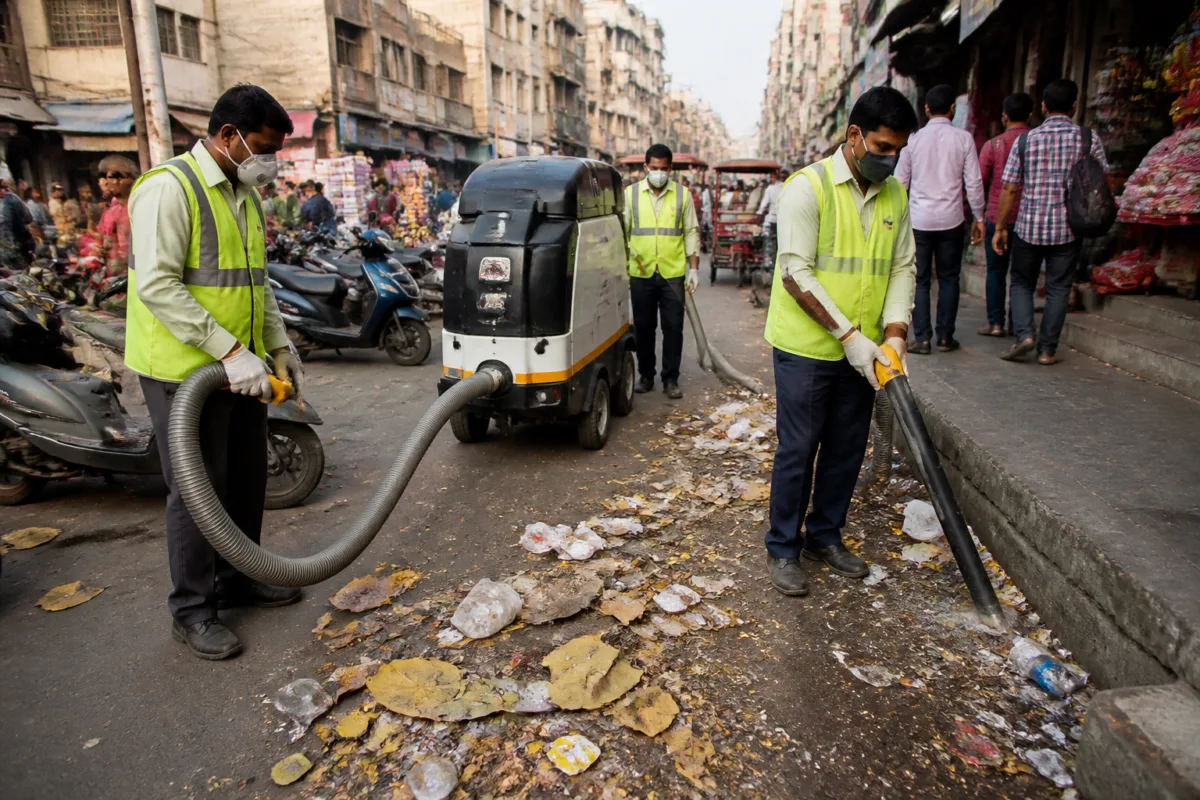
The Municipal Corporation of Delhi has begun trial operations of battery-operated, vacuum-based litter picker machines in eight wards of the Central North Zone, also known as the Keshav Puram Zone, to improve waste collection in congested markets, public spaces and narrow lanes.
The trial, which began on Tuesday, is part of a city-wide plan to deploy 1,000 machines across Delhi’s 250 wards. The MCD has proposed allocating four machines to each ward, creating a decentralised system for collecting lightweight litter in areas that are difficult for large mechanised road-sweeping equipment to access.
The machines are fitted with suction hoses and are designed to collect waste such as plastic bottles, paper cups, wrappers and fallen leaves. According to the MCD, their primary operating areas will include busy commercial streets, markets, public spaces and narrow lanes where conventional cleaning equipment may face access constraints.
The eight-ward trial in the Central North Zone is intended to help the civic body assess how effectively the machines improve litter collection in densely populated and congested localities before their wider deployment across Delhi. The machines were inaugurated by the Chief Minister on October 17, according to the report.
The initiative adds a smaller, mobile cleaning device to the MCD’s existing sanitation arrangements. While large mechanised sweepers can cover wider roads, the battery-operated litter pickers are intended for neighbourhood-level work in spaces where road width, pedestrian activity and commercial congestion can limit the use of larger equipment.
The proposed deployment across all 250 wards would give each ward a fixed allocation of four machines. This would allow the corporation to supplement existing waste collection and sanitation operations rather than rely only on large road-cleaning vehicles. The plan also places greater emphasis on collecting litter close to the locations where it accumulates, including markets and other heavily used public areas.
The effectiveness of the programme will depend on how regularly the machines are deployed, how they are maintained and how their operations are integrated with the MCD’s existing waste collection system. The supplied report does not specify the trial’s duration, the operating schedule, the procurement cost or the performance measures that will be used to decide whether the machines are rolled out across the city.
The trial comes as the civic body seeks to strengthen sanitation infrastructure through mechanised cleaning and improve waste management in areas that remain difficult to serve with conventional equipment. The next step will be the MCD’s assessment of the eight-ward trial before the proposed wider deployment across Delhi’s remaining wards.

