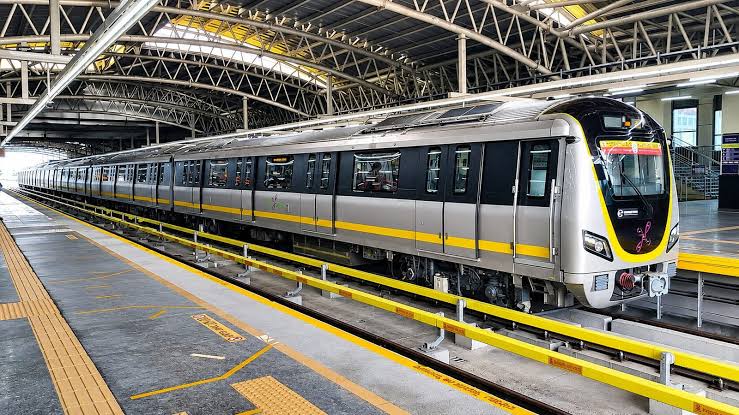
Bengaluru Metro Adds Travellators To Improve Passenger Access
Bengaluru Metro is moving to improve passenger movement inside its network with a ₹55.48 crore contract for installing travellators at selected stations. The project is aimed at reducing walking distances and making transfers easier, particularly across large interchange facilities where passengers can face lengthy internal journeys between platforms, entrances and connecting lines.
The contract covers the supply, installation, testing and commissioning of travellators, which are moving walkways designed to transport passengers across long horizontal distances. The intervention comes as Bengaluru’s metro network expands and stations increasingly function as major interchange points rather than simple boarding locations. The Bengaluru Metro travellator programme is particularly relevant to passenger experience. Large stations can require commuters to walk considerable distances, often while navigating stairs, escalators and crowded corridors. Moving walkways can reduce the physical effort required for these journeys and potentially improve the ease of transfers. Accessibility is another important consideration. Travellators can benefit older passengers, people carrying luggage, passengers travelling with children and people with limited mobility. However, they should complement rather than replace lifts, ramps and other accessibility infrastructure, which remain essential for passengers who cannot use conventional escalators or moving walkways.
The investment also reflects a broader challenge facing Bengaluru’s public transport system: increasing capacity is not enough if transfers remain inconvenient. A passenger’s journey includes the time spent entering stations, changing platforms and reaching exits. Improving these internal connections can make metro travel more competitive with private vehicles, especially for longer daily commutes. The Bengaluru Metro travellator rollout also needs to be considered alongside station crowd management. Moving walkways require adequate clearances, maintenance and passenger-flow planning. Poorly positioned equipment could create new bottlenecks, particularly during peak hours. Installation therefore needs to be integrated with station design rather than treated as a standalone engineering addition. For the city, the larger value lies in making existing and expanding metro infrastructure easier to use. Bengaluru’s transport demand is rising alongside employment and residential growth, placing greater importance on high-capacity public transport.
The project could improve the everyday experience of thousands of passengers, but its effectiveness will ultimately depend on reliability and integration with the wider station environment. As Bengaluru continues expanding its metro network, investments in last-metre connectivity inside stations can help ensure that public transport is not only available, but practical and accessible for a broader section of the urban population.