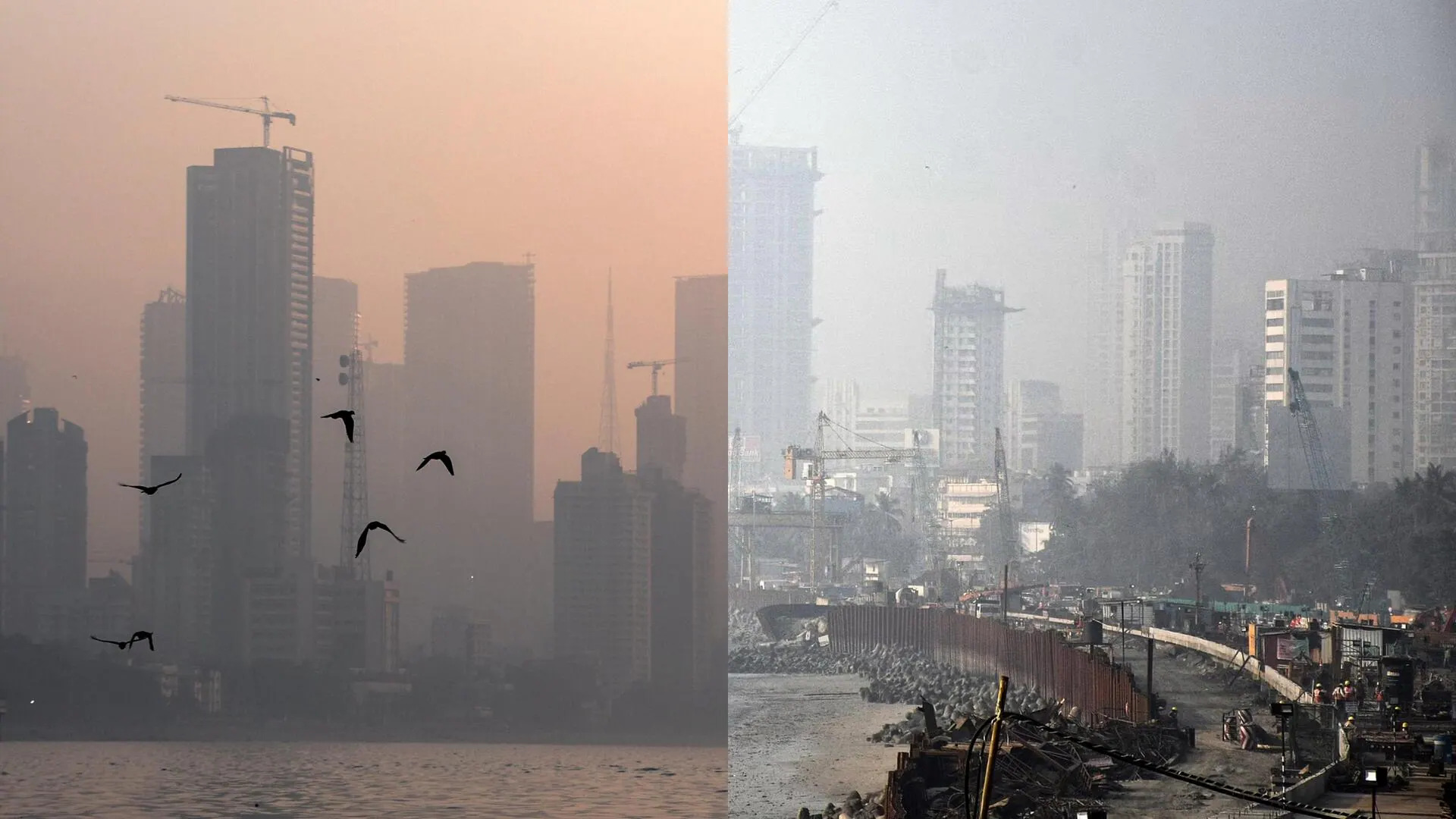
Mumbai’s air pollution problem is proving more localised than a single city-wide AQI can suggest, with large differences recorded between monitoring locations across the city. A winter analysis of CPCB data found Deonar’s average PM2.5 concentration at 79.6 µg/m³, compared with 29.2 µg/m³ in Borivali East. The gap strengthens the case for pollution controls that respond to individual sources and neighbourhood exposure rather than relying only on broad administrative boundaries. The variation matters because residents do not experience Mumbai’s atmosphere as one uniform environment. Traffic corridors, construction sites, waste facilities and industrial areas can create localised pollution conditions. A city-wide index may therefore describe the broader metropolitan picture while giving limited insight into the exposure faced by communities living close to concentrated emission sources.
The latest CSE assessment found that Mumbai’s winter average PM2.5 level was about 49 µg/m³ between October 2024 and January 2025, its lowest seasonal average in four years. Yet Deonar remained the city’s most polluted monitored location, followed by Shivaji Nagar and Malad West. Malad West also recorded a daily PM2.5 peak of 194 µg/m³ during the period, demonstrating how short-term local spikes can sit alongside an improving city-wide average. (cseindia.org) This creates a policy challenge for the Mumbai Metropolitan Region. Pollution sources and atmospheric conditions extend across municipal borders, while regulatory responsibilities remain divided among different civic bodies. Environmental planners have consequently argued for stronger coordination around airsheds — geographic areas where pollutants move through the same atmosphere — rather than treating each municipal jurisdiction as an isolated pollution zone. Mumbai is already building some of the infrastructure needed to make that approach possible. The BMC’s MANAS project, being developed with IIT Kanpur, envisages 250 hyperlocal sensors in phases, with 75 sensors forming the first phase. The network is designed to produce finer-scale pollution information and eventually support maps of PM2.5 at sub-kilometre resolution.
That data could change how the city responds to pollution. Construction controls could be concentrated where dust levels rise, traffic management could focus on persistent emission corridors and waste-burning incidents could be identified more quickly. However, sensors alone will not deliver cleaner air. Their value will depend on whether authorities establish clear thresholds, responsibilities and response mechanisms once a hotspot is identified. The distinction is particularly important for Mumbai’s development trajectory. Large transport projects, construction activity and expanding commercial districts can support economic growth while also creating temporary or persistent emission pressures. A more precise monitoring system could allow infrastructure expansion to be managed without treating environmental protection and urban growth as separate priorities.
For Mumbai air pollution, the next policy step is therefore not simply increasing the number of readings. It is connecting reliable neighbourhood-level data with enforcement and coordinated action across the wider airshed. That would make air-quality management more responsive to where pollution is generated and, more importantly, where people are exposed.