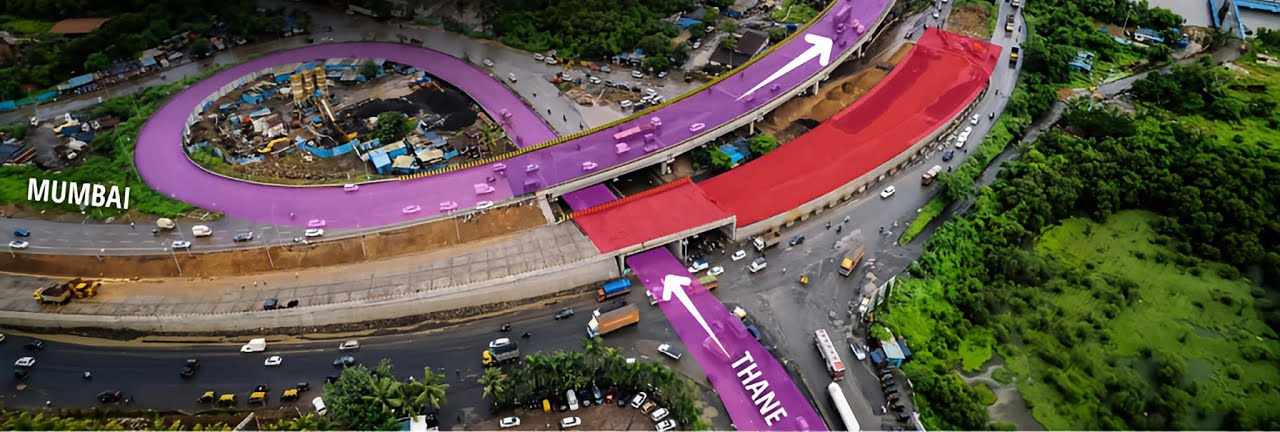
A long-pending transport corridor linking Bhayandar and Vasai has re-entered Maharashtra’s infrastructure pipeline, with regional authorities reviving plans for a multi-layered bridge designed to reshape mobility across Mumbai’s northern urban belt and reduce dependence on overstretched road and rail networks. The proposed Bhayandar Vasai bridge project, estimated at nearly Rs 2,500 crore, recently moved forward after the Mumbai Metropolitan Region Development Authority submitted an updated proposal to the state’s urban development department. The project aims to establish a direct connection across Vasai Creek, integrating road and metro infrastructure within a single double-deck transport structure.
Urban planners say the project could significantly alter commuting patterns in the fast-growing Vasai-Virar region, where population growth has rapidly outpaced transport capacity. At present, commuters travelling between Bhayandar and Vasai often rely on long road diversions or heavily crowded suburban rail services. Authorities estimate the new link could reduce travel distance from nearly 39 kilometres to around five kilometres, potentially cutting journey times from over 90 minutes to approximately 10 minutes during peak periods. The upper section of the proposed Bhayandar Vasai bridge would carry vehicular traffic, while the lower deck has been planned to support Metro Line 13, reinforcing the state’s broader strategy of integrating mass transit with regional road infrastructure. Mobility experts note that combining metro and road connectivity within a single corridor could help reduce long-term congestion and encourage more balanced suburban expansion across the Mumbai Metropolitan Region. The project, first proposed more than two decades ago, has faced repeated delays linked to environmental permissions, land acquisition and legal disputes. Of the five mandatory clearances, approvals have already been secured from maritime, inland waterways and coastal regulation authorities. However, permissions linked to mangrove land and salt pan areas remain under review.
Environmental concerns continue to shape discussions around the corridor, particularly because parts of the alignment pass through ecologically sensitive creek zones. Authorities have proposed compensatory land allocation in Dahanu to offset mangrove diversion, while litigation linked to salt pan land rights remains pending before the Bombay High Court. Infrastructure analysts believe the project reflects a larger shift in metropolitan planning priorities as Mumbai’s economic geography expands northward. The Vasai-Virar belt has emerged as one of the region’s fastest-growing residential zones, driven by comparatively lower housing costs and rising industrial activity. Yet inadequate east-west connectivity has limited economic integration and increased pressure on National Highway 48 and suburban rail corridors. Transport economists also point out that the Bhayandar Vasai bridge could strengthen freight and passenger movement linked to Gujarat-bound traffic while supporting upcoming metro expansion plans. If executed alongside sustainable mobility measures and environmental safeguards, the corridor may become a critical piece of Mumbai’s long-term regional transport framework.
For now, the project’s future depends on resolving ecological clearances, rehabilitation concerns and legal challenges that have stalled the proposal for years. But with planning momentum returning, the bridge is once again being positioned as a strategic intervention in reshaping mobility across the northern metropolitan edge.