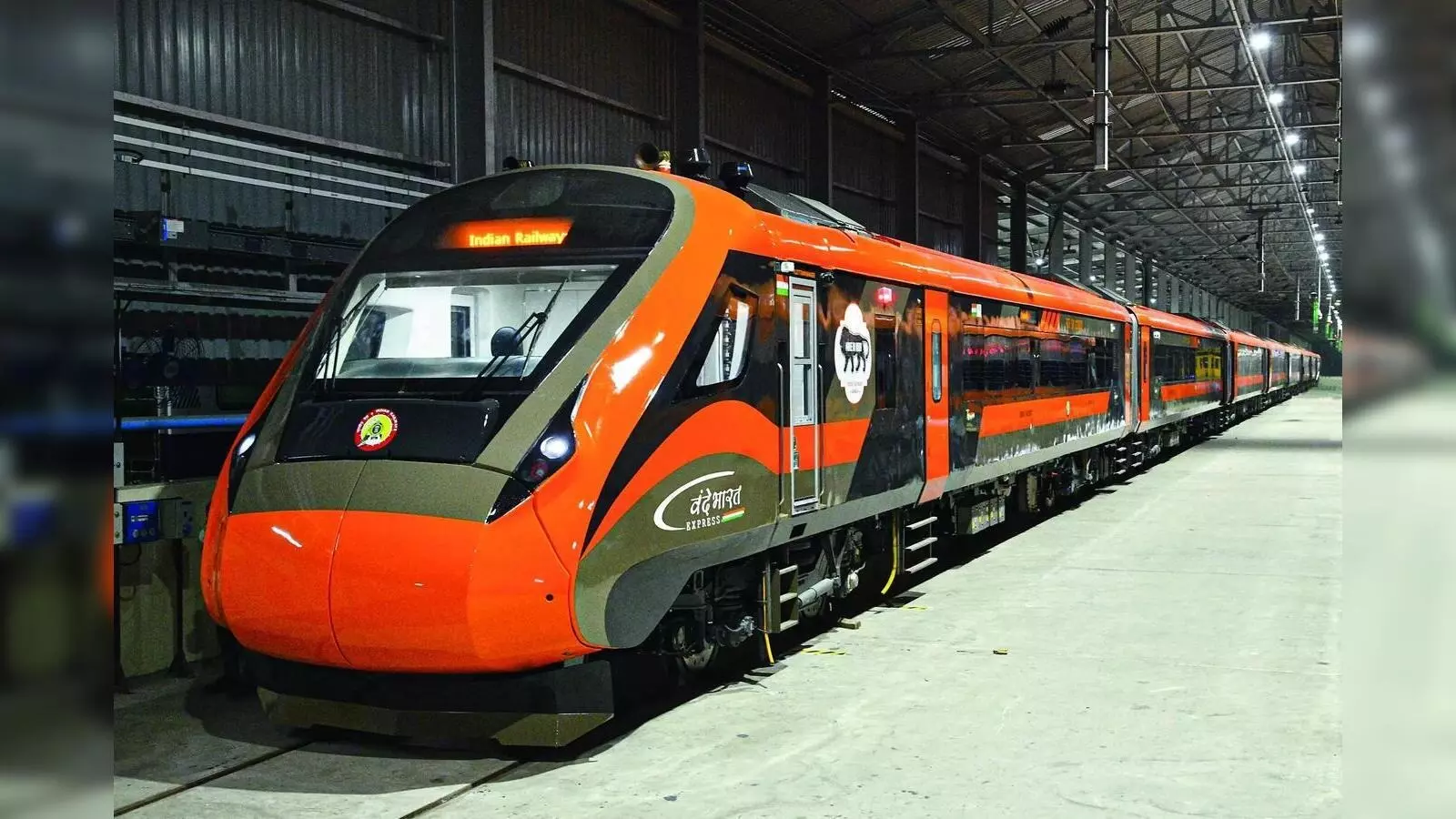
Mumbai’s premium intercity rail network is undergoing another operational recalibration as Indian Railways expands stoppages on the Mumbai–Gandhinagar Vande Bharat Express, a move expected to improve regional access across western India while strengthening demand for faster and lower-emission mobility corridors between Maharashtra and Gujarat. The revised schedule for the semi-high-speed service introduces an additional halt, taking the total number of stations served on the route to eight. The change affects the Mumbai Central–Gandhinagar Capital Vande Bharat Express operated under Western Railway, one of the country’s earliest Vande Bharat services and a key connector between two major financial and industrial regions.
Under the updated operational plan, the train will now stop at Borivali, Vapi, Valsad, Navsari, Surat, Vadodara Junction, Anand Junction and Ahmedabad Junction before reaching Gandhinagar Capital. Railway officials indicated that the additional halt is intended to widen passenger accessibility and support rising demand from business travellers, students and intercity commuters using the western economic corridor. The Mumbai Gandhinagar Vande Bharat service covers approximately 521 kilometres and has emerged as an important alternative to short-haul aviation and highway travel. Urban mobility experts note that expanding access to high-speed rail infrastructure can help reduce pressure on congested expressways while encouraging a gradual modal shift towards public transport with lower per-passenger emissions. The revised timetable maintains an early morning departure from Mumbai Central, with the service leaving at 6 am and arriving in Gandhinagar Capital shortly after noon. The return journey departs Gujarat in the afternoon and reaches Mumbai by evening. The train continues to operate six days a week, excluding Wednesdays.
Transport economists say the additional stop reflects a broader trend in Indian Railways’ strategy to balance speed with regional connectivity. While Vande Bharat trains were initially designed around limited halts and rapid transit, growing demand from emerging urban centres along industrial corridors has pushed authorities to reconsider service distribution patterns. The Mumbai Gandhinagar Vande Bharat route passes through some of western India’s fastest-growing economic belts, where industrial estates, logistics parks and expanding residential clusters are reshaping travel demand. Improved rail accessibility in these zones is expected to support labour mobility and regional business integration without adding substantially to road congestion. Urban planners also point out that rail-based intercity systems are increasingly central to climate-responsive infrastructure planning. As Mumbai and neighbouring cities continue to face rising vehicular pressure, expanding reliable rail alternatives could help reduce dependence on private cars and domestic flights for medium-distance travel.
The timetable revision may appear operational on the surface, but it signals how transport authorities are adapting premium rail infrastructure to serve a wider commuter base while supporting more balanced regional growth across western India’s urban corridor.