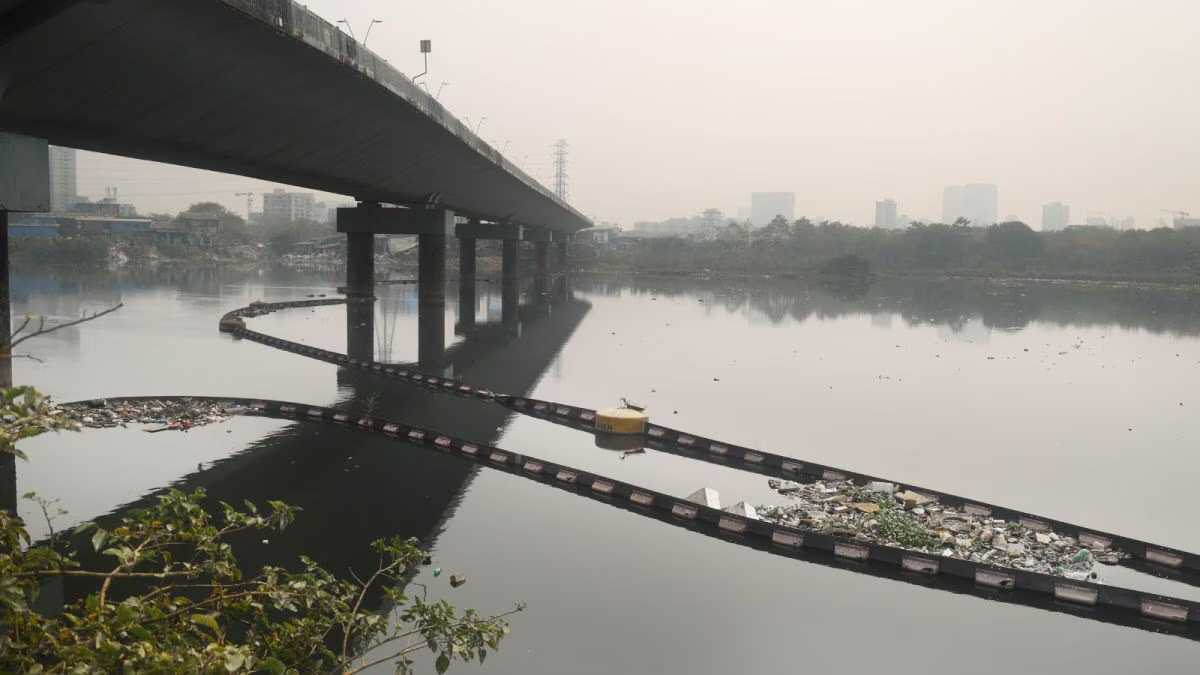
Mumbai has expanded its coastal waste interception network with the installation of a large floating trash barrier at Mahul creek in Wadala, as civic authorities intensify efforts to prevent untreated urban waste from flowing into the Arabian Sea during the monsoon season. The newly deployed 57-metre floating system, installed across a major stormwater outfall, is expected to intercept nearly 200 tonnes of floating waste annually before it reaches sensitive coastal ecosystems. The initiative reflects a growing shift in Mumbai’s environmental management strategy, where marine pollution control is increasingly being integrated into broader climate resilience and urban sanitation planning.
Developed through a collaboration between the Brihanmumbai Municipal Corporation and an environmental non-profit organisation, the barrier functions as a floating interception mechanism that redirects plastic, organic waste and floating debris towards designated collection points for mechanical removal. Civic officials estimate that Mumbai currently operates 21 such interception systems across creeks and drains discharging into coastal waters. Together, these installations reportedly collect nearly 1.5 tonnes of floating waste each day, particularly during periods of heavy rainfall when drainage channels carry significant volumes of plastic and household refuse into the sea. Urban ecologists say the Mumbai trash barrier programme represents an important intervention for a city where stormwater drains often double as informal waste disposal channels. Large quantities of unmanaged solid waste entering creeks not only damage marine biodiversity and mangrove ecosystems, but also reduce the efficiency of drainage systems, worsening flood risks during intense rain events. The Mahul installation is strategically important because the eastern waterfront remains highly vulnerable to industrial runoff, tidal flooding and waste accumulation.
Environmental planners note that preventing garbage from entering coastal waters can also reduce long-term clean-up costs for beaches and mangrove zones while protecting fishing communities dependent on healthy marine ecosystems. Authorities are now planning to expand the network with nine additional barriers across high-pollution drainage points. Officials are also exploring mechanisms to process and recycle part of the intercepted material instead of diverting all waste directly to landfill sites. Waste management experts argue that this approach could strengthen circular economy practices if supported by segregation systems and decentralised recycling infrastructure. However, environmental groups caution that interception systems alone cannot solve Mumbai’s growing waste crisis. They stress that floating barriers are downstream solutions that must be supported by stronger ward-level waste segregation, improved collection systems and stricter enforcement against dumping into drains and creeks.
The Mumbai trash barrier initiative arrives at a time when coastal cities globally are facing mounting pressure to tackle marine plastic pollution and climate-linked flooding simultaneously. For Mumbai, where urban waterways remain deeply interconnected with daily life and infrastructure resilience, reducing waste discharge into creeks is becoming as much a public health necessity as an environmental imperative. As the city prepares for another monsoon cycle, officials say the success of these systems will ultimately depend on sustained maintenance, community participation and stronger upstream waste governance across rapidly urbanising neighbourhoods.