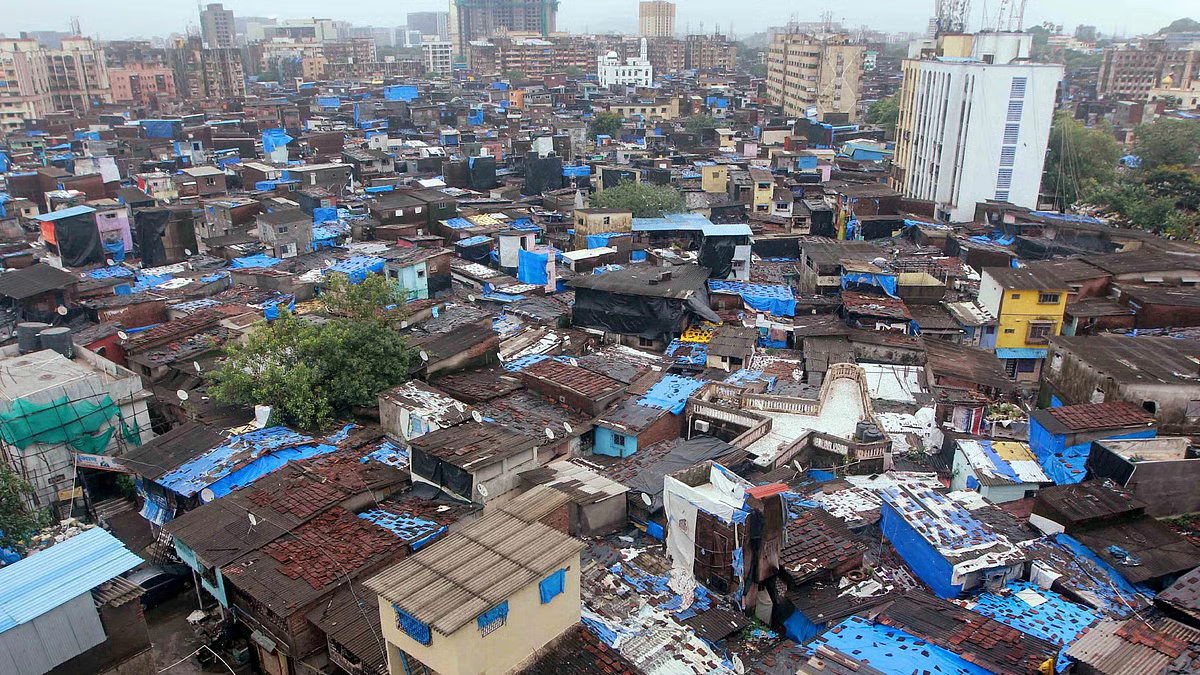
Maharashtra’s evolving approach to large-scale urban redevelopment is placing infrastructure and economic integration at the centre of housing policy, with the Dharavi Redevelopment Project emerging as a test case for how densely populated settlements can be transformed without disconnecting communities from livelihoods and public services. Government officials and metropolitan planners indicated this week that Mumbai’s future redevelopment strategy will increasingly prioritise integrated urban ecosystems rather than standalone housing construction. The shift reflects growing recognition that residential rehabilitation without mobility access, healthcare, education and employment connectivity can intensify urban congestion and social inequality.
The Dharavi Redevelopment Project, spread across more than 600 acres in central Mumbai, is expected to become one of India’s most ambitious urban regeneration programmes. Authorities involved in the planning process said the redevelopment model aims to preserve Dharavi’s long-established live-work economy while modernising housing, sanitation and transport infrastructure. Urban planners associated with the project noted that Dharavi’s economic ecosystem supports thousands of small manufacturing units, recycling operations, home-based enterprises and informal businesses that contribute significantly to Mumbai’s local economy. As a result, redevelopment plans are being designed to accommodate commercial activity within residential infrastructure rather than relocating livelihoods away from communities. Planning documents reviewed by Urban Acres Today suggest the project will integrate podium-level industrial and commercial spaces alongside residential rehabilitation towers. Ground-level retail access, pedestrian connectivity and proximity to expanding metro corridors are also expected to shape the redevelopment layout. The Dharavi redevelopment project is additionally being positioned within Mumbai’s broader infrastructure expansion strategy, which includes metro rail corridors, coastal road connectivity and multimodal transport integration across the Mumbai Metropolitan Region.
Officials overseeing urban planning efforts believe such infrastructure-led redevelopment is essential for reducing travel dependency and improving economic accessibility for lower-income households. Housing experts say the approach represents a notable transition in Indian urban redevelopment policy, where rehabilitation projects have historically focused on vertical housing delivery without sufficient attention to social infrastructure or economic continuity. The new framework attempts to connect affordable housing with schools, healthcare access, public transport and local employment opportunities. The project also faces significant planning constraints due to its proximity to the Mithi River flood zone and aviation-related height restrictions near Mumbai airport. Environmental planners caution that redevelopment in ecologically sensitive and high-density urban zones will require careful drainage management, climate resilience measures and sustainable infrastructure planning to avoid future urban stress. Authorities estimate that nearly 1.5 lakh housing units may eventually be developed across different rehabilitation and resettlement categories linked to the project. Eligible residents are expected to receive formal housing under varying ownership and financing structures, while rehabilitation criteria continue to be assessed through administrative verification processes.
Urban policy analysts argue that the long-term success of the Dharavi redevelopment project will depend less on the number of towers constructed and more on whether the redevelopment sustains community networks, economic activity and public infrastructure capacity. As Mumbai continues to confront rising land scarcity and housing pressure, Dharavi is increasingly being viewed as a blueprint for how Indian cities might attempt equitable and infrastructure-driven urban renewal in the decades ahead.