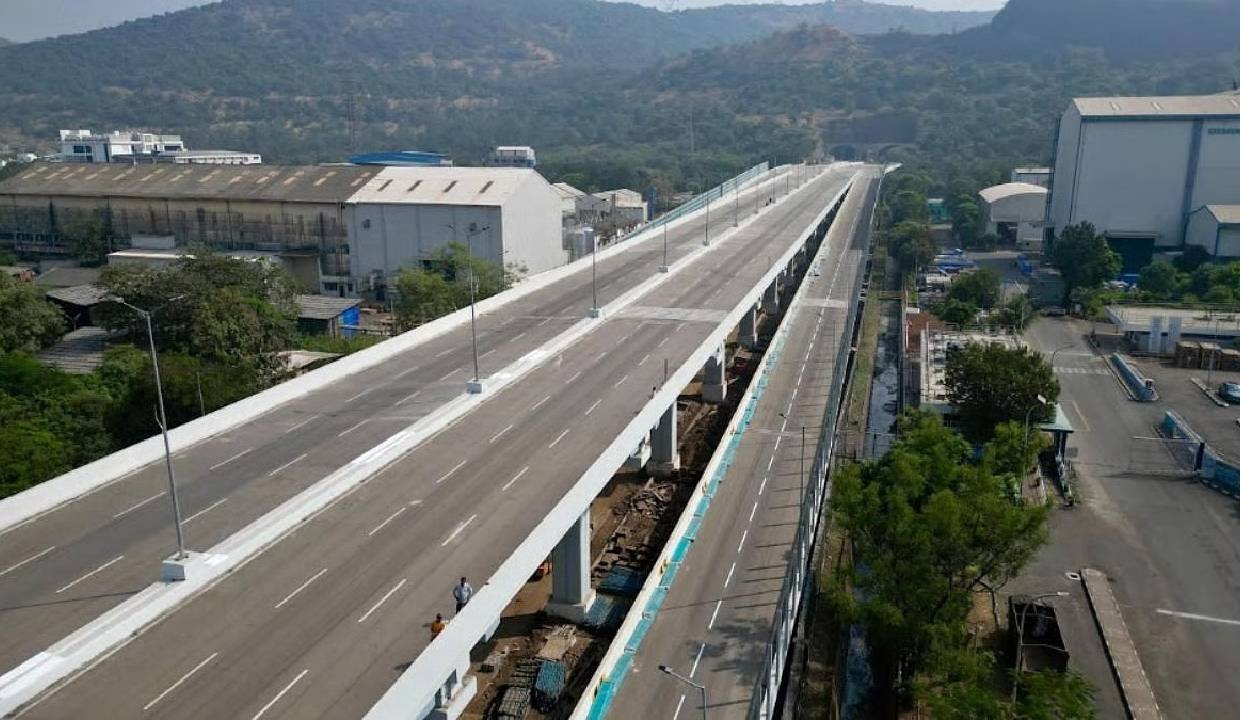
Maharashtra has moved forward with one of the region’s largest transport infrastructure initiatives after granting administrative approval for the first phase of the Virar Alibaug corridor, a high-capacity mobility project expected to reshape connectivity, logistics movement and urban expansion patterns across the Mumbai Metropolitan Region. The proposed multi-modal transport corridor will stretch across more than 126 kilometres in its initial phase, linking northern and southern growth zones through a controlled-access network designed to integrate highways, industrial corridors, port infrastructure and the upcoming Navi Mumbai International Airport.
Urban infrastructure officials said the project is intended to reduce travel bottlenecks across the Mumbai Metropolitan Region while improving freight movement between manufacturing zones, logistics hubs and major transport gateways. The corridor will pass through multiple rapidly urbanising talukas including Vasai, Bhiwandi, Kalyan, Panvel, Uran and Alibaug, regions increasingly viewed as future economic and residential expansion belts. The Virar Alibaug corridor is expected to function as a strategic mobility spine connecting several national highways and expressways, including routes towards Ahmedabad, Pune, Nashik and Goa. Infrastructure planners believe the project could significantly reduce dependency on Mumbai’s overloaded internal road systems by diverting regional and freight traffic away from densely populated urban corridors. Transport economists note that such infrastructure projects are increasingly shaping land-use transformation across metropolitan regions. Improved connectivity often accelerates industrial investment, warehousing activity and real estate development in peripheral areas previously constrained by weak transport access. However, experts caution that rapid infrastructure-led growth also requires stronger environmental safeguards and coordinated planning frameworks. The project alignment cuts across more than 100 villages, raising important questions around land acquisition, ecological management and long-term urban sustainability.
Environmental planners have stressed the need to carefully assess impacts on wetlands, floodplains and agricultural landscapes, particularly as climate-related flooding risks continue to intensify across the Mumbai region. Urban policy specialists say the corridor reflects Maharashtra’s broader strategy of decentralising economic growth beyond the island city by improving access between emerging urban nodes. With the Navi Mumbai International Airport nearing operational readiness and port-linked infrastructure expanding along the coast, authorities are prioritising transport systems capable of supporting higher cargo volumes and commuter movement. Officials associated with regional planning efforts indicated that multiple interchanges are planned along the route to improve traffic distribution and support integration with existing mobility networks. The corridor is also expected to support long-distance passenger movement while easing pressure on conventional arterial roads frequently affected by congestion. At the same time, mobility experts argue that highway-led infrastructure expansion should be complemented by stronger public transport systems and low-carbon urban planning strategies. While road connectivity remains critical for regional logistics and economic activity, sustainable metropolitan growth will also depend on transit-oriented development, multimodal integration and reduced private vehicle dependency.
The Virar Alibaug corridor is likely to become one of the defining infrastructure projects shaping the next phase of Mumbai Metropolitan Region expansion. As implementation progresses, planners and civic observers will closely watch how effectively the project balances economic connectivity with ecological resilience and equitable urban development across one of India’s fastest-growing metropolitan zones.