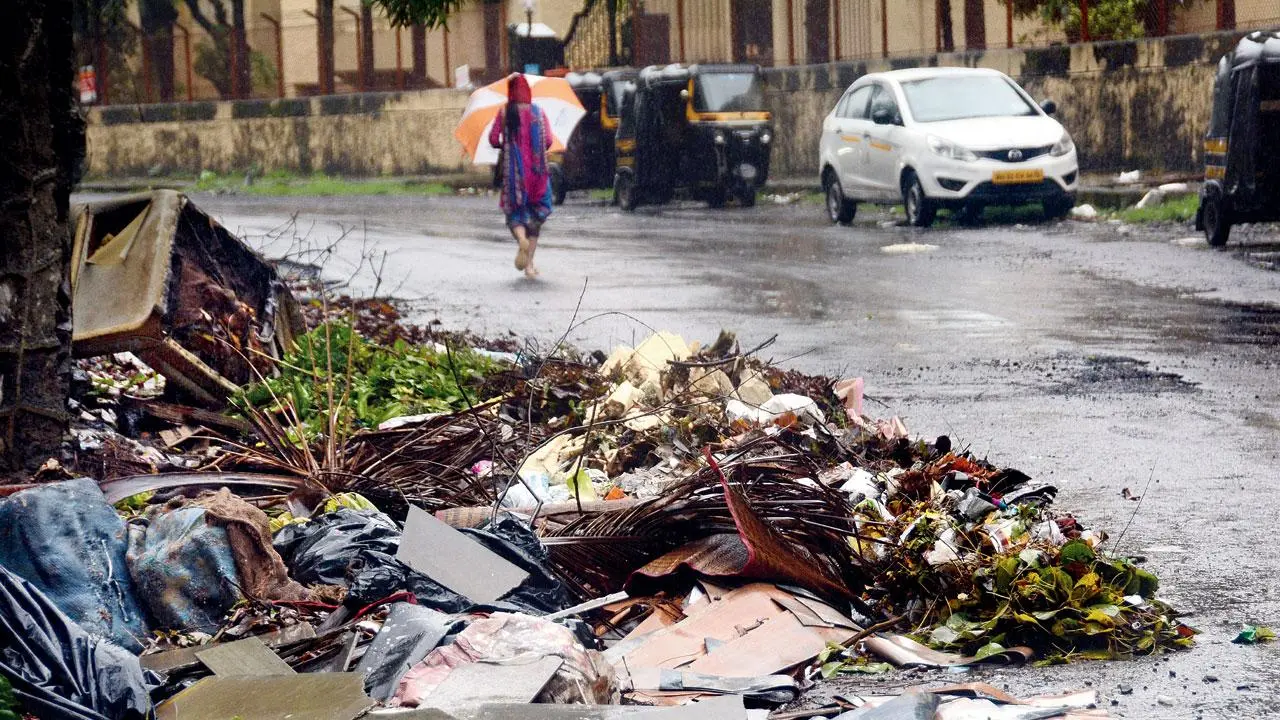
Mumbai’s civic administration has mapped more than 160 persistent waste dumping locations across the city, underscoring growing challenges in urban sanitation management as rapid population density, uneven infrastructure and weak behavioural enforcement continue to strain municipal systems. The Brihanmumbai Municipal Corporation (BMC) has identified 162 recurring garbage hotspots where waste reappears shortly after clearance operations. Spread across multiple wards, the locations have emerged as chronic sanitation pressure points despite repeated clean-up drives and monitoring efforts by civic authorities.
Officials involved in the assessment said the exercise was conducted through field inspections, local complaints and ward-level reporting mechanisms. The findings have prompted the administration to direct local ward offices to intensify waste collection, improve monitoring and address service deficiencies contributing to repeated dumping. The Mumbai garbage hotspots have exposed structural gaps in decentralised waste management infrastructure, particularly in densely populated neighbourhoods where public waste collection systems remain inadequate or inconsistently maintained. Several identified areas reportedly lack accessible community disposal facilities, forcing residents and informal commercial establishments to leave waste in open spaces, road edges and vacant corners. Urban planners say the issue reflects a broader challenge confronting high-density Indian cities where waste generation is rising faster than civic systems can adapt. Mumbai generates thousands of tonnes of municipal solid waste daily, placing sustained pressure on collection logistics, transfer networks and landfill capacity.
Environmental experts warn that recurring open dumping not only damages urban liveability but also creates long-term public health and climate risks. Accumulated waste often blocks stormwater drains, worsens local flooding during the monsoon and contributes to methane emissions through uncontrolled decomposition. Informal dumping sites also attract pests and create sanitation concerns in residential and mixed-use areas. The uneven distribution of Mumbai garbage hotspots across wards has also highlighted disparities in urban service delivery. Some wards have reported a significantly higher concentration of vulnerable locations compared to others, indicating differing levels of infrastructure stress, land-use density and enforcement capability. Civic officials said ward administrations will now face stricter performance reviews linked to cleanliness outcomes and recurring dumping patterns. The administration is expected to push greater accountability at the local level while encouraging community participation in segregation and responsible disposal practices. Waste management specialists argue that sustained improvements will require more than periodic clean-up operations. Experts point to the need for decentralised sorting centres, improved door-to-door collection efficiency, digital monitoring systems and stronger integration of informal waste workers into the formal sanitation economy.
The challenge also intersects with Mumbai’s wider sustainability goals. As the city continues to expand vertically and redevelop older neighbourhoods, experts say sanitation planning must evolve alongside real estate growth and infrastructure expansion to avoid further environmental stress. Municipal authorities are expected to continue identifying vulnerable dumping zones while strengthening enforcement and awareness measures. Urban policy observers note that how Mumbai addresses recurring waste accumulation will increasingly shape not only public hygiene standards but also the city’s broader climate resilience and quality-of-life outcomes in the years ahead.