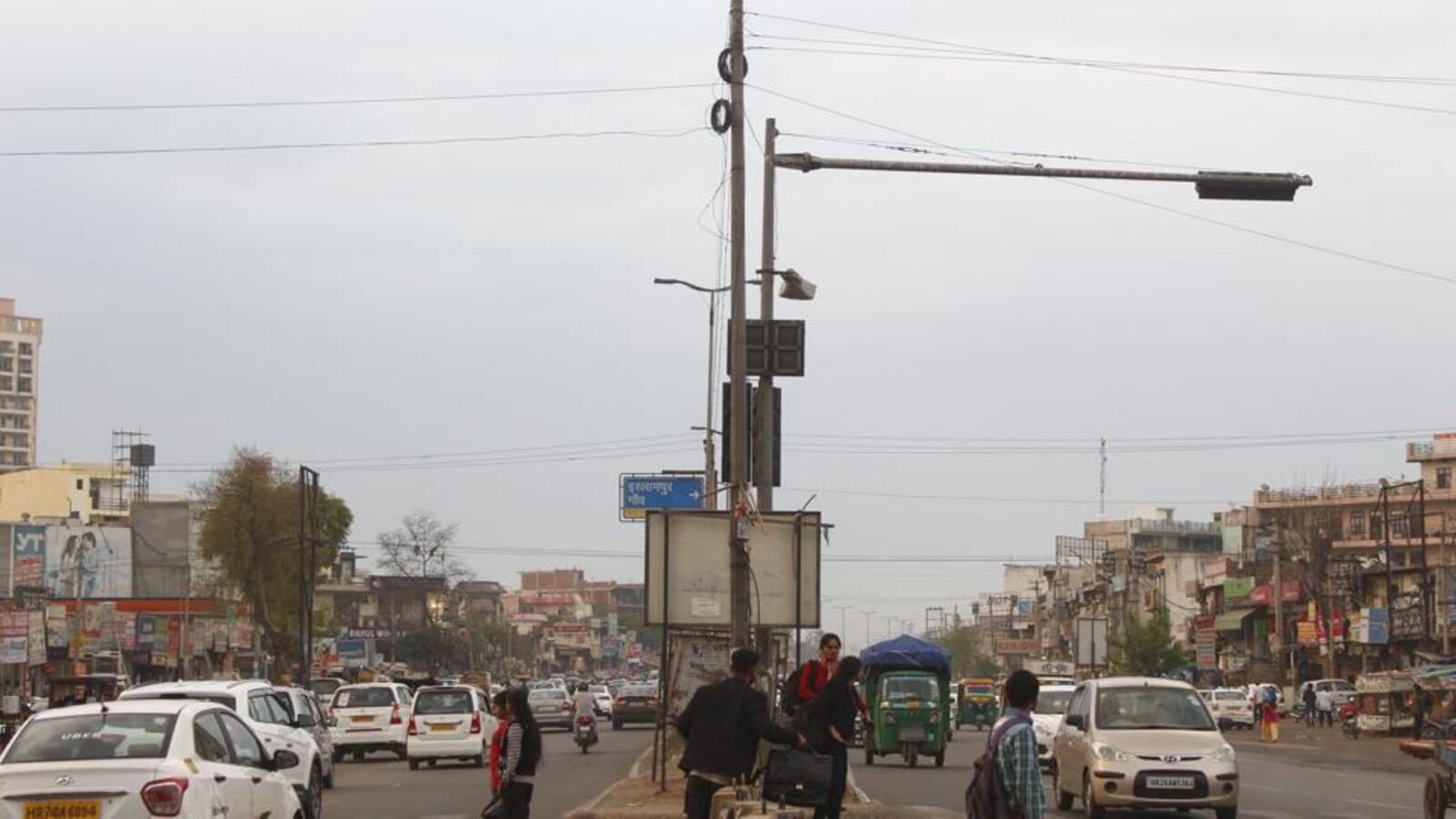
Gurugram is preparing to roll out an expanded automated traffic monitoring system across some of its busiest urban corridors, signalling a broader shift towards data-driven mobility management in India’s rapidly growing satellite cities. The next phase of the city’s Intelligent Traffic Management System will see nearly 380 AI-enabled surveillance cameras tested over the coming weeks before being integrated into the central traffic command infrastructure in Sector 44.
The deployment spans roughly 40 kilometres of high-density road infrastructure, including Golf Course Road, MG Road, Golf Course Extension Road and stretches connected to the Southern Peripheral Road. Urban planners say the move reflects mounting pressure on NCR cities to manage rising vehicle volumes, improve road safety and reduce congestion-linked emissions without relying solely on road expansion projects. According to officials associated with the project, the new network combines number plate recognition systems, red-light violation detection units, overspeed tracking sensors and high-resolution surveillance cameras capable of monitoring multiple traffic movements simultaneously. The system is also expected to identify illegal parking, unattended objects and lane violations in real time. The expansion of the Gurugram traffic surveillance network comes at a time when the city continues to face worsening traffic bottlenecks driven by rapid commercial growth, dense residential development and increasing dependence on private vehicles.
Transport analysts note that automated enforcement systems are increasingly being viewed as essential urban infrastructure in large metropolitan regions where manual policing struggles to keep pace with traffic intensity. Authorities involved in the project said the technology infrastructure has been linked through an underground optical fibre network established under the city’s wider smart surveillance programme. The upgraded system is designed to support automated challan generation and centralised traffic monitoring, reducing human intervention in enforcement processes. Urban mobility experts believe such systems can improve compliance at critical intersections, particularly in fast-growing business districts where road discipline and signal violations remain persistent challenges. However, they caution that surveillance-led traffic management must be accompanied by investments in safer pedestrian infrastructure, public transport integration and better last-mile connectivity to create long-term mobility resilience.
The Gurugram traffic surveillance initiative is also part of a wider trend across Indian cities where digital governance tools are being introduced to strengthen urban management systems. While technology can improve operational efficiency, planners argue that cities must balance enforcement with accessibility and equitable transport planning, particularly as NCR regions continue expanding outward. Currently, more than a thousand surveillance cameras are already operational across Gurugram and Manesar under earlier phases of the city’s monitoring programme. The latest expansion is expected to deepen the use of real-time traffic analytics in daily urban governance, with testing outcomes likely to shape future deployments across other high-growth corridors in Haryana. As Gurugram continues evolving into a major corporate and residential hub, the effectiveness of such systems will increasingly be measured not only by enforcement statistics, but by whether they help create safer, less congested and more liveable streets for residents.