


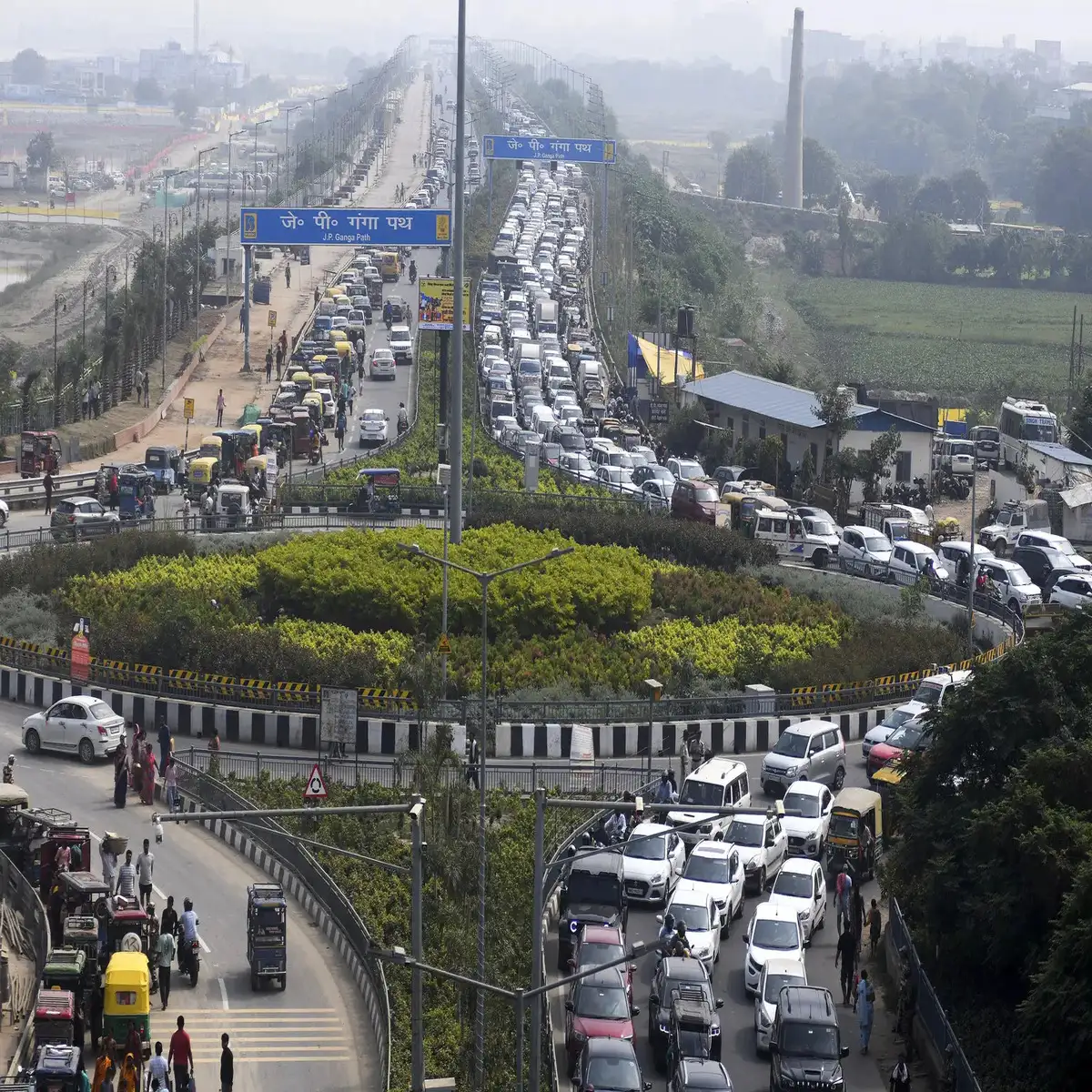
A fresh review of vehicle safety and emission compliance in Kolkata has brought renewed attention to the city’s growing struggle with traffic pollution, ageing transport fleets and uneven enforcement of road safety standards. Officials from the Union transport ministry, state agencies and technical authorities recently assessed the implementation of national vehicle regulations in eastern India’s largest metro, amid concerns over deteriorating urban air quality and rising road risks.
The review comes at a critical moment for Kolkata, where increasing private vehicle ownership, commercial freight movement and congestion are intensifying pressure on urban infrastructure. According to transport officials familiar with the discussions, the assessment focused on compliance with updated vehicle safety standards, emission control systems, inspection mechanisms and the readiness of enforcement agencies.Urban mobility experts say stricter implementation of vehicle safety norms is no longer limited to highway regulation but has become central to public health and city planning. Kolkata’s dense road network, mixed traffic conditions and large number of older diesel-powered vehicles have contributed to elevated particulate pollution levels in several transport corridors. In such conditions, vehicle inspection systems and emission monitoring are increasingly viewed as civic infrastructure rather than administrative formalities.Authorities are also evaluating how inspection and certification systems can be modernised to improve transparency and reduce the circulation of unfit vehicles. Industry observers note that weak periodic testing and inconsistent monitoring continue to undermine the effectiveness of national transport regulations in many Indian cities. Digital compliance tracking, automated testing centres and stricter penalties for non-compliance are being discussed as part of broader reforms.
The review of vehicle safety norms also reflects growing national concern around road fatalities linked to poor vehicle maintenance and inadequate safety features. Urban transport researchers point out that vulnerable road users including pedestrians, cyclists and public transport commuters bear the highest risk in cities where enforcement remains inconsistent. Strengthening vehicle standards, they argue, must work alongside better street design, safer pedestrian infrastructure and expanded public transport systems.Kolkata’s transport ecosystem presents additional complexity because of its dependence on ageing commercial fleets, para-transit services and informal mobility networks. While newer emission standards have improved manufacturing quality across India, replacing older vehicles remains financially difficult for many small operators. This creates a policy challenge for governments attempting to balance economic livelihoods with climate and public health priorities.Environmental planners say the long-term success of vehicle safety reforms will depend on integrating them with broader urban sustainability goals. Cleaner fuels, electric mobility adoption, low-emission zones and improved mass transit connectivity are increasingly being seen as necessary complements to regulatory enforcement.
With Indian cities facing mounting climate pressures and worsening congestion, transport governance is emerging as a defining urban policy issue. For Kolkata, the outcome of these regulatory reviews could shape not only road safety outcomes but also the future quality of urban life, air health and mobility access for millions of residents.
Read More : Chennai Metro Phase II Gains Final Momentum
Kolkata Road Safety Drive Eyes Cleaner Transit
