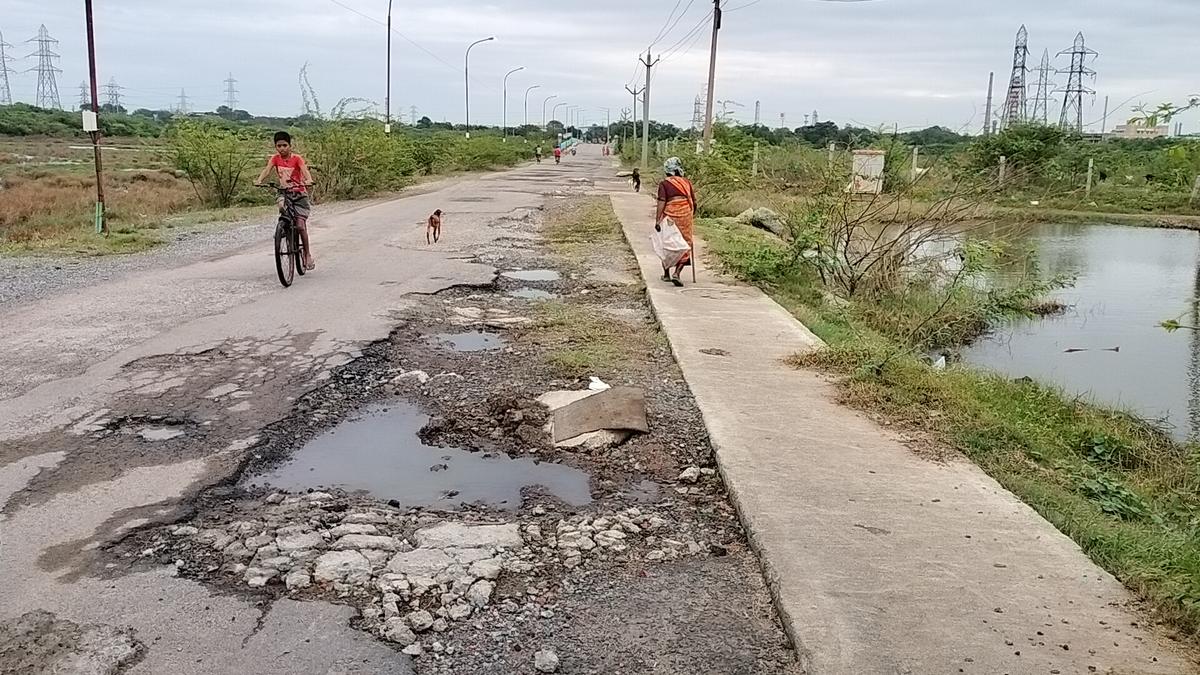
Chennai Manjambakkam Roads Face Infrastructure Neglect
Uncovered storm water drain chambers along Kamarajar Salai in Chennai’s Manjambakkam locality have emerged as a growing public safety concern, with residents warning that neglected civic infrastructure on one of the area’s key connector roads could lead to serious accidents. The issue has also renewed scrutiny over how Indian cities maintain critical drainage systems amid rapid urban expansion and rising mobility pressure.
The affected stretch links the Inner Ring Road with the Madhavaram–Red Hills corridor, a route heavily used by freight vehicles, industrial workers and local commuters. Residents say several storm water drain openings have remained exposed for months, forcing pedestrians and two-wheeler riders to navigate dangerous gaps along dusty road edges with little protection or warning signage. Urban mobility experts note that open drain chambers represent more than a maintenance lapse. In dense and mixed-use neighbourhoods, such failures can undermine pedestrian safety, disrupt traffic movement and weaken public confidence in municipal infrastructure systems. Poorly maintained drainage corridors also become especially hazardous during monsoon periods, when rainwater accumulation can conceal open pits and increase accident risks.
Local business owners and daily commuters in the area describe worsening conditions due to heavy dust deposits and loose construction debris gathering along the roadside. Visibility, they say, reduces significantly during peak traffic hours as heavy vehicles move through the corridor. The combination of exposed storm water drains, inadequate barricading and limited street illumination has amplified safety fears, particularly for children, elderly residents and night-time pedestrians.Urban planners tracking Chennai’s infrastructure growth say the incident reflects a larger challenge confronting expanding metropolitan regions: the gap between infrastructure creation and long-term maintenance. While storm water drain networks are increasingly being developed as part of flood mitigation and climate resilience strategies, consistent inspection and upkeep often remain weak at the neighbourhood level.The condition of the drains also raises broader environmental concerns. Experts point out that clogged or damaged storm water systems reduce rainwater flow efficiency, contribute to localised flooding and increase the accumulation of waste and sediment in urban corridors.
In climate-vulnerable coastal cities such as Chennai, resilient drainage infrastructure is considered essential not only for flood management but also for public health and economic continuity.Civic officials have indicated that the matter has been forwarded to local engineering teams for corrective action. However, residents argue that temporary barricading, immediate replacement of missing covers and mechanised cleaning of the corridor should be prioritised before the onset of heavier seasonal rainfall. As Chennai continues investing in transport corridors, industrial growth zones and flood-control infrastructure, urban policy observers say equal attention must be paid to routine civic maintenance. For rapidly growing cities, everyday infrastructure reliability increasingly defines whether development remains people-centric, safe and climate-ready.