


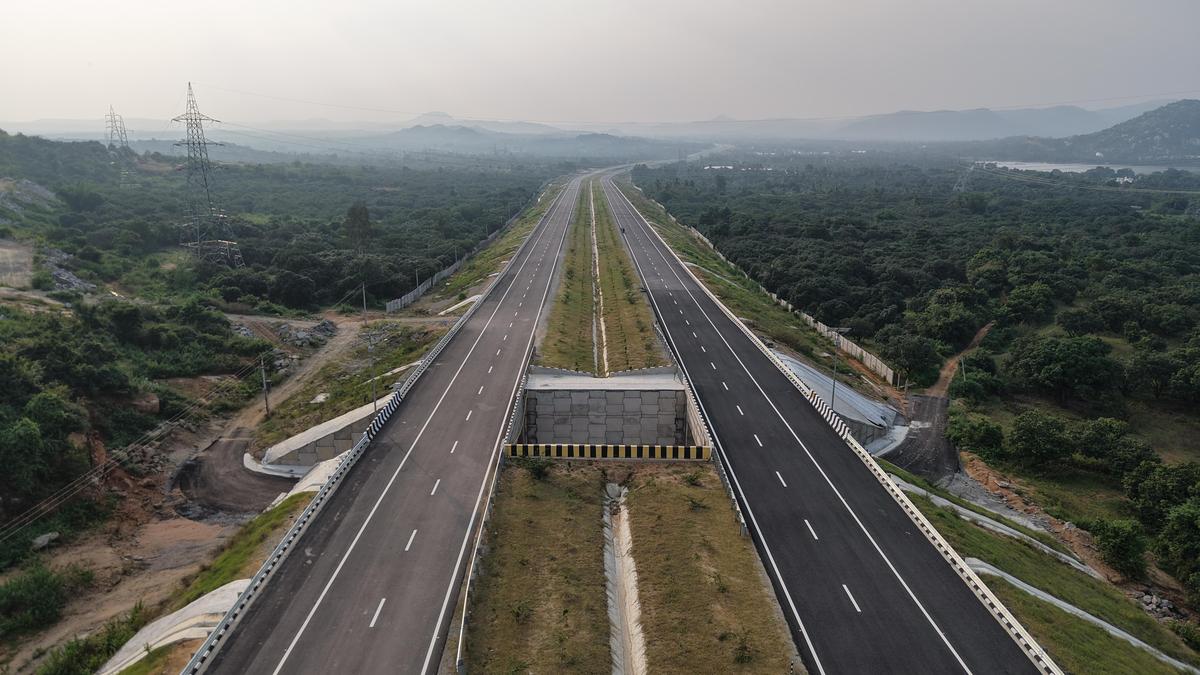
A key stretch of the Chennai–Chittoor–Thatchur highway has entered the trial run phase, marking a significant step towards operationalising a critical transport corridor aimed at easing regional congestion and improving freight movement. The development is expected to strengthen connectivity between industrial zones and national highway networks, reinforcing Chennai’s position as a major logistics and manufacturing hub.
The highway, designed as part of a broader effort to decongest the city’s core road network, is intended to divert heavy vehicular traffic away from densely populated urban areas. The trial phase of the Chennai Chittoor highway will allow authorities to assess traffic flow, safety measures, and infrastructure readiness before full-scale operations begin.Transport planners view this corridor as a strategic link connecting northern and western freight routes, enabling smoother movement of goods between ports, industrial clusters, and neighbouring states. By reducing dependency on city roads for long-distance transit, the project aims to cut travel time, lower fuel consumption, and improve logistics efficiency—factors that directly influence economic productivity.The Chennai Chittoor highway is also expected to play a role in reshaping urban mobility patterns. As heavy vehicles shift to peripheral corridors, inner-city roads could see reduced congestion, potentially improving air quality and commuter experience. However, experts caution that such benefits depend on effective enforcement and clear traffic management policies to ensure freight traffic consistently uses the designated route.
From an urban development standpoint, the highway could act as a catalyst for new growth corridors along its alignment.Improved connectivity often attracts industrial, warehousing, and residential developments, altering land use patterns in peri-urban areas.This presents both opportunities and challenges, particularly in managing unplanned expansion and ensuring infrastructure keeps pace with development.Environmental considerations remain central to such large-scale infrastructure projects.While improved traffic flow can reduce emissions per vehicle, increased road capacity may also encourage higher vehicle usage over time. Urban planners stress the need to complement highway development with sustainable transport strategies, including rail freight integration and multimodal logistics systems, to achieve long-term emission reductions.There are also implications for local communities along the corridor. Enhanced connectivity can improve access to markets, services, and employment opportunities, but it also necessitates adequate safety measures, pedestrian infrastructure, and noise mitigation to protect residents’ quality of life.
As the trial run progresses, authorities will focus on identifying operational gaps and refining infrastructure before opening the corridor to full traffic. The success of the project will ultimately depend on how well it integrates with regional transport planning and supports balanced, sustainable urban growth.
Also Read:Chennai ECR Widening Nears Completion Boosting Connectivity
