


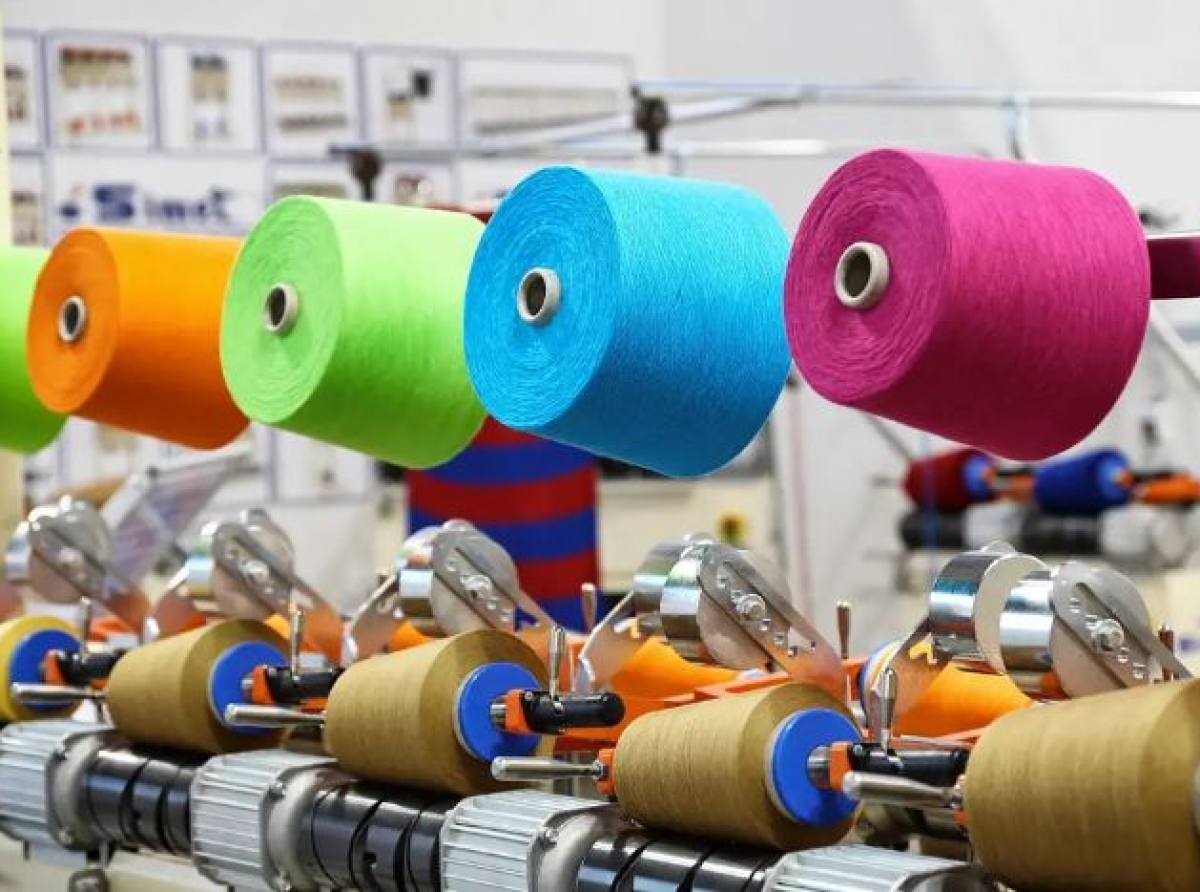
Surat’s textile industry is facing a sharp slowdown as global supply disruptions linked to the Iran conflict push up raw material costs and constrain production, exposing vulnerabilities in one of India’s largest manufacturing clusters. The situation is beginning to ripple through the city’s economy, affecting jobs, industrial output, and export competitiveness. At the core of the disruption is polyester, a petroleum-derived fibre that dominates global textile production.
With energy markets unsettled, the cost of key inputs used to manufacture polyester yarn has surged by nearly 30%, driven by supply interruptions and rising prices of petrochemicals. This has directly impacted Surat, where a large share of textile production depends on synthetic fibres. Industry estimates suggest that several units in the city have reduced output significantly, with some operating at nearly half their usual capacity. Dyeing and processing units are also scaling back operations due to rising energy and chemical costs, while intermittent fuel shortages have added to operational uncertainty. Labour availability has emerged as another concern, as migrant workers return to their hometowns amid rising living costs and energy constraints. The Surat polyester supply shock is affecting not just manufacturers but the broader urban economy. The textile sector is a key employment generator, supporting thousands of workers across production, logistics, and ancillary services. Reduced factory activity is translating into lower daily wages, decreased demand for transport services, and slower movement across local markets. Urban economists point out that Surat’s industrial model—built on scale, speed, and cost efficiency—is particularly sensitive to global supply chain shocks. When input costs rise sharply, smaller units with limited financial buffers are often the first to scale down or shut operations temporarily. This exposes structural gaps in resilience planning for industrial cities that are deeply integrated into global trade networks. There are also implications for sustainability. Polyester production is energy-intensive and closely tied to fossil fuels, making the Surat polyester supply shock a reminder of the environmental and economic risks of resource dependence. Experts suggest that diversifying into recycled fibres, improving energy efficiency, and investing in renewable power could help reduce exposure to such external shocks over time.
Globally, the disruption is expected to push up prices for garments and synthetic products if the situation persists, as manufacturers pass on higher costs across the value chain. However, demand uncertainty in key export markets may limit how much of this increase can be absorbed. As Surat navigates this period, the focus is likely to shift toward building a more resilient textile ecosystem—one that balances competitiveness with sustainability, reduces dependence on volatile inputs, and safeguards livelihoods in the face of global disruptions.
ALSO READ – Surat Bullet Train Push Signals Mobility Shift
Surat Textile Slowdown Signals Global Supply Shock
