


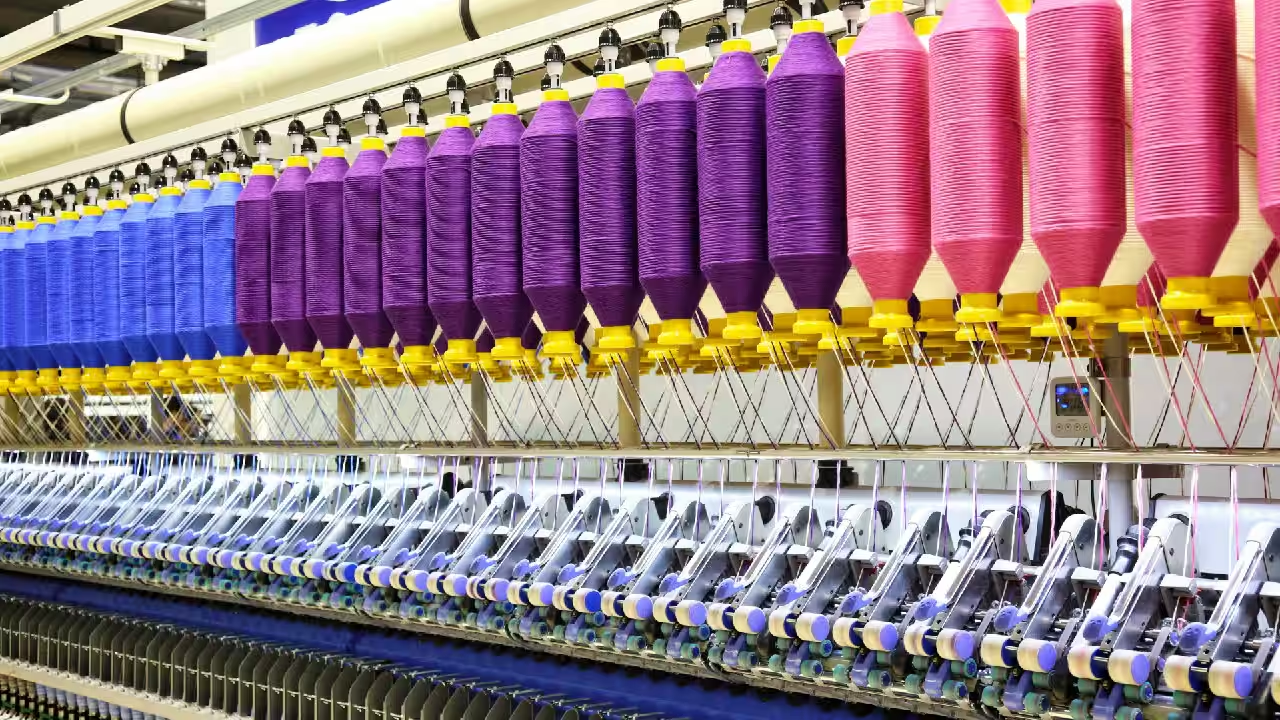
A deepening gas shortage in Surat has begun to disrupt its textile industry, triggering a reverse migration of workers and slowing production across one of India’s largest synthetic fabric hubs. The development highlights how energy supply disruptions can quickly translate into labour instability, affecting both urban economies and industrial ecosystems. Several textile processing and dyeing units, heavily dependent on natural gas, have reduced operations or temporarily shut down as supply constraints push up costs and limit availability.
For many units, especially small and mid-sized enterprises, operating under these conditions has become financially unviable, forcing a cutback in working hours and output. The immediate fallout has been a visible workforce exodus. Migrant workers, who form the backbone of Surat’s textile sector, are returning to their hometowns amid uncertainty over wages and job continuity. The Surat gas shortage impact is thus extending beyond production losses, directly affecting livelihoods and the city’s labour dynamics. Industry observers note that Surat’s textile economy is tightly interlinked with energy availability. Processing activities such as dyeing and finishing require consistent fuel supply, making them particularly vulnerable to disruptions. When energy becomes scarce or expensive, units are unable to maintain production cycles, leading to cascading effects across supply chains. From an urban perspective, the Surat gas shortage impact underscores the fragility of industrial cities that rely on a single dominant sector. Reduced factory activity affects not only workers but also transport operators, small businesses, and rental housing markets that depend on a steady industrial workforce. The slowdown can ripple through local economies, reducing consumption and weakening urban resilience. Experts also highlight the environmental dimension of the crisis. While natural gas is often considered a relatively cleaner industrial fuel, overdependence on any single energy source can create systemic risks. Diversifying energy inputs, including greater adoption of renewable power and energy-efficient technologies, could help mitigate such disruptions in the future.
There are growing calls for policy intervention to stabilise supply and support affected industries and workers. Measures such as prioritised energy allocation, financial relief for small units, and social protection for migrant workers are being discussed as short-term responses. In the longer term, the situation points to the need for more resilient industrial planning—where energy security, labour welfare, and sustainable practices are integrated into the growth model. As Surat navigates this disruption, the focus will be on restoring stability while building a textile ecosystem that can better withstand external shocks without compromising livelihoods or productivity.
ALSO READ – Surat Textile Slowdown Signals Global Supply Shock
Surat Textile Crisis Triggers Worker Exodus
