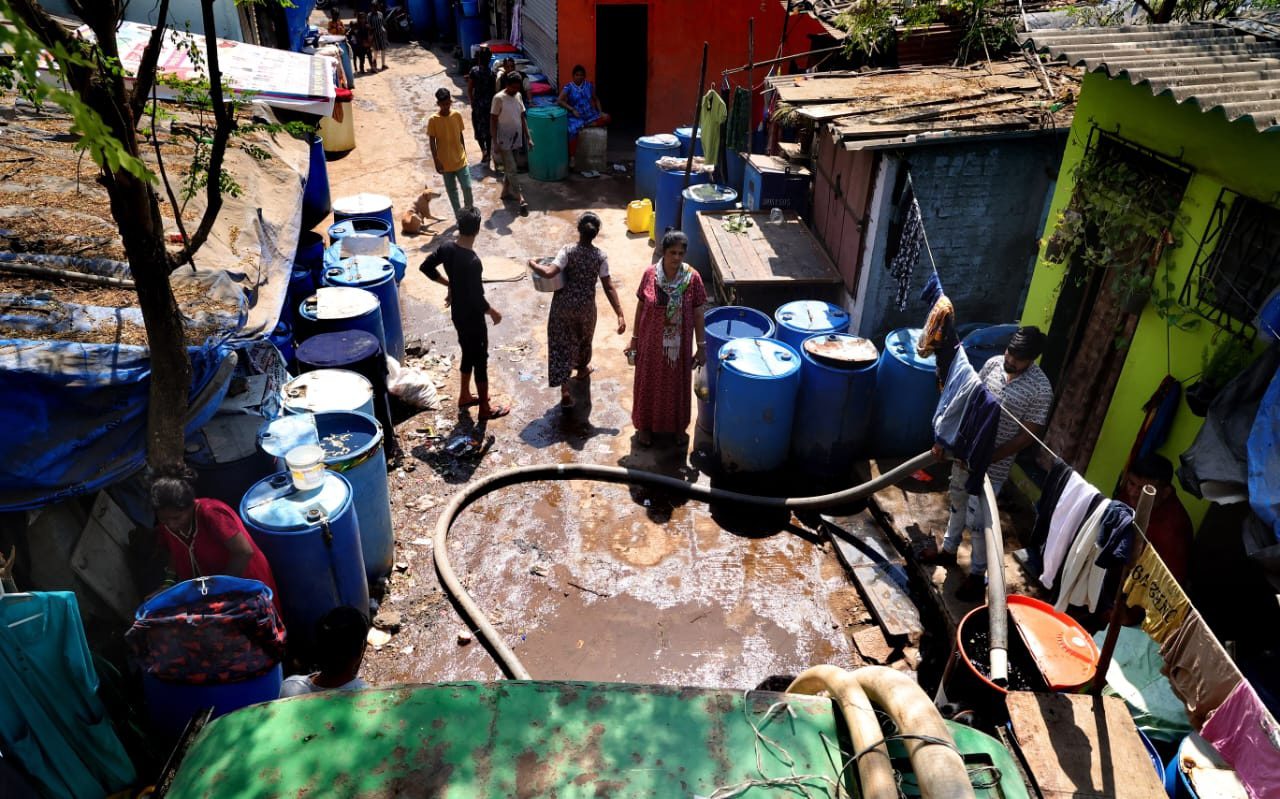
Mumbai is entering a critical phase in its annual water cycle, with reservoir levels dropping to nearly one-third of total capacity, raising concerns over supply stability in the months ahead. The emerging Mumbai water crisis underscores the city’s dependence on monsoon-fed reservoirs and highlights the growing challenge of managing water security in a rapidly expanding urban region. The seven lakes that supply drinking water to the city currently hold significantly reduced reserves compared to their full capacity. While this year’s levels are marginally better than recent summers, current storage is projected to meet demand only until early July under normal consumption patterns. With daily requirements running into billions of litres, any delay or deficiency in monsoon rainfall could intensify the situation.
Officials are already exploring contingency measures, including accessing reserve water stocks from key reservoirs. These reserves are typically maintained for emergency use, and their release requires state-level approvals. If additional allocations are not sanctioned in time, authorities may be forced to implement phased supply restrictions, affecting both residential and commercial users. Climate variability is adding another layer of uncertainty. Meteorological trends linked to global weather patterns suggest the possibility of uneven rainfall distribution this year. For a coastal city like Mumbai, where water availability is closely tied to monsoon performance, such fluctuations can disrupt planning cycles and strain existing infrastructure. Urban planners argue that the Mumbai water crisis is not just a seasonal issue but a structural one. The city’s water system relies heavily on distant reservoirs, with limited diversification of sources. As population density increases and urban boundaries expand, demand continues to outpace incremental supply enhancements. This imbalance is further exacerbated by transmission losses, leakage, and inefficient consumption patterns.
From an economic perspective, water shortages can have cascading effects. Industries, construction activity, and service sectors depend on uninterrupted supply, and any disruption can slow productivity. Informal settlements and lower-income households are often the most vulnerable, as they have limited storage capacity and fewer alternatives during supply cuts. Experts emphasise the need for a more resilient approach to urban water management. Strategies such as rainwater harvesting, wastewater recycling, and decentralised storage systems are increasingly seen as essential complements to large reservoir-based supply. Protecting natural water bodies and recharge zones within the metropolitan region is also critical to sustaining long-term availability. The current situation also brings attention to demand-side management. Public awareness campaigns encouraging conservation, along with stricter regulation of non-essential usage, could help extend available supplies during peak stress periods. However, these measures require consistent enforcement and community participation to be effective.
As Mumbai approaches the pre-monsoon months, the trajectory of the Mumbai water crisis will depend on both administrative decisions and climatic outcomes. Whether the city can navigate this period without significant disruption will be a key test of its preparedness and its ability to transition towards a more sustainable and climate-resilient water system.