Surat Textile Units Offset LPG Shortage To Retain Workers
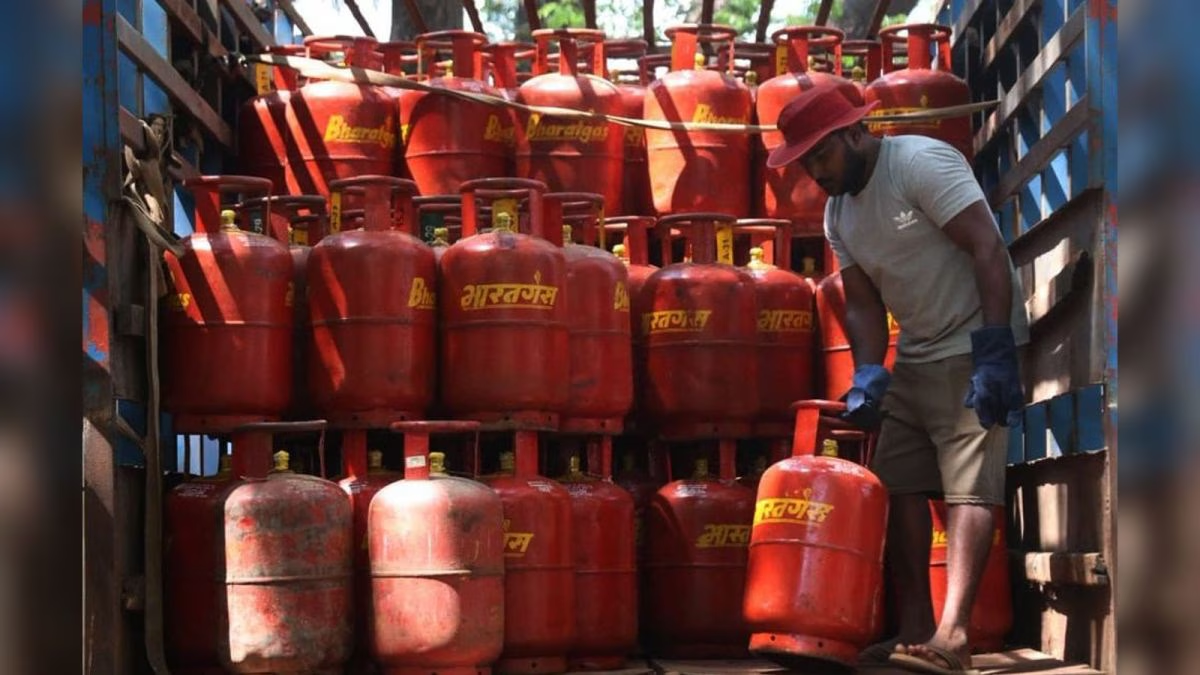
Surat’s textile industry is absorbing rising cooking fuel costs for workers as an ongoing LPG shortage begins to disrupt daily life, prompting concerns over labour retention in one of India’s largest manufacturing clusters. Factory operators are reportedly offering additional financial support to workers to offset higher fuel expenses, aiming to prevent an outflow of labour at a time when production stability is critical. The move reflects the deep interdependence between industrial output and basic urban services. For many migrant workers employed in textile units, access to affordable cooking fuel is essential to sustaining their livelihoods in the city. A prolonged LPG shortage not only raises living costs but also affects the viability of staying in Surat, particularly for low-income households.
Industry observers note that labour mobility remains highly sensitive to changes in living expenses. Even marginal increases in daily costs can trigger migration back to home regions, especially in sectors where wages are tightly calibrated. By stepping in to support workers, textile units are attempting to maintain workforce continuity and avoid disruptions to production cycles. The situation underscores a broader urban challenge: the vulnerability of economic clusters to disruptions in essential service supply chains. While industries often invest heavily in production infrastructure, they remain dependent on external systems such as energy distribution, housing, and transport. When these systems falter, the impact quickly extends to industrial performance and employment stability. Urban economists point out that Surat’s textile sector operates within a tightly interconnected ecosystem, where worker availability directly influences output and competitiveness. A sudden reduction in workforce can lead to delays in orders, reduced capacity utilisation, and financial losses, particularly in export-oriented segments. From a policy perspective, the episode highlights the need for more resilient urban energy systems. Ensuring reliable access to cooking fuel for workers is not only a welfare issue but also an economic priority for cities with large industrial bases. Diversifying energy options and strengthening distribution networks can help mitigate such risks in the future. There are also implications for urban inclusivity. Migrant workers often have limited access to formal support systems, making them more vulnerable to price shocks and supply disruptions. Targeted interventions, whether through public policy or industry initiatives, are essential to ensure that these populations are not disproportionately affected.
Experts suggest that coordinated action between local authorities, energy suppliers, and industry stakeholders could help stabilise the situation. Short-term measures may include improving distribution efficiency and ensuring adequate supply, while long-term strategies could focus on alternative energy solutions and better urban planning. As Surat continues to position itself as a global textile hub, maintaining a stable and supported workforce will be critical. The current response by textile units highlights both the resilience of the sector and the urgent need to strengthen the urban systems that underpin industrial growth.