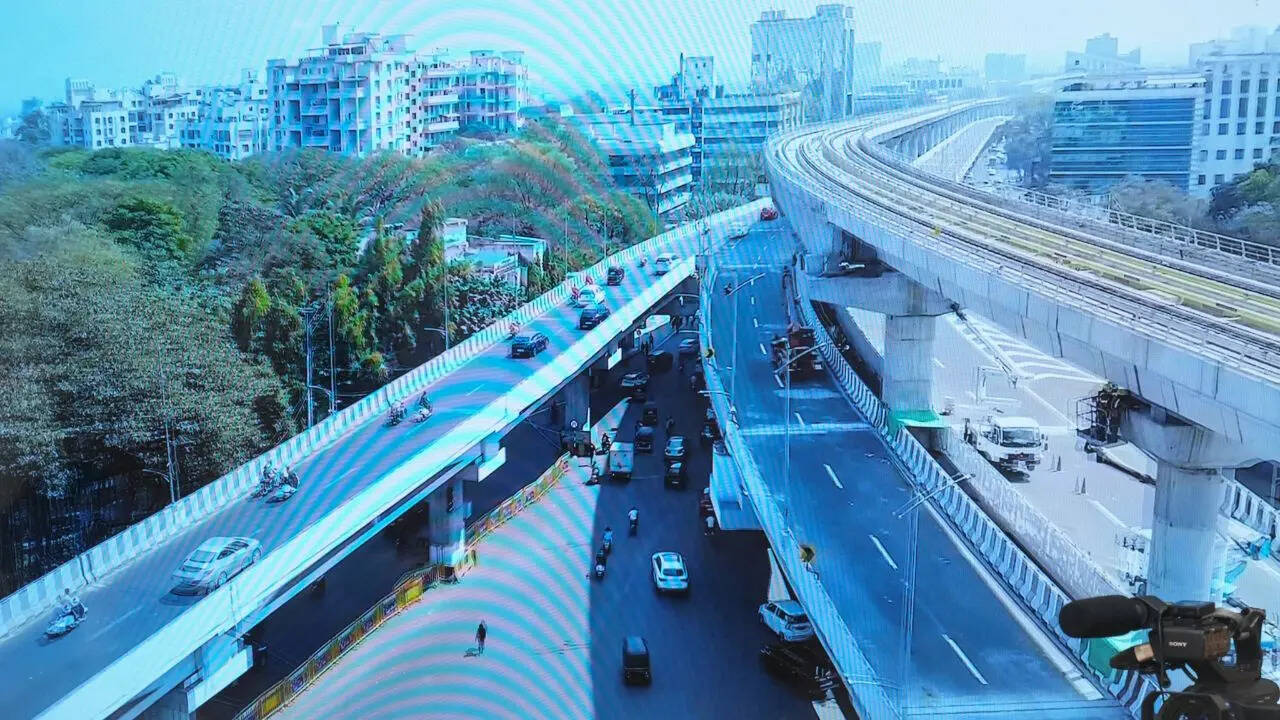
Pune has added a major piece of urban transport infrastructure with the opening of a double decker flyover near Savitribai Phule Pune University, a junction long known for severe traffic bottlenecks. The multi-level structure integrates road traffic movement with an elevated metro corridor, marking one of the city’s most visible efforts to address congestion through combined transport planning in a rapidly expanding metropolitan region.
Developed by the Pune Metropolitan Region Development Authority, the project forms part of a broader mobility strategy aimed at improving connectivity between western suburbs such as Baner, Aundh and Pashan and the city’s central districts. The corridor is used daily by thousands of commuters travelling to the Hinjewadi technology hub, educational institutions and commercial areas in Shivajinagar. Urban transport planners say the double decker flyover reflects an emerging approach in Indian cities where road infrastructure and metro systems are integrated within a single structure. With limited urban land available for new transport corridors, combining multiple modes of travel within the same footprint helps reduce land acquisition and construction disruption.
The project replaces an earlier flyover that once served the intersection. Authorities chose to dismantle the older structure during the pandemic period to allow construction of a new integrated system capable of supporting both vehicular traffic and the metro line planned along the Hinjewadi–Shivajinagar corridor. Transport engineers say the two-level structure separates different traffic movements, enabling through traffic to bypass the heavily congested junction below. Dedicated ramps connect major surrounding roads, allowing vehicles to move more directly between key neighbourhoods without entering the intersection.
City planners believe the infrastructure upgrade will significantly reduce travel delays during peak hours. The junction previously required motorists to spend long periods navigating traffic signals and merging lanes, particularly during office commuting hours when movement between residential suburbs and employment centres peaks. The new double decker flyover also signals how Pune’s infrastructure planning is evolving alongside its economic growth. Over the past decade the city has become a major technology and services hub, with expanding business districts and global capability centres increasing the volume of daily commuter traffic.
Infrastructure specialists argue that expanding mobility networks is essential for sustaining that economic momentum. Improved road and public transport connectivity can influence real estate growth patterns, encourage business investments and support more balanced urban expansion across metropolitan regions. At the same time, urban planners caution that road infrastructure alone cannot resolve long-term congestion challenges. Cities experiencing rapid population growth must also invest in public transport, non-motorised mobility and climate-sensitive urban design to reduce dependence on private vehicles.
The integration of the metro line within the double decker flyover may offer a glimpse of that multi-layered approach. By combining rail transit with road infrastructure, the project attempts to balance immediate traffic relief with long-term investments in mass transit.
For Pune, where urban expansion continues across the western corridor, the success of such infrastructure projects will likely influence future transport planning. As additional metro lines, tunnels and mobility corridors are developed, the city’s challenge will be to ensure that infrastructure growth aligns with sustainable and people-focused urban development.
Pune Double Decker Flyover Boosts Urban Mobility