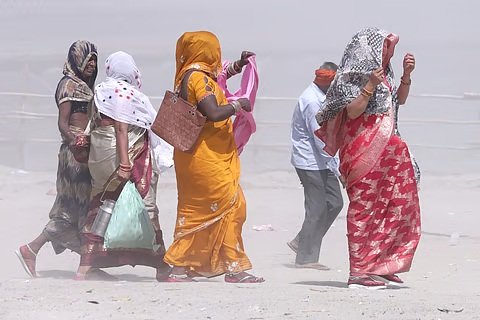
Tamil Nadu is expected to witness a hotter-than-usual summer, with forecasters indicating multiple heatwave risk windows between March and May. Coastal districts, including Chennai, could record several days of extreme daytime temperatures, placing pressure on water systems, electricity demand and public health infrastructure at the start of the financial year. Seasonal projections from the India Meteorological Department show above-average maximum temperatures across much of the state through the pre-monsoon period. Coastal belts may experience three to nine heatwave days, while parts of northern Tamil Nadu could face prolonged spells extending up to two weeks.
Under meteorological criteria, a heatwave is declared in the plains when temperatures cross 40°C and rise significantly above seasonal averages, or when they breach 45°C regardless of deviation. For Chennai, where May typically records average highs above 37°C, even a modest upward shift can sharply increase thermal stress in dense neighbourhoods with limited tree cover and high surface heat retention. Urban planners say the emerging heatwave risk is no longer just a seasonal discomfort but a structural challenge for fast-growing cities. Higher daytime temperatures intensify electricity consumption as air-conditioning demand surges, straining distribution networks. Simultaneously, evaporation losses increase in reservoirs already navigating pre-monsoon depletion cycles. Water tanker markets in peripheral areas often see early price spikes during prolonged heat episodes. Real estate analysts note that residential projects with integrated water management systems, shaded public spaces and energy-efficient building envelopes are increasingly viewed as risk-mitigated assets rather than premium add-ons.
Public health systems are also preparing for seasonal spikes in heat-related illnesses. Exposure risks are disproportionately higher for outdoor workers, elderly residents, and informal settlement communities where ventilation and cooling access remain limited. Urban development experts argue that early-warning systems must be paired with ward-level response plans, including cooling shelters and hydration access points. March is expected to remain relatively moderate in several districts, offering a narrow preparation window before peak summer intensifies. Night-time temperatures are forecast to stay broadly within seasonal norms, which may provide limited respite but will not offset daytime stress in high-density urban clusters.
For Chennai’s built environment, repeated heatwave risk events underscore the urgency of climate-resilient planning from reflective roofing and green corridors to decentralised water storage and grid upgrades. As Tamil Nadu continues expanding housing, commercial space and transport infrastructure, integrating passive cooling and energy efficiency into approvals could determine whether the city absorbs heat shocks or amplifies them. With summer only beginning, municipal agencies, utilities and developers now face a critical test: whether preparedness can keep pace with rising temperatures in one of India’s fastest urbanising coastal states.