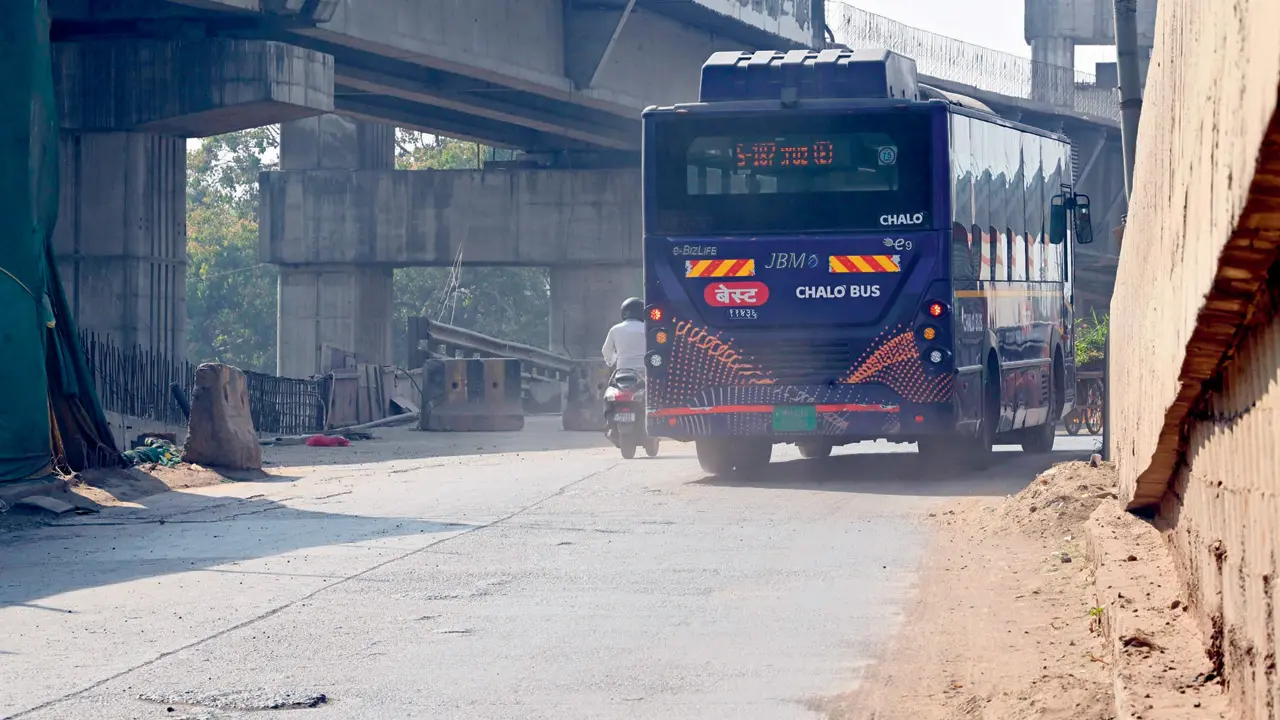
Mumbai’s east–west commuter corridor in Santacruz East has become a growing point of civic concern, as prolonged construction activity along a key arterial stretch continues to generate heavy dust, raising questions about urban air quality management and construction governance in dense neighbourhoods.
The affected zone lies along Hans Bhugra Marg, close to a major connector feeding into the Santacruz–Chembur Link Road (SCLR), an infrastructure spine intended to ease cross-city mobility. While the project is designed to improve long-term connectivity, daily users of the corridor say persistent dust clouds are undermining both health and road safety, particularly during peak traffic hours. Residents, commuters, and roadside workers report that routine mitigation steps—primarily road watering—have offered only temporary relief. According to urban planners, water spraying without debris clearance or surface sealing is widely considered an inadequate response in high-traffic construction zones, as evaporated moisture allows fine particulate matter to resuspend rapidly.
Officials from the Mumbai Metropolitan Region Development Authority have acknowledged that multiple agencies are operating within the same construction envelope. Debris handling, segregation, and removal activities are being carried out alongside finishing works for a proposed 30-metre-wide connector road intended to improve last-mile connectivity. The overlap of these operations, experts note, often leads to accountability gaps unless enforcement protocols are tightly coordinated. Civic authorities from the Brihanmumbai Municipal Corporation have been instructed to ensure transport vehicles carrying debris are covered and that exposed surfaces are dampened regularly. However, transport researchers point out that best practices in climate-resilient construction increasingly favour dust screens, wheel-washing bays, soil stabilisers, and mechanised vacuum sweeping—measures still unevenly applied across Indian cities.
The stretch beneath the SCLR flyover has emerged as a particular trouble spot. Accumulated rubble, uneven surfaces, and constant truck movement have reduced visibility and aggravated respiratory discomfort for drivers and pedestrians. For non-air-conditioned public and intermediate transport users, prolonged exposure during slow-moving traffic significantly increases health risks, especially for older commuters and outdoor workers. From an economic perspective, delays in completing finishing works can translate into indirect costs—lost productivity, higher vehicle maintenance, and increased healthcare expenditure—borne disproportionately by lower-income commuters who rely on these corridors daily. Urban economists argue that such externalities rarely feature in project cost-benefit analyses, despite their tangible impact on city life.
With the connector project nearing completion, officials indicate that phased debris clearance and final surface treatment are planned in the coming weeks. Urban sustainability experts say the episode highlights a broader lesson for Mumbai’s infrastructure push: mobility upgrades must integrate environmental safeguards at every stage, not as afterthoughts. As the city accelerates road and transit investments, how effectively construction zones are managed will increasingly shape public trust in urban development—and determine whether growth translates into genuinely healthier, people-first streets.
Mumbai Infrastructure Works Raise Public Health Alarms