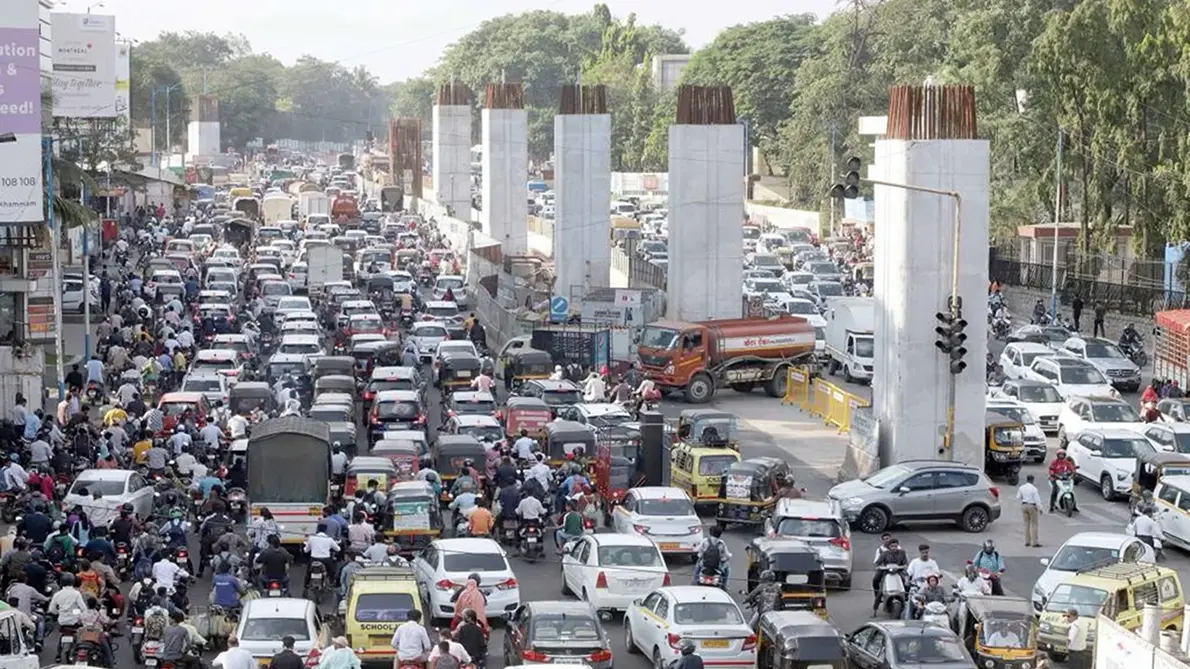
A renewed enforcement campaign against illegal vehicle alterations has seen the Pune Traffic Police impound 45 motorcycles fitted with high-decibel aftermarket exhaust systems, underscoring the city’s intensifying response to urban noise pollution and road safety concerns. The action followed complaints from residents in Khadki and adjoining neighbourhoods who reported repeated disturbances caused by modified silencers.
Teams were deployed at strategic junctions to intercept two-wheelers suspected of violating prescribed noise standards. According to officials, non-compliant exhaust systems were removed and confiscated, and penalties were initiated under relevant provisions of the Motor Vehicles Act. Authorities indicated that over the past five days, more than 650 motorcycles across the city have faced action for unauthorised modifications. In several instances, riders were directed to reinstall manufacturer-approved components before the vehicles could be processed further. Seized aftermarket parts were destroyed to prevent their reuse.
While customised motorcycles remain popular among younger riders, transport regulators classify most performance-altering exhaust systems as illegal for on-road use. Such equipment often exceeds permissible sound limits, contributing to ambient noise levels that already strain dense urban environments. Urban health experts note that prolonged exposure to elevated noise can affect sleep quality, cardiovascular health and overall wellbeing issues particularly acute in mixed-use neighbourhoods where residential and commercial activities overlap. The Pune Traffic Police campaign also signals a broader policy shift linking mobility management with liveability metrics. Indian cities are increasingly grappling with noise as an environmental externality, alongside air pollution and traffic congestion. According to urban planners, enforcement drives need to be paired with sustained awareness campaigns and stricter regulation of retail outlets selling non-compliant automotive parts.
Industry observers point out that unchecked vehicle modifications can also impact road safety. Altered exhaust systems are frequently associated with aggressive riding behaviour, which raises accident risks in already congested corridors. For real estate markets, persistent noise disturbances can influence rental values and residential demand patterns, particularly in emerging micro-markets close to arterial roads. The city’s approach aligns with its broader ambition to create people-centric streets that prioritise safety, accessibility and environmental health. As Pune expands its public transport network and promotes non-motorised mobility, controlling vehicular noise becomes integral to sustaining equitable urban growth. Officials suggest that further inspections will continue in residential pockets and high-traffic zones. For riders, compliance may increasingly become not just a legal obligation but a civic one, as Indian cities recalibrate transport systems to balance personal expression with collective wellbeing.
Pune Traffic Police Target Modified Bikes