


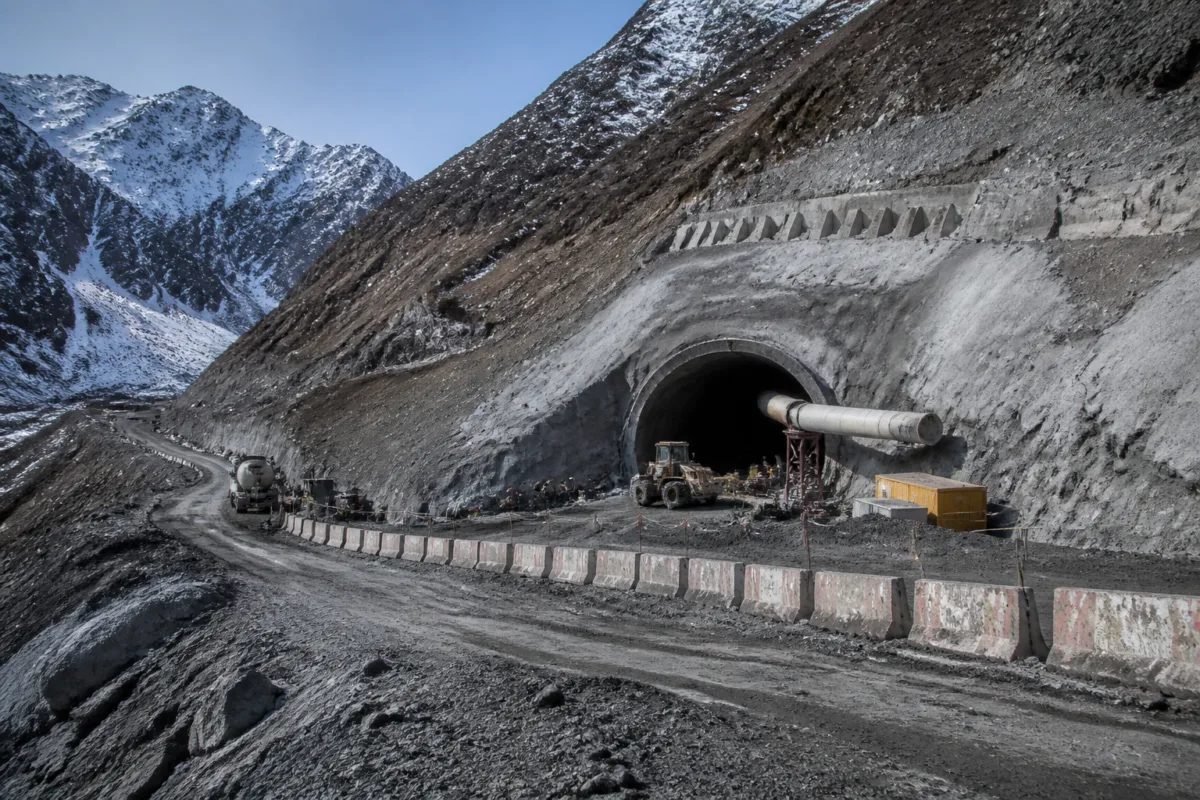
The Zojila Tunnel project linking the Sonamarg area in Jammu and Kashmir with Minamarg on the route to Kargil and Ladakh has reached a reported 70% completion, according to a MagicBricks report, which also said the main tunnel breakthrough was achieved in June 2026.
The project is being executed by the National Highways and Infrastructure Development Corporation Limited (NHIDCL) along National Highway 1. It is intended to provide a more reliable connection across the Zojila Pass, which is vulnerable to heavy snowfall and is periodically closed during winter.
The report said excavation had progressed for more than 13 km before the breakthrough at the eastern portal near Minamarg. It described the tunnel as a bi-directional passage with a reported length of between 13.15 km and 14.15 km, at elevations ranging from about 2,900 metres to 3,310 metres above sea level.
Planned safety and resilience features include automatic fire detection, closed-circuit television cameras, ventilation, emergency lay-bys and cross-passages. The wider approach works are reported to include snow galleries, catch dams, avalanche-control structures, cut-and-cover sections, bridges and culverts to protect the route from difficult Himalayan conditions.
The tunnel is expected to reduce exposure to avalanches, landslides, snow-covered roads and other hazards on the existing pass. It could also improve the movement of residents, tourists, commercial vehicles and supplies between the Kashmir Valley, Kargil and Ladakh during periods when the surface route is disrupted.
However, the travel-time claims require clarification. The source headline refers to a reduction from 1.5 hours to 15 minutes, while the article’s project description says the Sonamarg-to-Minamarg journey through the tunnel would take about 30 minutes. It separately states that crossing the existing pass can take close to two hours or longer in difficult conditions.
The project’s completion schedule is also not presented consistently. The report refers to a statement by Union Minister Nitin Gadkari that the work could be completed within six to eight months, while also pointing to completion in 2027 and full operations in late 2027 or early 2028. Civil works, systems installation, testing and high-altitude weather conditions could affect the final commissioning date, but no official project schedule is cited in the report.
The report places the project’s base cost at about Rs 6,800 crore and a broader estimate at up to Rs 8,308 crore after accounting for inflation, operations and maintenance. These figures also require confirmation from official project records.
If completed and commissioned as planned, the tunnel could extend the period of reliable road access between the Kashmir Valley and Ladakh. Improved access may support tourism, freight movement, guesthouses, homestays, storage facilities and roadside commerce in locations such as Sonamarg, Minamarg and Kargil. Any real-estate or construction response would still depend on land regulations, local development controls, environmental conditions and the length of the region’s usable building season.
The Zojila project forms part of a wider programme of high-altitude road and tunnel upgrades in the region. The source also refers to proposed or planned works involving the Fatu-La and Kela Pass corridors on the Kargil–Leh route, but provides no official project documentation or confirmed schedules for those works.
The tunnel’s reported progress is therefore significant for regional connectivity, but its completion percentage, travel-time benefits, cost and opening date should be confirmed through NHIDCL, government project records or an official ministerial statement before publication as settled fact.

