


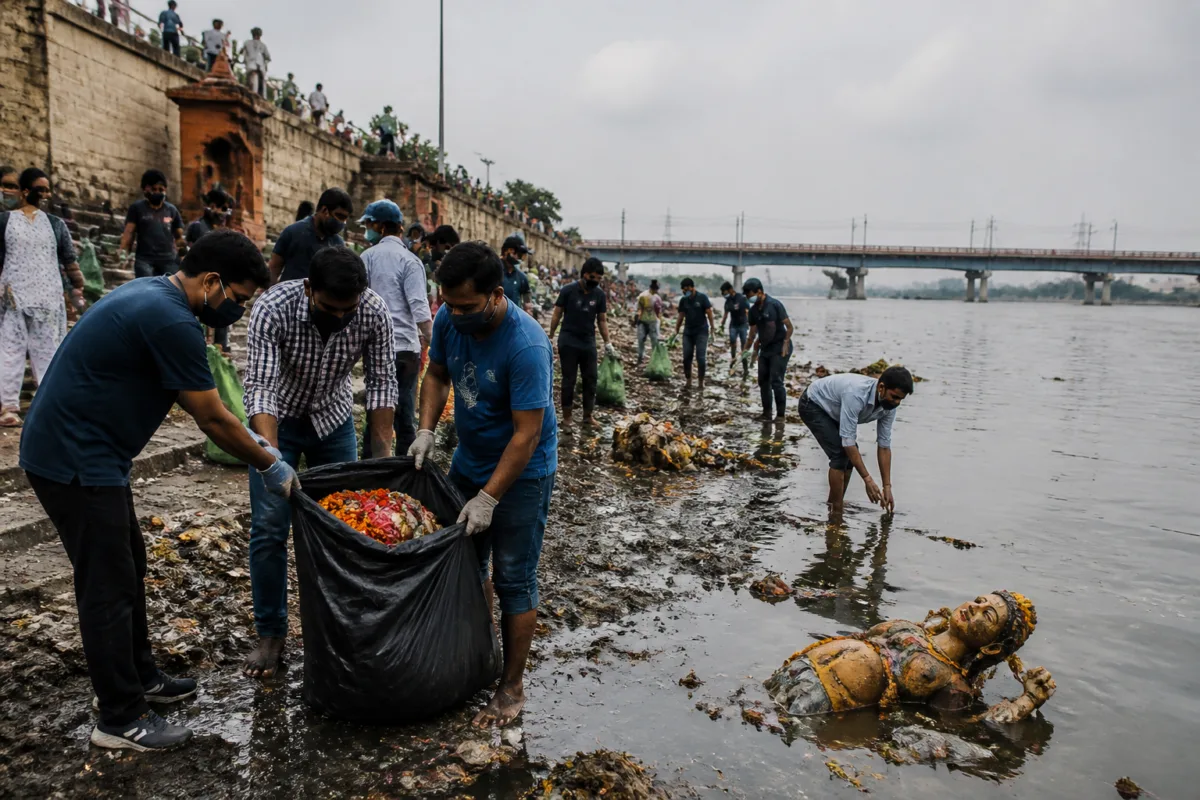
Delhi Chief Minister Rekha Gupta joined a cleanliness drive at Hathi Ghat near ITO on Sunday as part of the ‘Chalo Yamuna Abhiyan’, urging residents to stop dumping plastic, religious offerings and other waste along the riverbank.
Gupta participated in the drive alongside Cabinet colleagues, young volunteers, social organisations and local residents. The campaign covered 70 Yamuna ghats across Delhi, according to the chief minister, who said residents had come together to turn their devotion to the river into an act of service.
During the activity, Gupta said she saw large quantities of broken idols and other worship-related material discarded along the riverbank, along with plastic waste. “It is the responsibility of everyone who has faith in the Yamuna to keep it clean,” she said, while asking residents to maintain the cleanliness of the ghats and encourage others to do the same.
In a post on X, the chief minister appealed to citizens not to throw plastic, puja items or other waste on the Yamuna’s ghats and banks. She also called on residents to become ‘Yamuna Pramukhs’ and make cleanliness part of their everyday lives instead of limiting participation to organised campaigns.
The drive at Hathi Ghat was attended by Delhi Assembly Chief Whip and MLA Abhay Verma, along with representatives of voluntary organisations, residents’ welfare associations, local citizens and BJP workers and leaders. The participation of community groups and residents formed a central part of the campaign’s public outreach.
The event also placed the government’s river-cleaning measures alongside the immediate problem of waste reaching the riverbank. Gupta said the Delhi government was taking steps to clean the Yamuna, including setting up decentralised sewage treatment plants to tap drain water flowing into the river and desilting drains.
These measures address different parts of the pollution pathway: the cleanliness drive focuses on waste accumulated at public ghats and along the banks, while sewage treatment and drain desilting target water and waste entering the river through urban drainage systems. The report did not provide details on the number, capacity or implementation timeline of the proposed decentralised treatment plants.
The campaign’s emphasis on resident responsibility reflects the difficulty of maintaining public spaces through periodic drives alone. Gupta said keeping the ghats clean would require citizens to continue taking responsibility after the organised campaign ends. The government’s appeal therefore combines public participation with infrastructure-related interventions intended to reduce the flow of polluted drain water into the Yamuna.
The next phase of the campaign will depend on whether the participation seen across the 70 ghats is sustained through routine waste disposal, continued maintenance and progress on the sewage-treatment and drain-desilting measures announced by the Delhi government.

