


Subheadline: Oil flows through the Strait of Hormuz have fallen sharply, but alternative export routes, higher output elsewhere, weaker demand and large Chinese reserves are cushioning the market.
Standfirst: Brent crude has rallied as the United States-Iran conflict disrupts Gulf exports through the Strait of Hormuz and the Red Sea, yet prices have remained below $100 a barrel. The apparent contradiction reflects a market adjusting through several channels at once. Some oil continues to move through Hormuz, Gulf producers are using alternative ports and ship-to-ship transfers, and non-OPEC countries are increasing output. At the same time, demand destruction in petrochemicals and transport fuels remains substantial, particularly in China. Physical markets are tighter than headline crude prices suggest, with spot premiums and diesel prices showing stress. This analysis examines how supply, logistics, demand and inventories are interacting—and why the benchmark price may not fully capture conditions faced by refiners, freight operators and urban economies.
The central question facing oil markets is straightforward: if a major supply route has been disrupted and Middle East shipments have fallen by millions of barrels per day, why has Brent crude not moved decisively above $100? The answer is not that the disruption is insignificant. Rather, several offsetting mechanisms are operating simultaneously, allowing the market to absorb part of the shortfall while tightening conditions in specific physical markets.
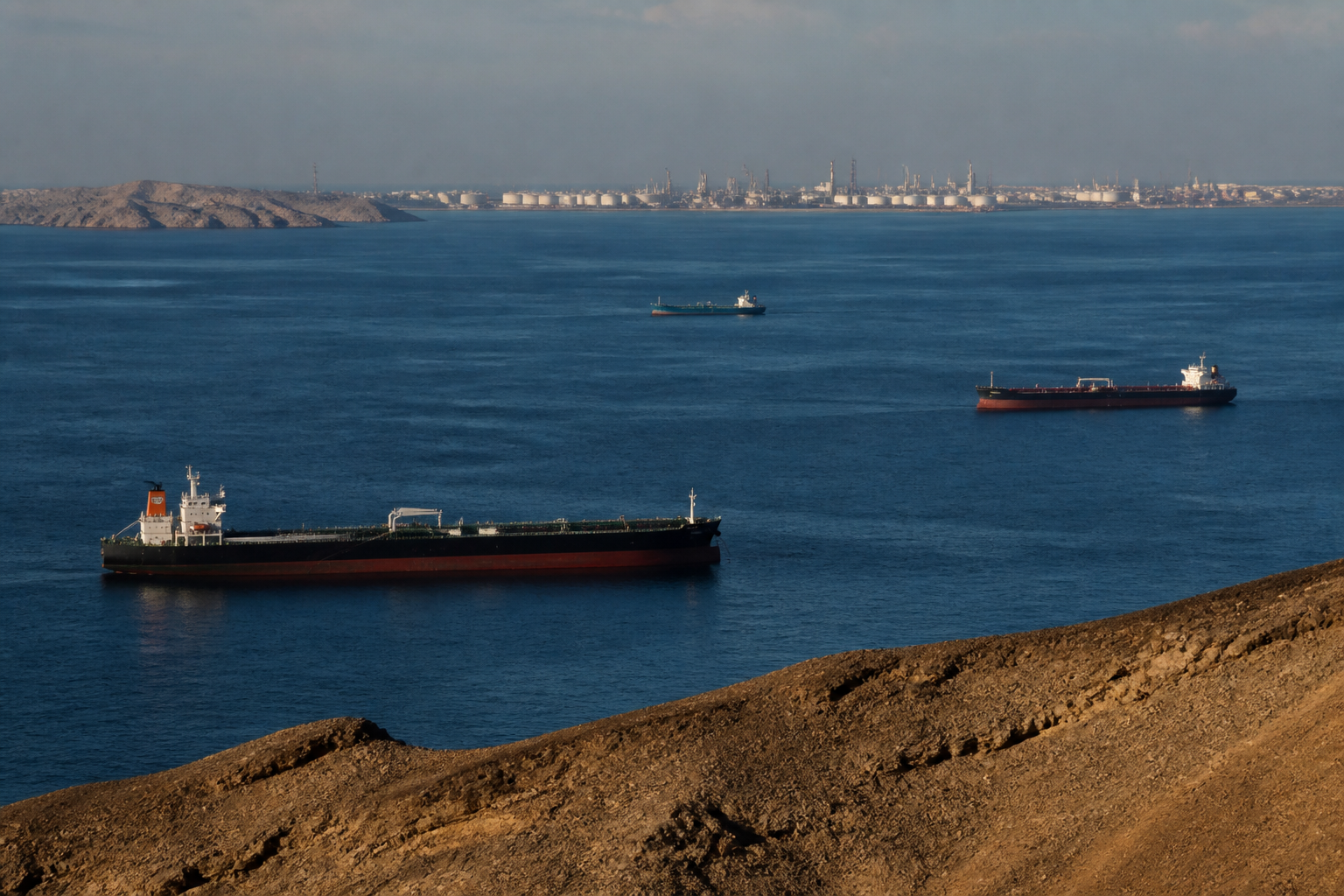
Middle East oil shipments are now running at about 11 million barrels per day, down from 18 million bpd before the Iran war began seven months ago, according to Argus data cited in the report. Flows through the Strait of Hormuz have also declined substantially. In the week before fighting erupted again on August 30, roughly 8 million to 9 million bpd moved through the strait, according to Rystad Energy. Since then, flows have fallen below 2 million bpd at points, although the daily moving average remains around 4 million to 5 million barrels.
That distinction between a temporary daily low and an average flow is important. Rystad Energy Chief Economist Claudio Galimberti said the average level was consistent with a Brent price of about $95 a barrel. Industry estimates put current daily exports through the strait between 6 million and 8 million barrels. Kpler data showed no very large crude carrier exiting Hormuz since September 2, but the overall picture is not one of a complete halt. During an interim United States-Iran peace deal in July, exports through the strait reached 16 million bpd, demonstrating how quickly flows can change when maritime conditions improve.
The market is therefore pricing a serious disruption, but not necessarily a permanent removal of all Gulf supply. That expectation helps explain why benchmark prices can remain below $100 even while individual cargoes and refined products command much higher prices. The difference between headline crude benchmarks and physical market conditions has become one of the defining features of the current episode.
Gulf exporters are also adapting their logistics. Producers are using alternative routes and are expected to continue sending cargoes for ship-to-ship transfers outside Hormuz. These methods do not eliminate the risk created by the conflict, but they can reduce the immediate volume lost from global trade. The response is uneven across exporters and routes.
Saudi Aramco resumed loadings from its Ras Tanura port inside the Gulf in August, while exports from Yanbu on the Red Sea remained under pressure from a naval blockade by Iran-aligned Yemeni Houthis. Yanbu exports fell to a six-month low of 1.429 million bpd in August, compared with an average of 3.9 million bpd during the previous three months, according to provisional Kpler data.
Other export points have partly compensated for that decline. Shipments from Egypt’s Sidi Kerir port reached 2.139 million bpd in August, more than double June volumes. Iraq’s exports rebounded to about 2.34 million bpd in August. United Arab Emirates shipments remained around 2.9 million bpd in July and August after reaching a record in June, while Kuwait’s crude exports recovered to approximately 1 million bpd in July and August.
These figures show why supply disruption cannot be measured only by looking at one chokepoint. A fall in Hormuz traffic creates a major logistical problem, but the effective global shortfall depends on how much can be rerouted, stored, transferred or replaced. The alternatives are more expensive and vulnerable, yet they can delay a full price response in benchmark markets.
Iran’s own exports have fallen sharply because of the United States blockade. At the same time, other producers are increasing output. Non-OPEC producers, including the United States, Canada and Guyana, are expected to add a combined 1.4 million bpd this year, according to Rystad Energy founder Jarand Rystad. That increase is partly filling the gap created by disrupted Middle East supply.
Russian exports provide another buffer, although they are below their recent peak. Kpler data showed Russian crude exports at about 5.5 million bpd in July and August, down from 6.4 million bpd in June but still 23% above the February level. Lower refinery processing in Russia, following damage to Russian plants from Ukrainian attacks, has allowed more crude to enter export markets. Russia has nevertheless lowered its 2026 oil output forecast to a 17-year low, a development that could reduce future exports.
The supply response is therefore broad but uncertain. Additional output from the United States, Canada and Guyana does not directly solve every route-specific problem. Oil grades, port capacity, tanker availability and refinery requirements all influence whether one source can substitute for another. The data nevertheless show that the global market is not relying on Gulf flows alone to meet immediate demand.
Demand is providing a second, equally important restraint on prices. Rystad estimates that demand destruction in petrochemicals and transport fuels remains significant at 3.5 million bpd in the third quarter, compared with 4.5 million bpd in the second quarter. China accounts for more than half of that decline, supported by rising transport electrification and the use of coal-based chemicals.
China’s role is especially important because it is the world’s largest oil importer and has been described in the report as the “new demand OPEC” because of its influence over the market. Seaborne crude shipments to China fell to about 7 million bpd in July and August from more than 11 million bpd in February. Lower buying from such a large importer reduces the immediate pressure on global supply, even as geopolitical risk increases.
China’s reserves also provide reassurance to the market. Kpler estimates that the country holds about 1.17 billion barrels. Those reserves do not remove the risk created by a prolonged disruption, but they give traders an additional reason to believe that immediate physical shortages can be managed. The result is a market in which geopolitical risk is high while near-term demand growth is comparatively weak.
The headline Brent price, however, does not tell the entire story. Physical indicators are showing tighter conditions than the benchmark suggests. Spot premiums have returned to April levels, while Dubai and Oman cargoes loading in November were trading at premiums of $19 to $20 a barrel above Dubai quotes, according to Reuters data cited in the report. Oman futures were at $104.54 a barrel and cash Dubai at $105.10 on Monday.
Argus Chief Economist David Fyfe described the physical market as “incredibly tight” and said that prices were already substantially above $100 in physical trading. He also pointed to a diesel market facing a severe shortage. This distinction matters for urban economies because crude benchmarks are only one part of the fuel-cost chain. Refined products used in road freight, public transport, construction equipment, backup generation and industrial operations can become more expensive even when Brent remains below a psychologically important threshold.
The reported rise in United States diesel prices to a record high reinforces that point. Refiners are increasing output of diesel at a time when the latest United States-Iran escalation is expected to curb Gulf exports. If crude supply is available only through more expensive or slower routes, the pressure can appear first in refined products rather than in the headline benchmark.
For cities, the relevant signal is therefore not simply whether Brent crosses $100. Fuel markets transmit through logistics, public and private transport, construction activity and the operating costs of businesses that depend on diesel. The supplied evidence does not establish the size of those effects in any particular city or country, but it does show why a relatively contained crude-price response should not be interpreted as proof that energy systems are operating normally.
Financial institutions are responding to the possibility that disruption will last. Morgan Stanley expects Brent to average $100 a barrel in the fourth quarter. Goldman Sachs raised its Brent and West Texas Intermediate forecasts by $5 a barrel for December 2026 and 2027, citing an expectation that Middle East shipping disruptions will persist into next year. Its revised forecast places Brent at $85 and WTI at $80 for December 2026, with 2027 prices at $80 and $75 respectively.
The range of forecasts reflects the market’s unresolved tension. Current prices are being restrained by continuing flows, alternative export arrangements, additional non-OPEC output, weaker demand and China’s reserves. At the same time, physical premiums, diesel shortages and lower Gulf exports indicate that the system is under pressure.
What the evidence confirms is that oil prices remain below $100 not because the supply disruption has failed to matter, but because the market has found temporary ways to distribute its effects. Some of those mechanisms depend on rerouting cargoes; others depend on producers outside the Gulf increasing output or consumers, especially in China, buying less crude. What remains uncertain is how long these buffers can last if the disruption continues into next year. For urban economies, the next developments to monitor are Gulf shipping volumes, diesel prices, alternative-port exports, Chinese crude demand and the ability of non-OPEC producers to sustain their projected output increases.
