


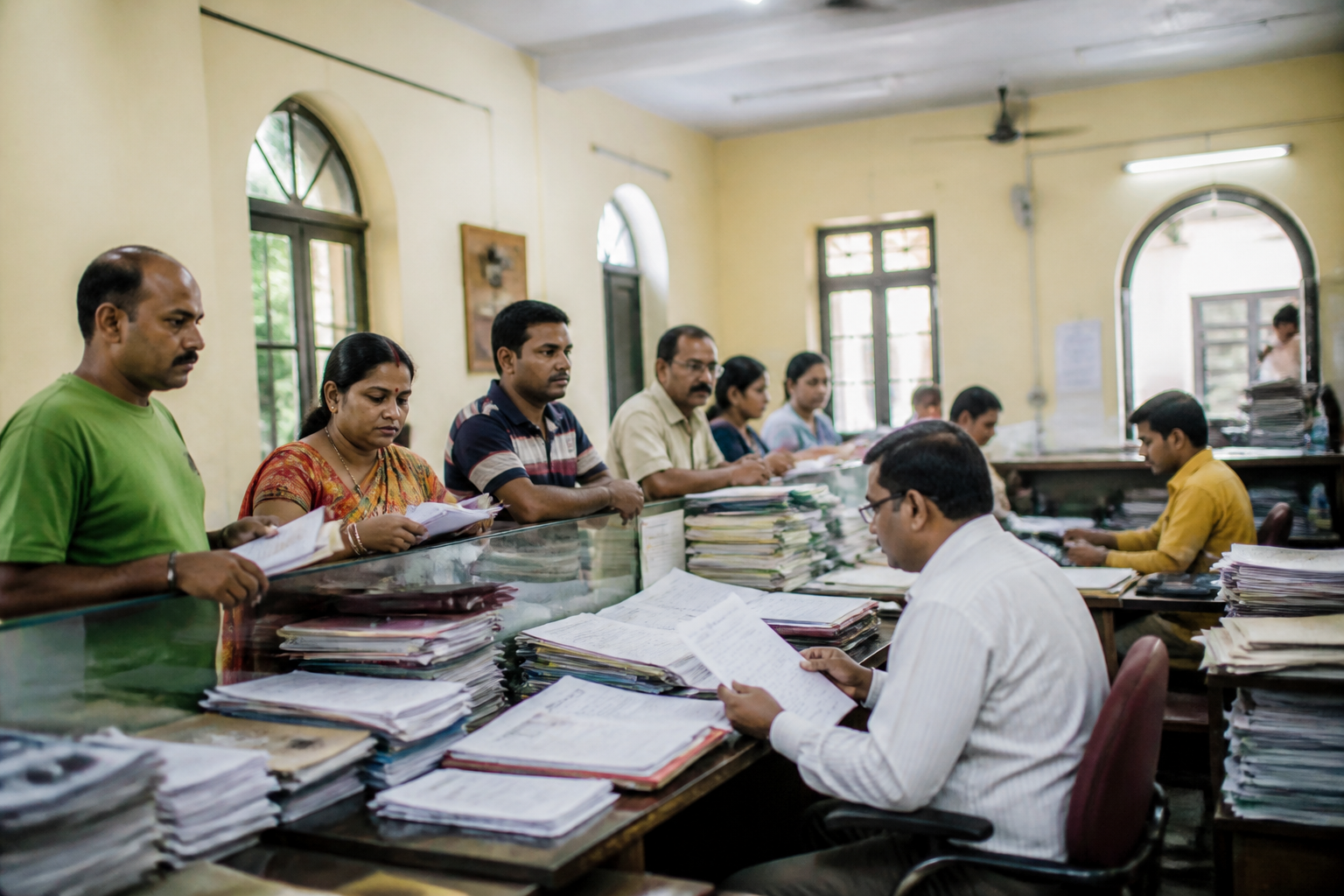
West Bengal has introduced property-tax relief schemes for six municipal corporations, offering up to a 100% waiver on accumulated interest and penalties and a 10% rebate on pending principal tax for eligible residential properties, according to a report by the Times of India. However, the operative deadline requires confirmation because the report states that the schemes remain effective until March 31, 2026, despite being published on October 6, 2026.
The West Bengal Municipal Corporation Incentive Scheme 2026 covers Bidhannagar, Howrah, Chandernagore, Durgapur, Asansol and Siliguri municipal corporations. The scheme is intended to help property owners, occupiers and other persons responsible for paying property tax clear unpaid bills issued on or before March 31, 2026.
Under the reported structure, the complete waiver of accumulated interest and penalties applies across residential, commercial and mixed-use properties. The additional 10% rebate on pending principal property tax is limited to residential buildings. This distinction means that commercial and mixed-use taxpayers may receive relief from penalties and interest but would not qualify for the principal-tax rebate described in the report.
The state urban development and municipal affairs department introduced the scheme after approval from the state cabinet. The report said municipal corporations had submitted proposals seeking similar relief for taxpayers with long-standing arrears. Howrah Municipal Corporation received a separate notification titled the Howrah Municipal Corporation Incentive (Waiver of Interest & Penalty to the Property Tax Payers) Scheme 2026.
For municipal corporations, the measure is more than a concession to defaulters. Property-tax arrears represent revenue that civic bodies have already assessed but have not collected. Officials quoted by the Times of India said the waiver could help corporations recover a substantial portion of these dues while allowing taxpayers to settle their liabilities at a concessional rate. The immediate administrative objective is therefore to convert dormant arrears into current revenue without requiring taxpayers to pay the full accumulated penalty burden.
The arrangement also illustrates the different legal and administrative positions of Kolkata Municipal Corporation and the six corporations covered by the state notification. According to the report, KMC does not require a separate notification from the urban development and municipal affairs department because it has the power to grant tax waivers under the Kolkata Municipal Corporation Act. KMC is therefore outside the specific six-corporation scheme described in the report, although it may exercise its own powers.
The timing is significant for municipal administration in the state. The report noted that civic polls are scheduled to begin from December and that elections to KMC and HMC are expected to be completed by the end of the year. The source did not establish whether the relief scheme was designed for electoral purposes, but its implementation coincides with a period when municipal revenue collection and taxpayer outreach will receive heightened public attention.
The central operational question remains the scheme’s closing date. The report says the waiver schemes will remain effective until March 31, 2026, while also referring to bills issued on or before that date and carrying a 2026 scheme designation. Since the report was published after that date, the state government’s notification or the relevant municipal circular is needed to establish whether the intended deadline is March 31, 2027, whether March 31, 2026 refers only to the cut-off for eligible bills, or whether a different implementation period applies.
Until that date is clarified through the official notification, taxpayers and civic bodies cannot reliably determine the period available for settlement. The next necessary step is confirmation from the West Bengal urban development and municipal affairs department or the concerned municipal corporations on the scheme’s effective period, payment procedure and treatment of different property categories.
