


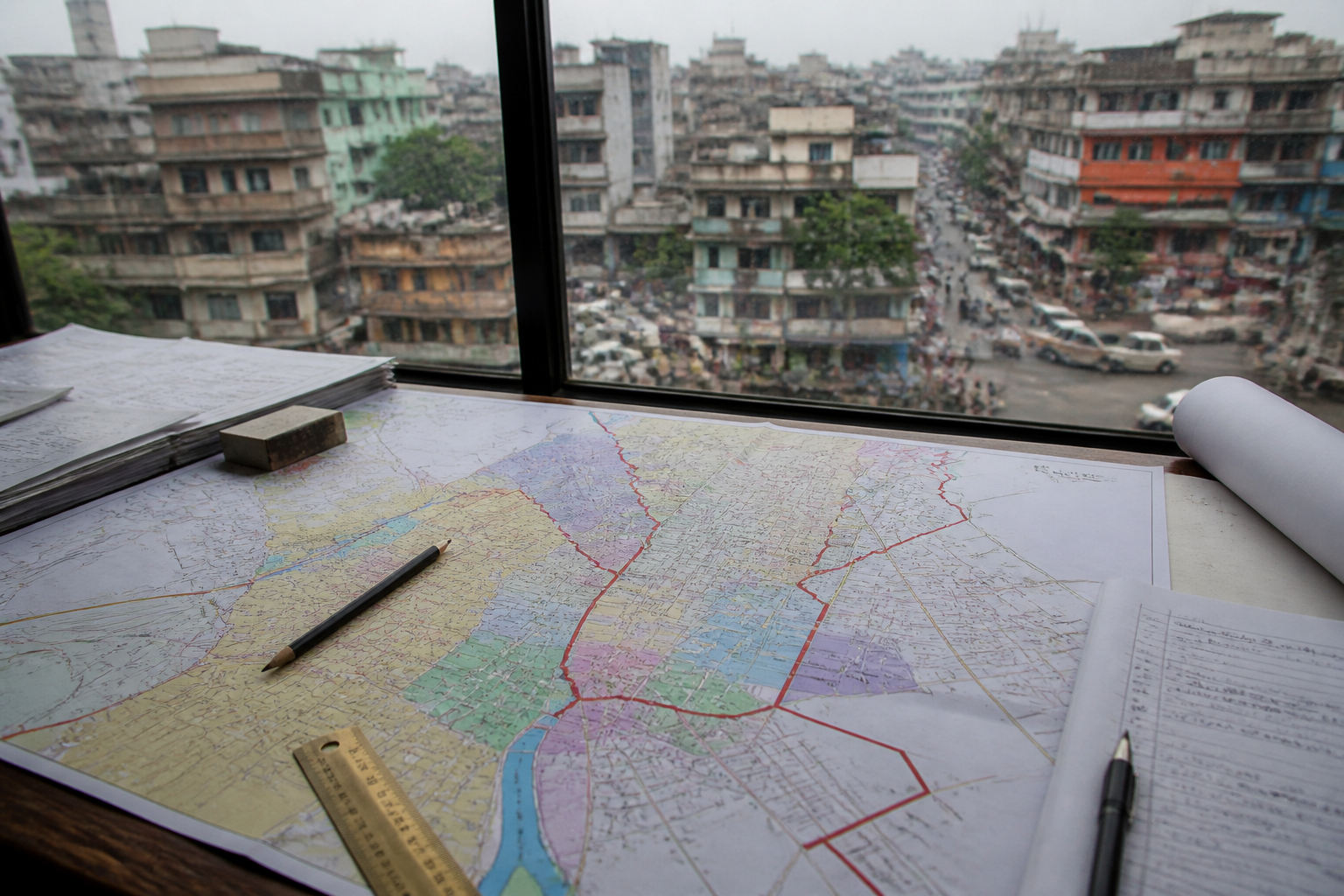
West Bengal’s ongoing civic delimitation process has come under political criticism after CPM state secretary Md Salim alleged that ward boundaries were being altered without uniform criteria, describing the exercise as “gerrymandering”.
Salim made the allegation at a news conference at the CPM’s Darjeeling district office in Siliguri on Monday. He said delimitation was a political, administrative and legal exercise but was being handled as a bureaucratic process without clear standards based on population, geographical location or other established yardsticks.
“Delimitation is a political, administrative and legal exercise. But here, it is being treated as a bureaucratic exercise. No basic criteria such as population, geographical location or other established yardsticks were being followed. What we are witnessing is just ‘gerrymandering’ in the name of delimitation,” Salim said.
The CPM leader did not directly name the BJP in his remarks but accused the state government of manipulating the exercise. He said officials had been asked to establish a proper yardstick before carrying out the changes. According to Salim, some areas were being divided even where the total number of wards was not being changed, and the process was not following basic criteria.
The delimitation debate comes alongside planned increases in the number of municipal wards in several civic bodies. In the Kolkata Municipal Corporation area, the number of wards has been increased to 209 from 144. In the Siliguri Municipal Corporation area, the proposed number will rise from 47 to 63, while the Durgapur Municipal Corporation will have 53 wards instead of 43. The Howrah Municipal Corporation area now has 68 wards, compared with 50 earlier.
Government representatives have said the increase is intended to improve governance and provide better civic services. The report also indicates that similar changes could be implemented in other municipal bodies across the state, although details of the areas and timelines were not provided.
Ward delimitation directly shapes the territorial units through which municipal elections are contested and civic services are administered. Changes to ward boundaries can affect electoral representation, the allocation of councillors and the administrative responsibility for neighbourhoods. Salim’s objection centres on the absence of publicly identified criteria for determining the boundaries, while the government’s stated rationale focuses on improving governance and service delivery.
Salim also linked the delimitation issue to broader political concerns, calling for “larger Left unity” to resist what he described as attempts to undermine India’s diversity and alter people’s ideological outlook. He was in the Darjeeling hills and plains for two days as part of an organisational programme and held meetings with CPM workers.
CPM sources said he asked party workers to reach out to residents to explain the party’s opposition to the delimitation policy in different civic bodies and to an ongoing eviction drive against street vendors. Salim criticised the eviction of vendors during the festive season and said the Left Front would protest against the move.
The immediate next step in the delimitation process is the establishment and application of the criteria that will determine ward boundaries and, where applicable, the revised number of wards in municipal bodies across West Bengal.
