


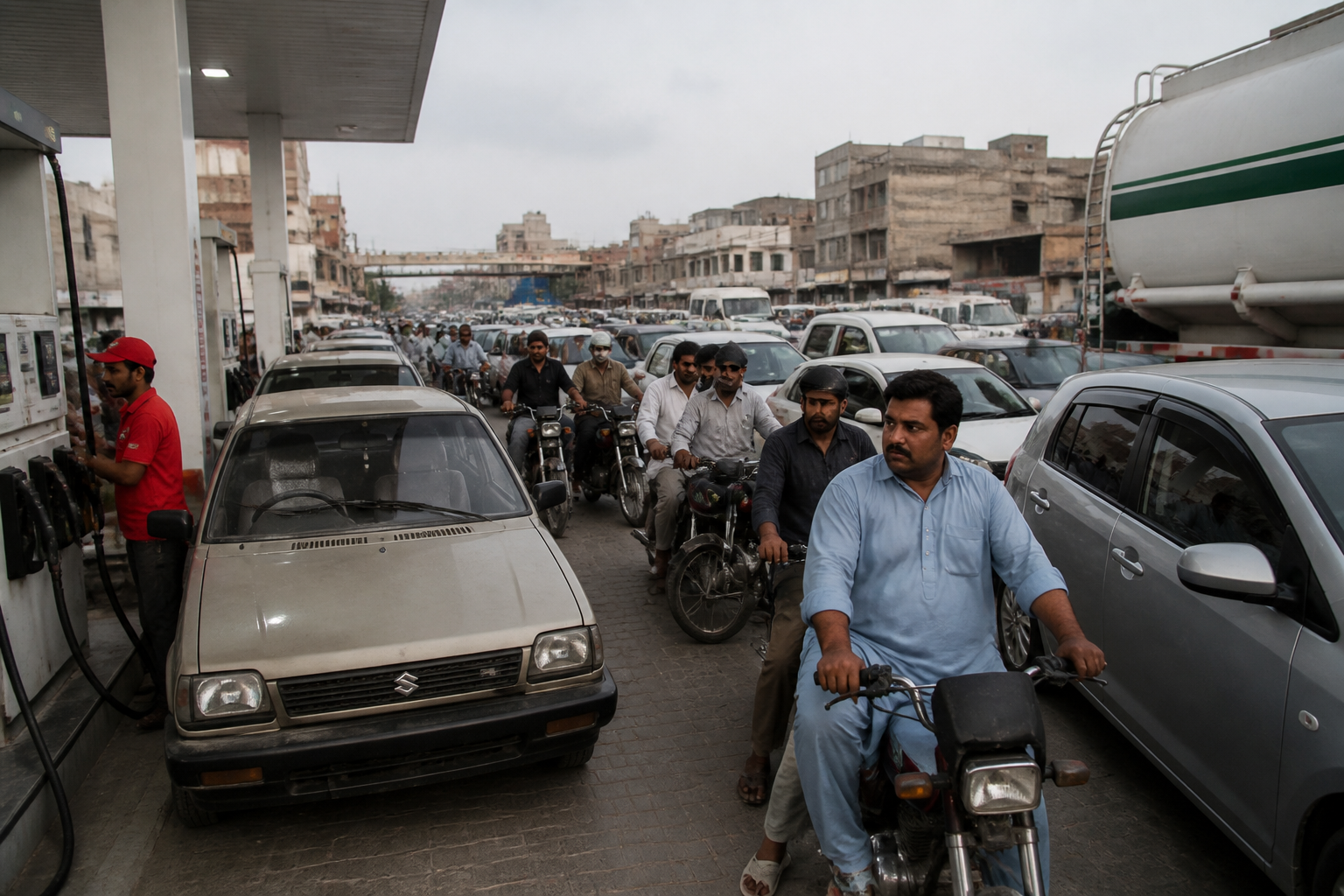
Pakistan has raised petrol and high-speed diesel prices from 16 September, with petrol reaching ₹384.34 per litre and diesel crossing ₹415.83 per litre, as the government reviews measures to reduce fuel consumption amid pressure on international oil prices and supplies.
The increase is ₹4.10 per litre for petrol and ₹6.41 per litre for high-speed diesel. The latest prices have intensified concerns over transport costs and fuel availability, while prompting the government to examine restrictions on working and market hours.
Prime Minister Shehbaz Sharif chaired a meeting to review options for reducing fuel use in the transport sector. According to the report, the discussion covered conservation measures in both government and private-sector operations. The review comes as Pakistan faces pressure linked to fuel supply and continuing tensions in West Asia.
The government is considering measures that could reduce the number of hours during which markets and commercial activity operate. Such steps are being discussed as a way to lower fuel consumption rather than as a response limited to retail fuel prices. The report does not say that a nationwide lockdown has been announced.
Pakistan has previously used restrictions on market timings to conserve fuel. Measures introduced in April required markets to close by 8 pm. With fuel prices now higher, similar measures are again being discussed under the description of a possible “smart lockdown”.
Information Minister Attaullah Tarar had also said that some steps in this direction could be considered in view of the prevailing conditions. The proposed approach, as described in the report, would focus on limiting activity and reducing travel demand while the government assesses the fuel situation.
For cities, any reduction in market or working hours would affect public transport operations, private vehicle use, commercial deliveries and the working patterns of retail and service-sector employees. Higher diesel prices could also increase operating costs for buses, goods vehicles and other transport services. The report, however, does not provide details of any proposed city-wise schedule, exemptions, enforcement mechanism or implementation date.
The immediate government response is therefore focused on reviewing fuel-saving options rather than announcing a confirmed lockdown. The next steps will depend on the decisions taken after the prime minister’s review and on whether authorities issue formal instructions covering markets, workplaces or transport operators.
