


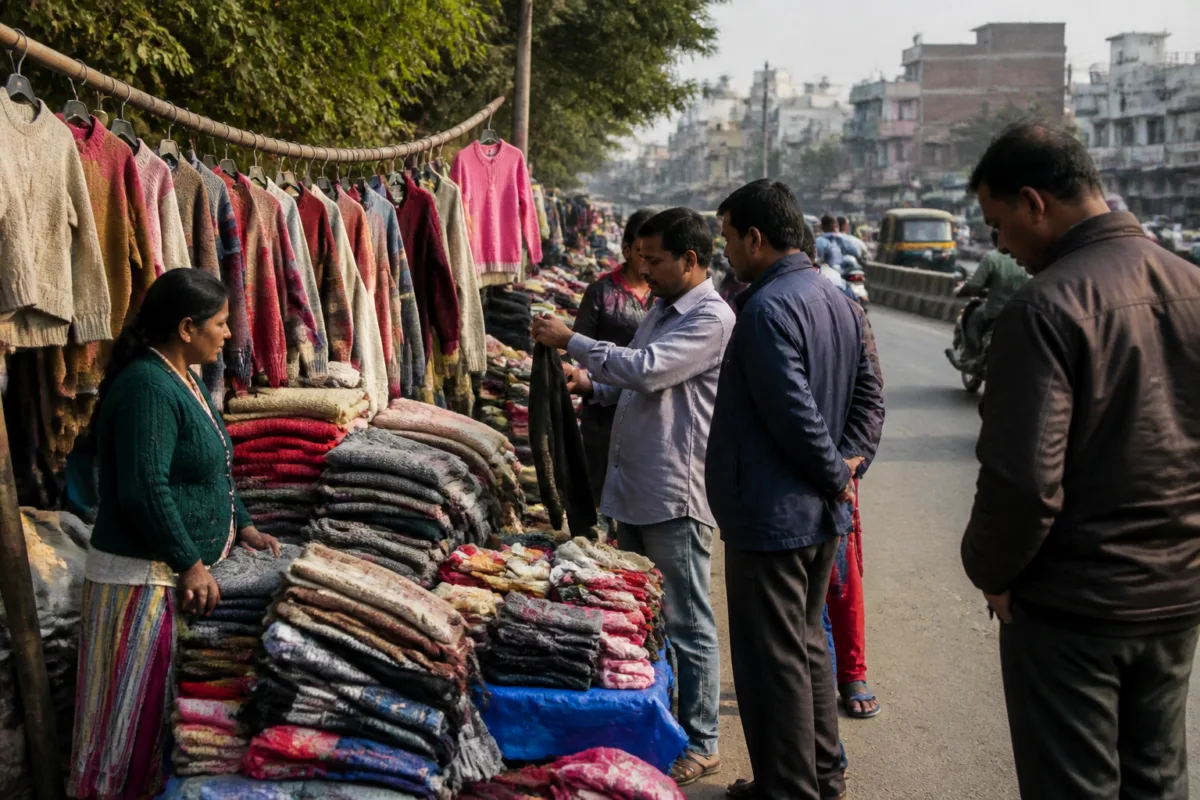
Seasonal woollen-garment traders from Rajasthan, Sikkim, Nepal and Tibet are reporting weaker sales in Warangal this winter, putting pressure on a short-term livelihood that supports families across multiple regions. The traders typically spend three to four months in the city before returning to their native places for agricultural work or garment-making.
The traders set up temporary stalls at busy junctions and other high-footfall locations across Warangal and Hanamkonda. Their selling points include Ashoka Junction, areas near the university and other major junctions where they expect residents to shop for sweaters, mufflers and other winter clothing.
The business is concentrated almost entirely in the winter season. Prahlad and Teju Goud, traders from Rajasthan, said they travel to Warangal every year during this period and leave their families in their native place. The seasonal trade is an important source of income for them, after which they return to their villages and take up agricultural work.
This year, however, the traders said customer visits have fallen and sales have not met expectations. They attributed the slowdown to higher-than-normal temperatures, which they linked to the El Niño effect. They recalled stronger business during November last year, when colder conditions increased demand for woollen clothing.
Tenzil and another woman trader from Tibet and Nepal also reported a decline in sales. They said they stay in Warangal for about four months to sell sweaters and other woollen garments, returning to their native regions during the rest of the year. During that period, they make and weave woollen clothes before travelling again for seasonal sales.
The traders’ presence illustrates how temporary urban commerce connects cities to wider livelihood networks. The stalls are not permanent shops, but they depend on public visibility, customer movement and access to busy locations. Their earnings are therefore tied both to the length of the winter season and to the number of people visiting the markets and junctions where they operate.
The traders said they paid taxes to the municipal corporation while operating their stalls. Despite meeting that municipal requirement, they said their sales had declined considerably compared with the previous year. The report does not specify the tax amount, the number of seasonal traders in the city or whether the municipal corporation has recorded a change in temporary-stall activity.
For traders who leave their families behind, a weaker season can affect income earned during the limited period in which the business operates. Those who travel with their wives and children also spend several months living and working in the city. The source report does not provide details of their accommodation, operating costs or profit margins.
The traders’ sales will remain closely connected to the winter months, after which they are expected to return to their native regions and resume agricultural work or woollen-garment production. The current season’s final earnings will depend on demand before the winter trade ends.

