


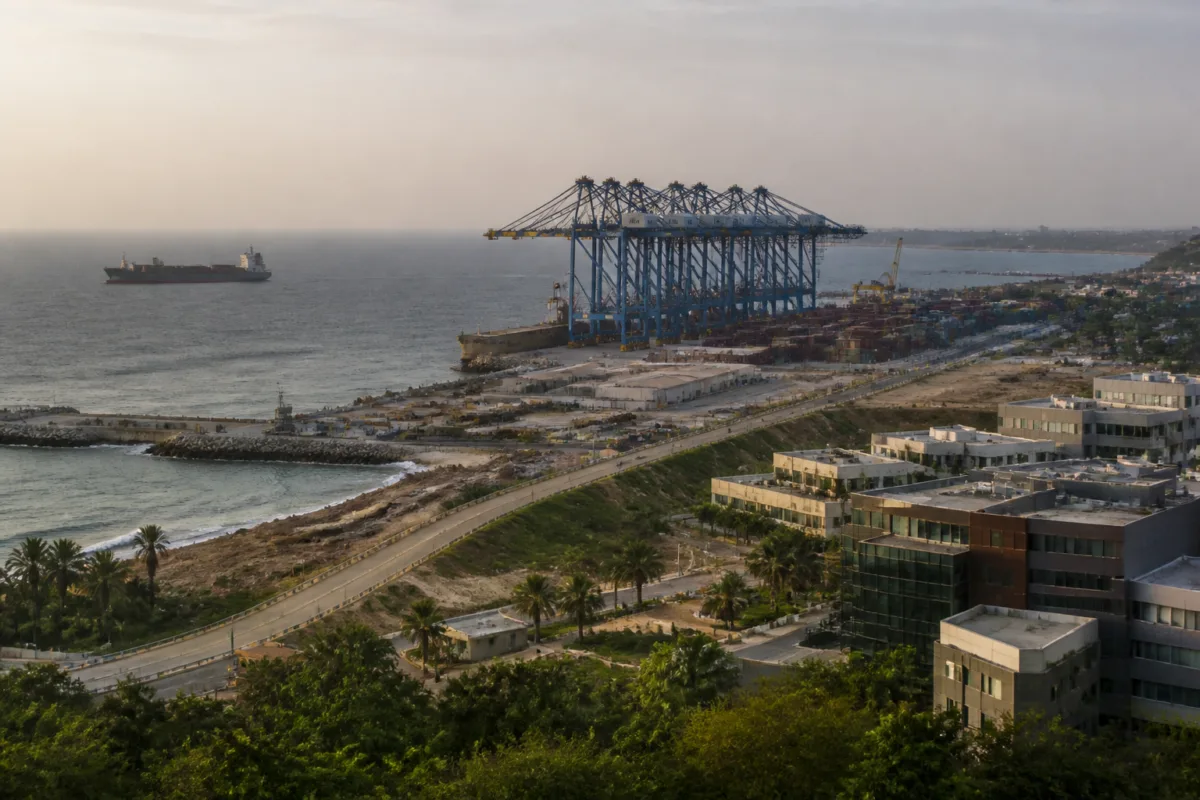
The next phase of expansion at Vizhinjam International Seaport could create new opportunities for technology companies and startups based at Technopark, particularly in maritime technology, logistics and industrial solutions, according to Sreekumar K Nair, CEO of Vizhinjam International Seaport Limited (VISL).
Speaking on Technopark’s official podcast series, ‘Aspire: Stories of Innovation’, Nair said closer collaboration between startups, information-technology companies and the port sector would be essential as businesses adopt more technology. He said such companies could develop solutions for maritime, logistics and industrial facilities.
Nair said Vizhinjam had adopted a Vessel Traffic Management System (VTMS) for the first time. He compared the system with an airport’s air-traffic control system and said it had been developed by a startup incubated at IIT Madras.
The port’s expansion, he added, could allow technology companies to connect with the manufacturing and industrial ecosystem expected to emerge over the next five to 10 years. His comments point to a possible shift in how the port’s urban and regional impact is assessed: not only through cargo-handling capacity, but also through the digital systems, industrial services and specialised companies that may develop around it.
Nair said a concerted effort by Technopark and the port sector would be needed to attract global shipping, logistics and maritime companies to establish technology centres in Thiruvananthapuram. The city’s economy has traditionally been driven by Technopark, the services sector and tourism, he said, while Vizhinjam could support a broader industrial ecosystem serving global markets.
That ecosystem would require more than port-side operations. Nair said Vizhinjam’s full potential would depend on integrated landside infrastructure, logistics and industries in surrounding areas, particularly across Kerala’s southern districts. This places connectivity and industrial-support infrastructure alongside the port itself as key parts of the proposed growth model.
The report does not provide details of the expansion’s scope, investment, implementation schedule or confirmed technology-company commitments. Those details will determine whether the projected opportunities translate into established employment, industrial activity and new urban infrastructure. For now, the stated opportunity is a strategic proposition from VISL’s leadership: use the port’s location and maritime systems to connect Thiruvananthapuram’s existing technology base with a wider logistics and industrial economy.

