


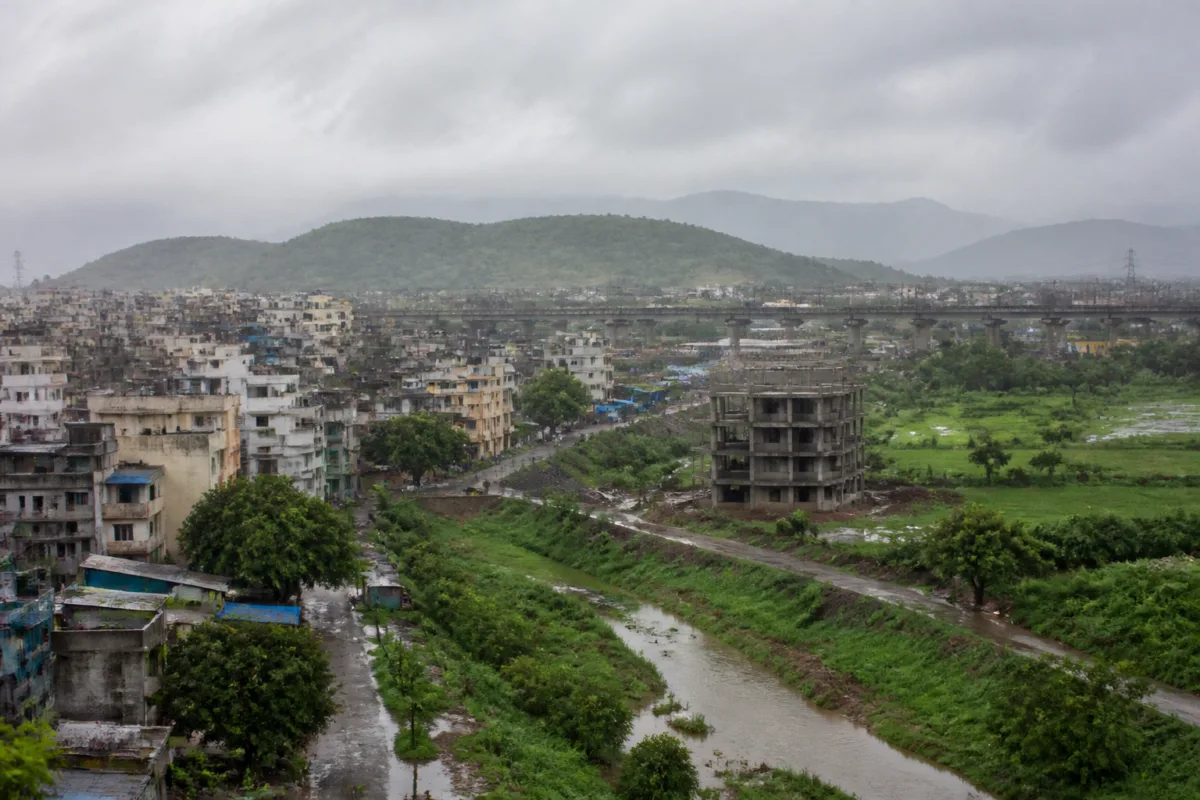
The proposed township around Virar’s upcoming Mumbai-Ahmedabad bullet train station would reorganise 464.21 hectares across More, Tulinj, Gokhivare, Bilalpada, Dhaniv and Virar, according to a report by the Free Press Journal citing Vasai-Virar City Municipal Corporation (VVCMC) officials.
The civic body’s draft Local Area Plan (LAP), prepared with assistance from the Japan International Cooperation Agency (JICA), has been approved by the VVCMC general body and published to invite suggestions and objections from residents, the report said. It stated that the proposal was passed at a special general body meeting on November 11, 2026.
The plan is intended to replace what officials describe as haphazard growth around the planned station with a coordinated mix of housing, commercial uses, transport infrastructure, open areas and utilities. VVCMC Commissioner Prithviraj BP was quoted as confirming the draft plan’s approval and publication.
Housing would occupy the largest share of the planning area, covering 176.85 hectares, or 38.10 per cent. Existing forest land covering 148 hectares, or 31.88 per cent, is proposed to be retained as green space. Transport infrastructure would account for 59.36 hectares, or 12.79 per cent, while commercial activities would receive 38.20 hectares, or 8.23 per cent.
The remaining land would include recreational spaces, water bodies, public and semi-public facilities and utilities. The distribution places residential development and retained greenery at the centre of the proposed township, while reserving a smaller but significant area for transport and commercial functions.
A proposed Automatic Guideway Transit system, similar to the pod taxi network proposed for Bandra-Kurla Complex, is listed as a key mobility feature. According to the report, the system is expected to improve connections around the Virar station and link with the proposed Virar-Mira Road Metro corridor. The source does not provide a construction schedule, funding structure or confirmed implementing agency for the proposed system.
The layout also includes a Central Green Spine intended to serve as an arrival space for high-speed rail passengers and a public area for residents. The plan draws on Sapporo as an urban reference, with the stated aim of integrating development with natural landscapes and retaining greenery around two hills in the area.
Water management is another stated component. Six-metre-wide green buffers have been proposed along nallahs to protect natural drainage channels and support stormwater management. The report said officials had stressed the need for adequate drainage infrastructure because of the region’s heavy rainfall.
The planning area contains existing illegal buildings and chawls. VVCMC officials told the publication that eligible occupants would be accommodated through cluster redevelopment schemes. Existing religious establishments, including temples and mosques, and reservations under the earlier Development Plan would be retained wherever applicable, according to the report.
The civic body has estimated the township’s potential population using the maximum permissible Floor Space Index. The calculation assumes an average residential dwelling size of 93 square metres and commercial occupancy of 15 square metres per person, while applying a 70 per cent consumption factor to account for likely utilisation of the development potential.
The report also said, citing sources, that the civic body had signed expressions of interest with major developers for the project. It did not identify the developers or provide details of the proposed development agreements.
The Virar plan forms part of a wider effort to create planned urban centres around stations on the Mumbai-Ahmedabad High Speed Rail corridor. Maharashtra’s four stations are at Bandra-Kurla Complex, Thane, Virar and Boisar. The Mumbai Metropolitan Region Development Authority is planning townships around BKC and Boisar, while the Thane Municipal Corporation is expected to oversee development around the Thane station, which the report described as predominantly commercial.
For Virar, the immediate public-interest issue is the transition from a draft planning framework to implementation. The published LAP gives residents an opportunity to submit suggestions and objections, while questions concerning redevelopment eligibility, drainage capacity, transport delivery, forest-land protection and the details of private-sector participation will have to be addressed through the planning and approval process. The report does not provide a final implementation timeline for the township.

