


The Vijayawada railway division of South Coast Railway has launched the Swachhata Hi Seva 2026 campaign, combining cleanliness programmes, waste-segregation awareness and sanitation education at railway offices, stations and operational facilities across the division.
The campaign began with a Swachhata Pledge administered by Divisional Railway Manager Mohit Sonakiya at the divisional headquarters. Railway employees, Safai Mitras and other stakeholders participated in the pledge and committed themselves to maintaining cleanliness in railway stations, trains and public spaces.
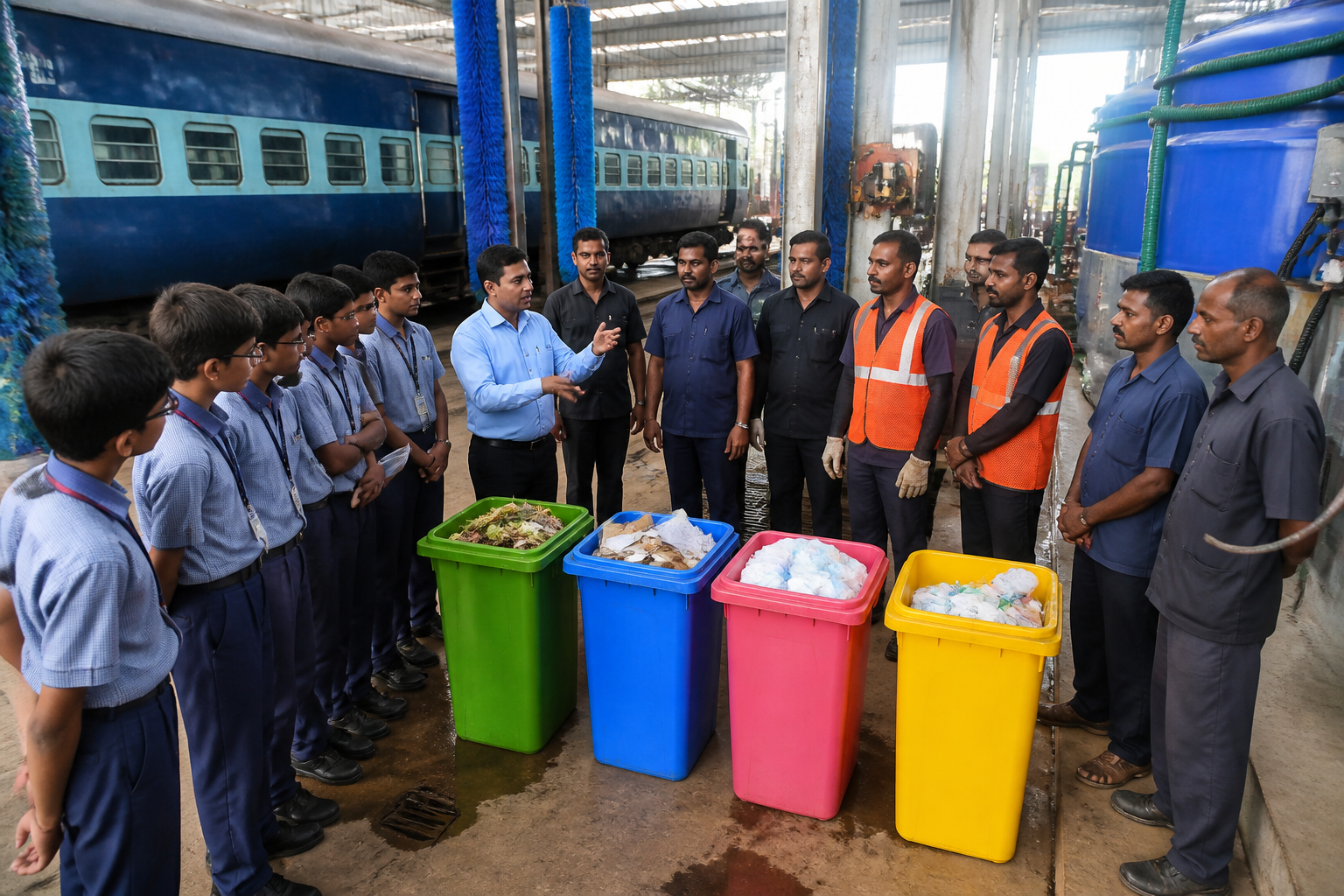
A central component of the campaign is a four-way waste segregation drive aimed at passengers, railway employees, vendors and service providers. Participants were educated to separate waste at source into wet, dry, sanitary and special-care categories for scientific disposal.
The initiative places waste segregation at the point where waste is generated, rather than treating railway premises only as sites for collection and removal. The railway division said the awareness programme covers the different groups that use or operate within stations, including passengers and commercial service providers.
The division also organised a Swachhata Gyan Yatra for school students. The students visited the Vijayawada and Narasapur coaching depots and the Electric Loco Shed in Vijayawada, where they were shown waste-management facilities, coach-washing lines and sanitation infrastructure.
The educational visit included demonstrations of bio-toilets and other sanitation facilities linked to railway operations. By taking students into operational railway premises, the campaign connected public cleanliness with the systems used to wash coaches, manage waste and maintain passenger infrastructure.
Railway stations generate waste through passenger movement, food and retail activity, train operations and routine maintenance. The campaign’s focus on passengers, vendors, employees and service providers reflects the division’s stated emphasis on participation by multiple users of the railway environment.
Sonakiya said cleanliness was a collective responsibility and required the participation of employees, passengers and other stakeholders. He appealed to people to make cleanliness a daily habit.
The Vijayawada division has not announced specific targets for the quantity of waste to be segregated, the number of stations covered or the schedule for measuring the campaign’s results in the information available. The immediate programme consists of awareness activities, the pledge, the student visit and education on source-level segregation.
The campaign is being implemented across railway offices and stations in the Vijayawada division, with the Swachhata Gyan Yatra extending the programme to the Narasapur coaching depot and the Electric Loco Shed in Vijayawada.
