


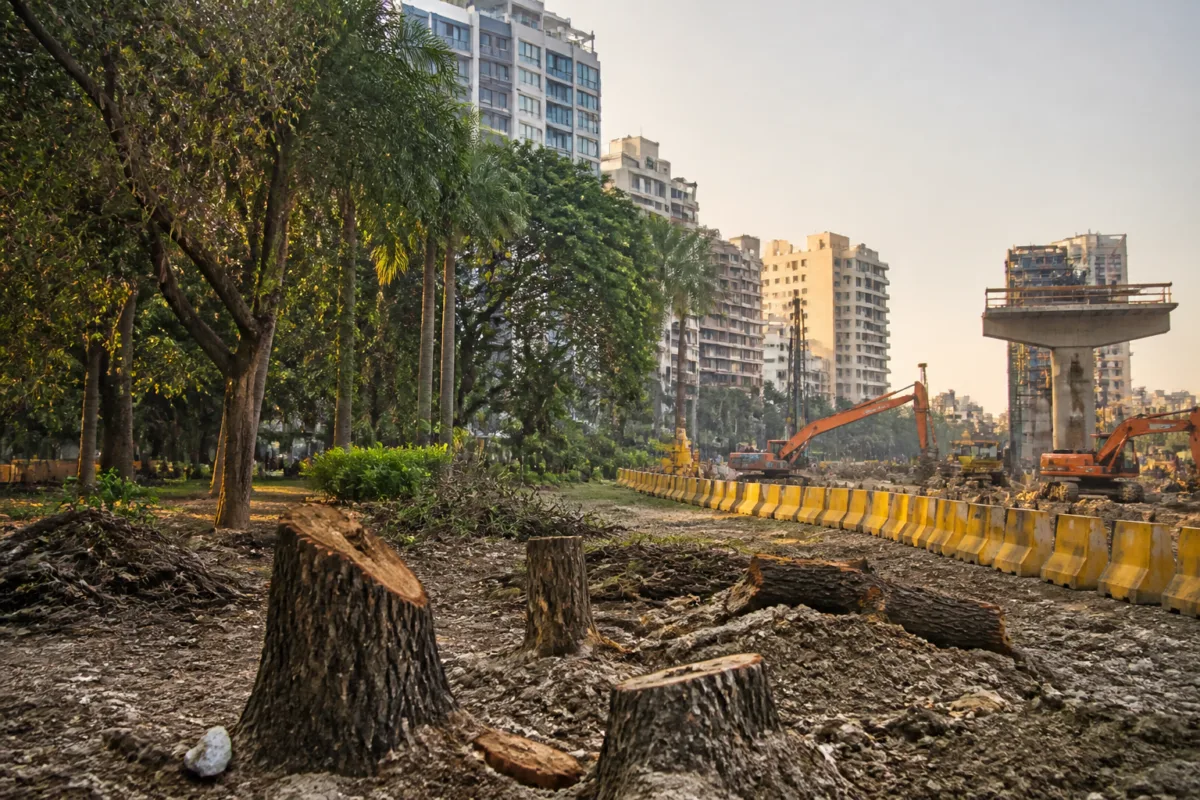
Forty-four mature trees have been felled within a week at Nana Nani Park in Versova, Mumbai, bringing renewed scrutiny to the alignment and environmental impact of the Mumbai Coastal Road (North) project connecting Versova and Dahisar.
Residents protested against the felling and questioned whether the proposed transplantation plan would be viable. Congress group leader in the Brihanmumbai Municipal Corporation (BMC), Ashraf Azmi, visited the park on Sunday and said he would raise the issue at the upcoming BMC Standing Committee meeting.
According to the project details cited in the report, around 89 trees at Nana Nani Park will be affected. Forty-four have already been felled, while eight have been saved and another 30 are slated for transplantation. A second phase of work scheduled for next year proposes the felling of 37 more trees and transplantation of a further 18.
The figures indicate that the park is not only facing an immediate loss of mature trees but may also remain under pressure as the next phase advances. Residents asked whether alternative planning could have reduced the impact on the green patch and sought clarity on the proposed bridge alignment.
Azmi questioned the choice of a landward alignment for the Coastal Road, saying a route closer to the Arabian Sea could potentially reduce damage to existing green cover. He also said he would seek information from civic officials on the status of transplantation and why the trees were felled late at night.
The dispute places two public objectives in direct focus: expanding regional road connectivity and protecting established urban vegetation. The report does not provide an official response from the BMC or the Coastal Road project authorities on the alignment, the tree permissions, the transplantation method or the expected survival of the transplanted trees.
Azmi said he would press the BMC to ensure that transplanted trees survive and explore relocating them to suitable sites in the neighbouring area rather than distant locations. The proposed discussion at the Standing Committee could therefore establish whether the project’s tree-management plan, alignment choices and next phase have been reviewed in response to residents’ concerns.
Until those details are made public, the central questions for residents remain whether the remaining trees can be protected, where the transplanted trees will be placed and how their survival will be monitored. The next phase’s proposed tree works make those answers relevant beyond the immediate protest at Nana Nani Park.

