


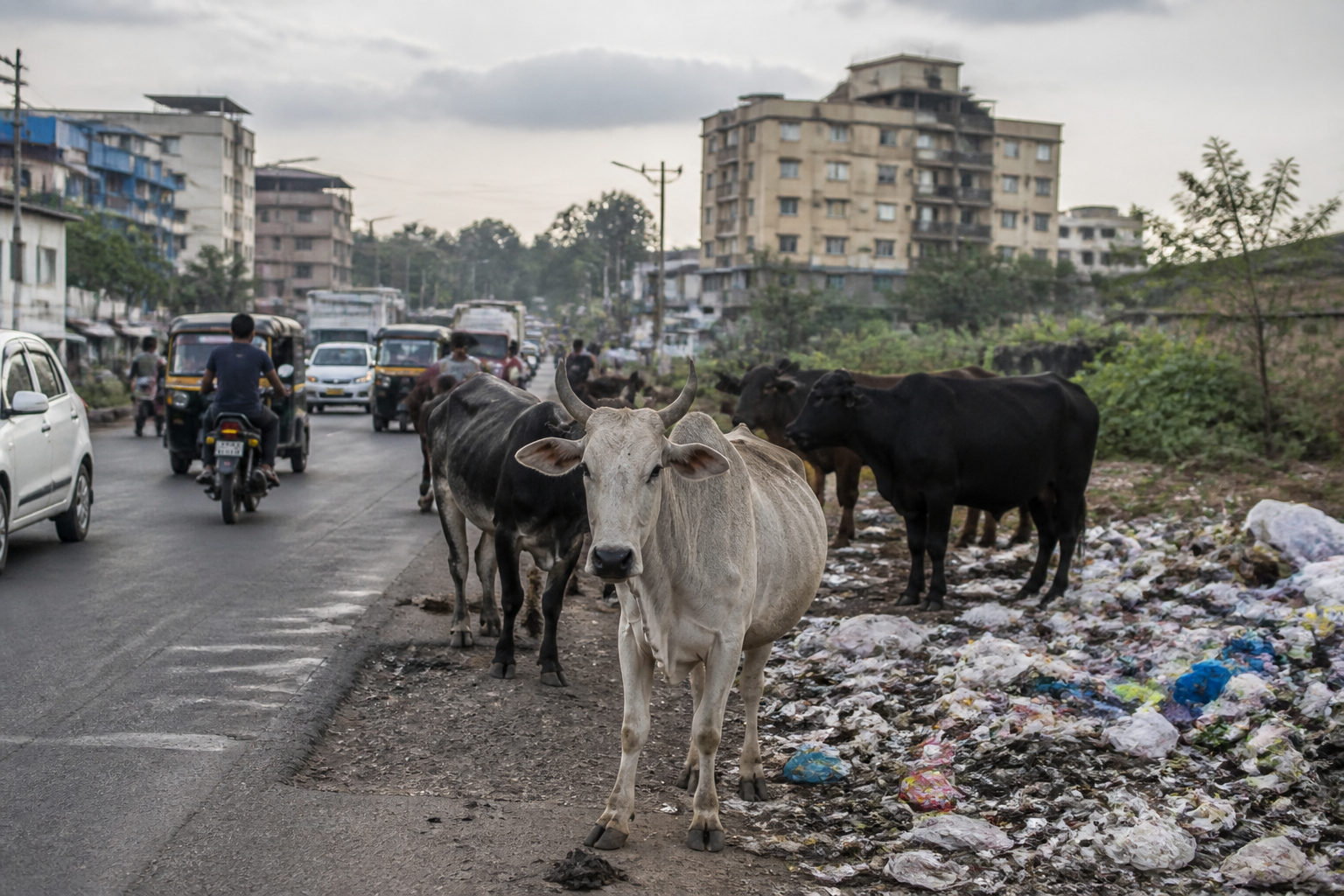
Vasai-Virar Municipal Corporation will seek help from gaushalas and animal welfare organisations to control the movement of stray cattle, while taking penal action against owners who release cattle on roads, according to a report by Loksatta – Vasai-Virar. The measures were discussed at the civic body’s general body meeting held on Wednesday after corporators raised concerns about the growing risks faced by residents.
The reported plan includes shifting stray cattle to gaushalas and providing a subsidy of Rs 50 for the arrangement. The civic administration is also expected to act against owners who leave cattle unattended in public spaces. The report does not specify the number of shelters involved, the capacity available or the detailed procedure for identifying and penalising owners.
The problem is linked to the presence of large cattle sheds in several parts of Vasai-Virar and to households in the city’s rural areas that continue to keep cattle. According to the report, some owners release their animals on grazing land, open plots and roads instead of keeping them inside cattle sheds.
The municipal corporation currently does not have its own cattle pound, making it difficult to contain cows and buffaloes found moving freely through the city. As a result, residents face sanitation problems and traffic disruptions, while cattle suddenly entering the path of vehicles can cause serious accidents. Such incidents can injure both motorists and animals, the report said.
Corporator Pramila Patil demanded that the civic body construct cattle pounds on vacant plots owned by the municipality. Such facilities would give the administration a designated location to hold animals found on roads and could also support action against owners who repeatedly allow them to roam in public areas.
The meeting also raised concerns about the disposal of dead cattle. Incidents of cattle dying after consuming plastic waste have reportedly occurred along the stretch from Sopara to Santoshbhuvan. The municipal corporation does not have an adequate system for disposing of dead animals, creating further sanitation and public health difficulties in affected areas.
The reported measures therefore cover two separate municipal responsibilities: preventing cattle from obstructing roads and managing animals that are injured, impounded or found dead. Their effectiveness will depend on the availability of gaushala space, the enforcement process, arrangements for animal care and the creation of a formal disposal system. The civic body’s next steps are expected to include coordination with gaushalas and animal welfare organisations and action against cattle owners who release animals on public roads.
