


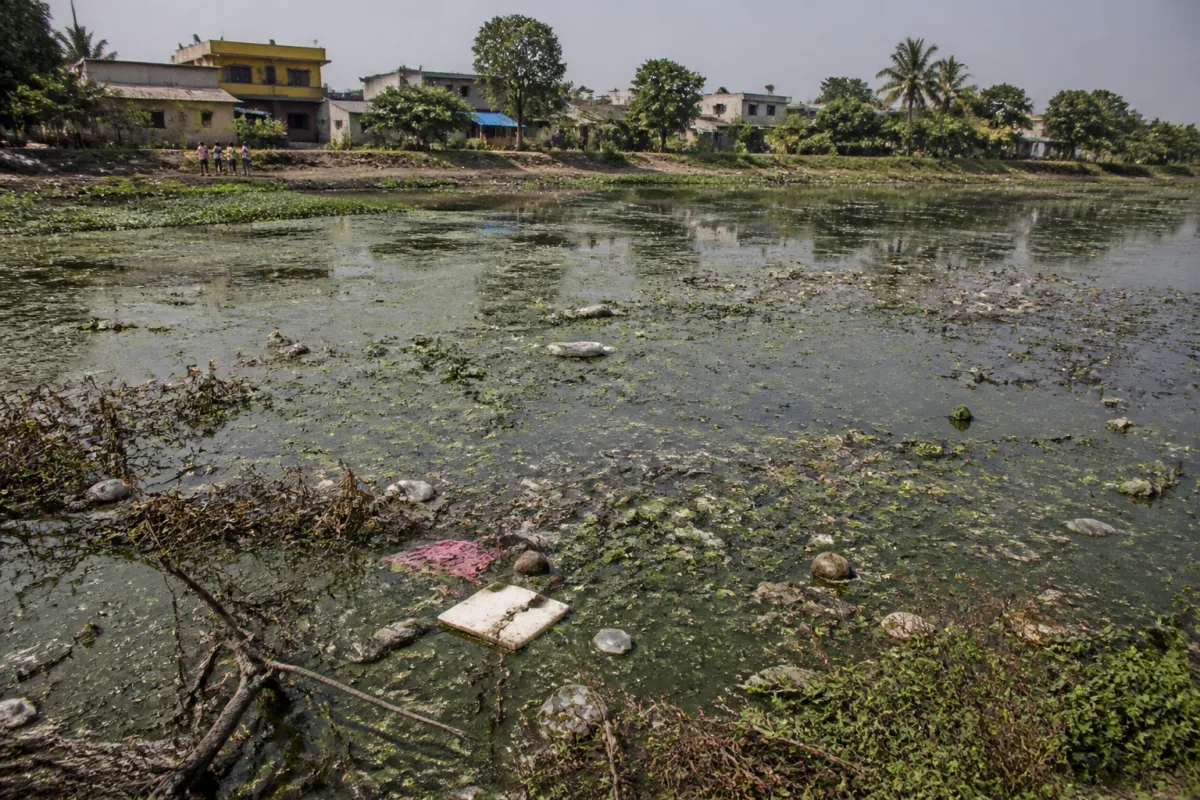
Vasai-Virar’s lakes are becoming polluted at a time when the city may need every available water resource. A report by Loksatta – Vasai-Virar says that many of the city’s more than 100 old, historic and natural lakes are covered by waste, aquatic weeds, silt and algae, raising questions about how the civic administration maintains water assets after redevelopment work is completed.
The immediate concern is not only the appearance or smell of individual lakes. The reported condition points to a wider urban management problem: civic projects can create visible improvements, but their public value depends on routine cleaning, removal of fallen trees, control of aquatic growth and protection from waste dumping. Without that continuing work, restoration becomes a one-time intervention rather than a functioning water-management programme.
The report links the deterioration to a difficult water context. It says the influence of El Niño has contributed to a prolonged delay in rainfall, while rising heat and lower precipitation have reduced water storage in dams. The article presents these conditions as a warning for the region, although it does not provide official reservoir figures, rainfall data or a municipal assessment of the city’s water position. What it does establish is the contradiction between potential water stress and the neglect of traditional water bodies.
Vasai-Virar has more than 100 old, historic and naturally attractive lakes, according to the report. The Vasai-Virar City Municipal Corporation had undertaken lake rejuvenation and beautification in phases. However, once the development work was completed, regular cleaning and maintenance appear to have received less attention. The reported accumulation of religious offerings, fallen trees, silt, algae and other waste shows how quickly a lake can lose functionality when post-project upkeep is not sustained.
This distinction between capital work and maintenance is central to the story. Rejuvenation and beautification typically produce a defined project with a beginning and an end. Cleaning and ecological management are recurring responsibilities. They require schedules, field inspections, removal systems, waste handling arrangements and accountability for missed work. The Loksatta report does not state which municipal department is responsible for each lake, what maintenance contracts exist or how often inspections are conducted. Those gaps are themselves important because they make it difficult for residents to know who is responsible when a restored or publicly valued water body deteriorates.
The reported problem is spread across several parts of the city. Lakes identified as being in poor condition include those at Papdi, Sandor, Kaman, Chulne, Bhुईगाव, Gokhivere and Achole in Vasai, as well as the lake opposite the Buddhist stupa in Nalasopara. The list suggests that the issue is not confined to one neglected site. It involves water bodies across different settlements and therefore raises a city-level question about whether lake maintenance is being managed as a system or handled only after complaints and visible deterioration.
Chulne is cited as a particularly clear example. The report says that large quantities of waste and aquatic weeds have accumulated in the lake. It warns that continued lack of cleaning could cause foul odour and make the surrounding area unsanitary. The concern is also linked to local use: citizen Jack Gomes told Loksatta that the lake should be cleaned immediately because villagers and animals use it against the backdrop of possible drought.
That reported use makes the condition of the lake a public-health and access issue, not merely an environmental one. When a water body is used by people or animals, waste, algae and decomposing organic matter can affect the immediate surroundings and reduce the usability of the resource. The supplied report does not establish whether the lake water is formally tested, whether it is classified as potable or whether any health advisory has been issued. It does, however, identify a direct relationship between the lake’s physical condition and the needs of nearby residents and livestock.
The pollution described is also a warning about the limits of treating lakes as beautification sites. A lake may receive pathways, landscaping or other visible improvements and still remain vulnerable to waste, invasive aquatic growth, siltation and fallen vegetation. If the water body is not monitored after the project is completed, the original investment can lose its environmental and civic value. The report’s account indicates that this is what residents believe has happened in several locations, although the municipal administration’s response is not included in the supplied material.
The institutional question is therefore larger than whether a particular lake requires desilting. The civic body must connect lake restoration with routine solid-waste control, removal of organic debris, stormwater management and protection of the lake edge. The source report does not provide the municipal budget, tender details or operating procedures for these activities, so the financial and administrative structure cannot be independently assessed from the available evidence. But the reported conditions show why a project-based approach is insufficient for urban water bodies that continue to receive waste and natural debris after construction work ends.
The report also highlights the difference between a lake’s visual value and its functional value. Vasai-Virar’s lakes are described as historic and naturally scenic, which gives them cultural and public-space importance. At the same time, the concern about use by villagers and animals shows that at least some lakes have a practical role in local life. These roles can overlap, but neither can be protected by beautification alone. A visually improved lake that later becomes covered with waste and weeds remains a failed public asset, even if the earlier construction work was completed.
The available evidence does not establish how many of the city’s more than 100 lakes are polluted, how much waste has accumulated, whether water quality has changed over time or how much municipal spending has been made on rejuvenation. It also does not show whether the reported deterioration is seasonal or long-term. These are essential data points for judging the scale of the problem. Their absence means that the present account should be read as a documented report of conditions at named locations, rather than as a complete assessment of every lake in Vasai-Virar.
Even with those limitations, the pattern described is significant. A city facing concerns over heat, delayed rainfall and potentially reduced water availability cannot afford to view traditional water bodies only as landscape features. Their condition affects environmental resilience, local sanitation and the credibility of civic investment. At the same time, the report does not claim that these lakes alone can resolve a drought or replace formal water-supply systems. Their value lies in their role as local water assets and public spaces whose condition becomes more important when water stress increases.
The next administrative step should be visible in the form of an official response and a maintenance plan for the identified lakes. The supplied report does not record a response from the Vasai-Virar City Municipal Corporation, nor does it specify deadlines for cleaning Papdi, Sandor, Kaman, Chulne, Bhुईगाव, Gokhivere, Achole or the Nalasopara lake. Details on responsibility, inspection frequency, waste removal and water-quality testing would allow residents to distinguish between a temporary cleanup and a sustained lake-management system.
The evidence currently confirms a maintenance failure reported across several Vasai-Virar lakes during a period of drought concern. It does not yet establish the full administrative cause, the cost of corrective work or the condition of every water body in the city. Those questions will determine whether the civic response treats the lakes as recurring infrastructure requiring continuing care, or as completed beautification projects that can be left without regular supervision.

