


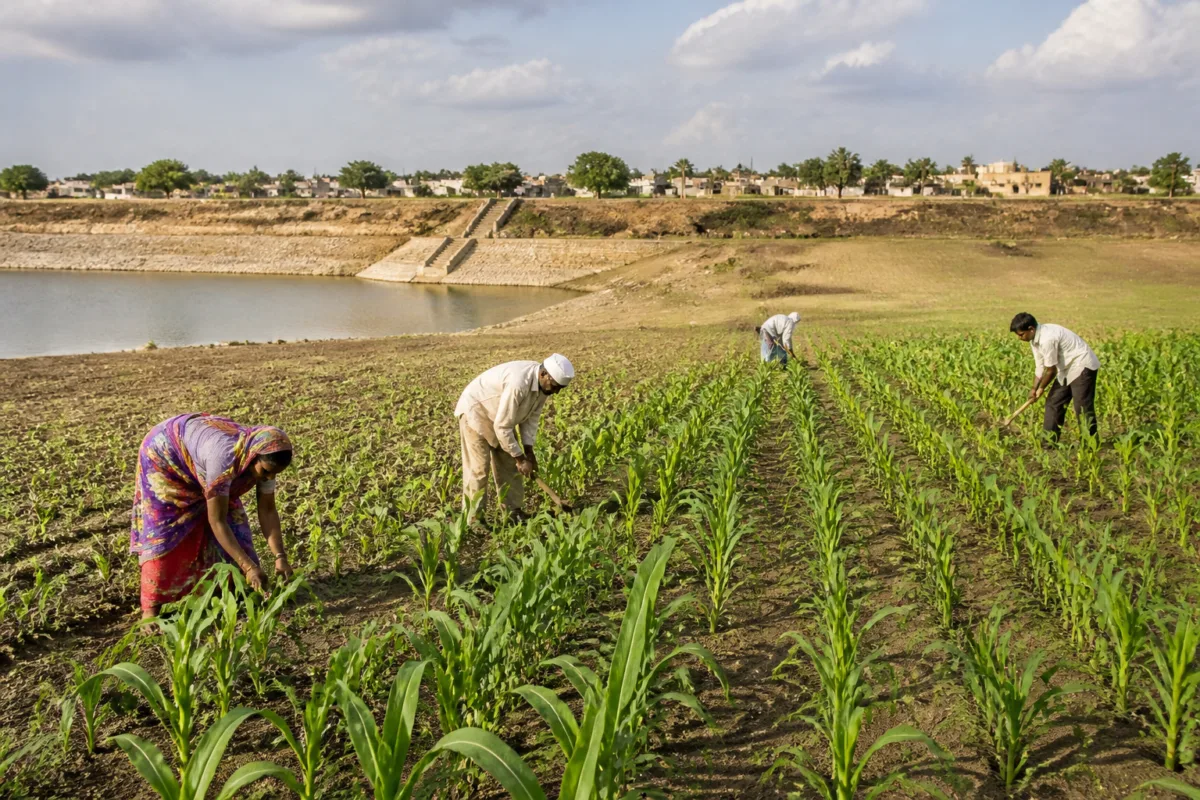
Maharashtra has allowed farmers and livestock owners to grow fodder on cultivable land exposed as water levels fall in reservoirs and tanks under the Soil and Water Conservation Department, in a move aimed at supporting livestock in drought-hit areas. The land will be leased for fodder cultivation only and must be returned to the department by May 31, 2027.
The decision follows a reported rainfall deficit during the 2026 kharif season and other factors that have led the state to declare 304 talukas drought-affected. The government has introduced the measure to improve fodder availability for livestock in these areas while placing restrictions on cultivation and water use.
The land covered by the decision includes areas exposed in minor irrigation tanks, storage tanks, percolation tanks, village tanks, former Malguzari tanks and Kolhapur-type weirs after their water levels decline. Land in reservoirs primarily reserved for drinking water will receive priority for water protection. Areas where repairs, desilting or restoration work is under way cannot be allotted for cultivation.
A joint survey by officials from the Soil and Water Conservation Department, talathis, agricultural assistants and livestock development officers will determine the cultivable exposed area. A report on the available land must be prepared and submitted to the district-level committee within 15 days of the survey.
The rules permit short-duration fodder crops such as maize, sorghum, pearl millet and oats. Maize and sorghum will receive preference where the produce is intended for silage. Sugarcane, fruit crops and other commercial crops are prohibited on the allotted land.
Cultivation will be restricted to a depth of 20 centimetres. Excavation of soil, silt, gravel or sand is prohibited, and beneficiaries cannot construct wells, farm ponds, permanent structures, fences or sheds on the land. A specified safety distance must also be maintained around dam walls, spillways and water-lifting infrastructure.
Protected irrigation will be permitted only when additional water remains available after reservations for drinking water and livestock needs have been secured. Drip and sprinkler irrigation will be prioritised. Water cannot be lifted for irrigation once the reservoir level reaches dead storage or the level reserved for drinking water.
A district-level committee chaired by the district collector will oversee land allotment, beneficiary selection and monitoring. The chief executive officer of the zilla parishad will serve as co-chairperson. District agriculture officials, executive engineers from the Water Resources and Soil and Water Conservation departments, and animal husbandry officials will be members of the committee.
Village-wise lists of available land will be sent to tehsildars. Public notices inviting applications must then be displayed at the village chavdi, gram panchayat and tehsil office, with applicants receiving at least 15 days to apply. Talathis and mandal officers will scrutinise residence details, claims of being project-affected and the size of the applicant family’s landholding. After the final list is published, allotments may be made through a draw where necessary.
The allotted plots must be cleared of crops and returned to the department by May 31, 2027. The restrictions are intended to keep temporary fodder cultivation from affecting drinking-water security, reservoir maintenance or future restoration work.

