


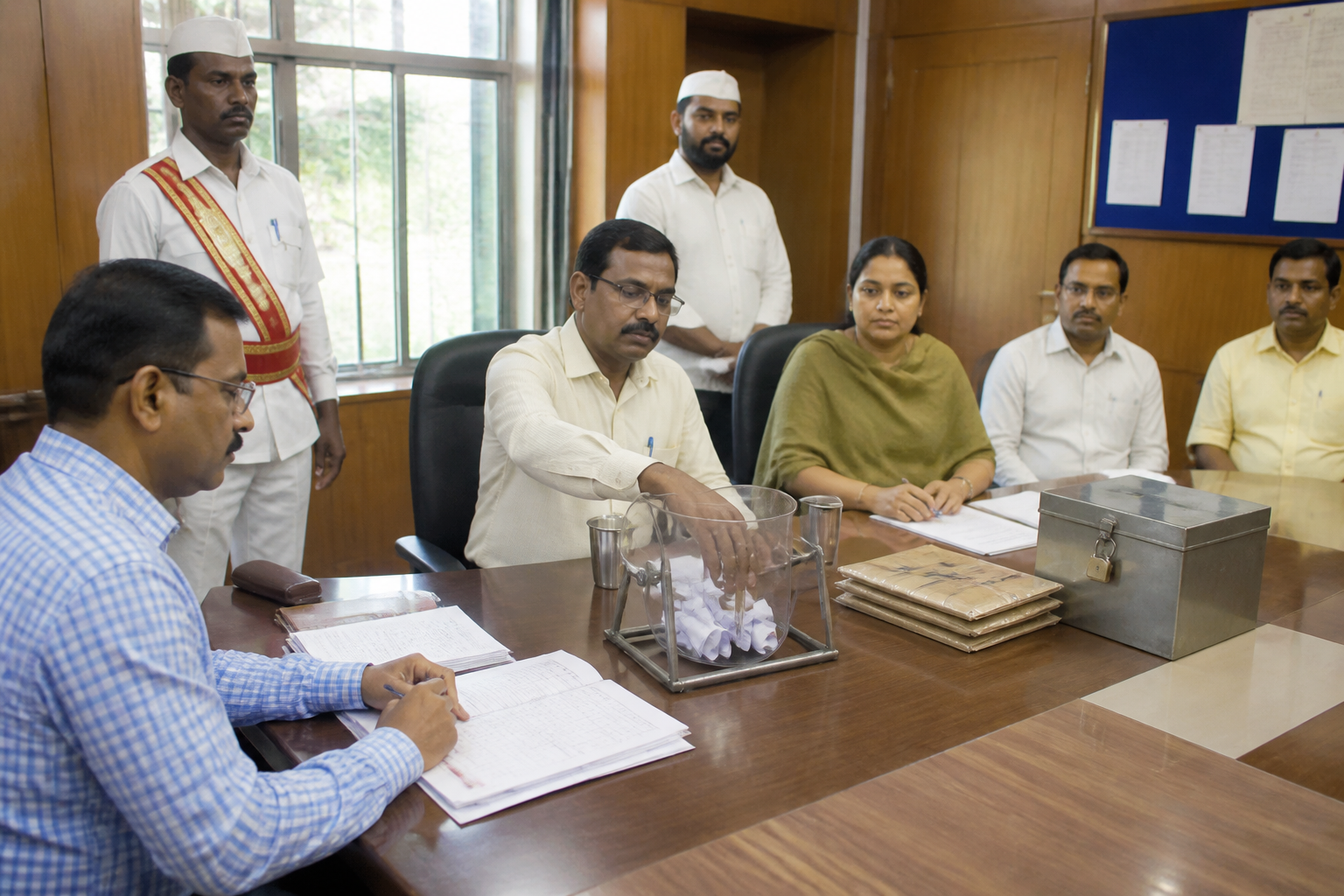
Vasai Kotwal recruitment has resumed after the reservation draw for revenue-servant posts was cancelled because of technical errors, with a fresh draw held at the Vasai tehsildar office on October 1. The process covers 31 vacant posts across PESA and non-PESA areas of Vasai taluka.
The earlier reservation draw had been conducted on September 28 but was later cancelled after officials identified technical errors. The new draw was held in the conference hall of the Vasai tehsildar’s office under the chairmanship of Tehsildar Deepak Gaikwad.
Assistant Administrative Officer of the Panchayat Samiti Yuvraj Shivgan, Circle Officer Kishor Deshmukh and other revenue officials attended the programme, according to the report. The fresh exercise has allowed the recruitment process to move forward again after the cancellation of the earlier draw.
Vasai taluka has 38 sanctioned revenue-servant, or Kotwal, posts. Seven of these posts have already been filled, leaving 31 vacancies to be covered through the current process. The reservation allocation was conducted according to the applicable government decision and divided between PESA and non-PESA areas.
Four of the vacant posts fall in PESA areas, while the remaining 27 are in non-PESA areas. In the PESA allocation, Kaman and Parol villages, or sajas, were designated for the Scheduled Tribe category, while Khanivade was classified as unreserved. One post in the PESA area had already been filled.
The 27 non-PESA posts were distributed among several reservation categories. Gokhivre was allocated to the Scheduled Tribe category; Pelhar to Vimukta Jati-A; Bolinj to Nomadic Tribe-B; Kaular to Nomadic Tribe-C; Vatar to Nomadic Tribe-D; and Dhovli to the Special Backward Class category.
Three sajas—Girij, Chandansar and Naringi—were reserved for the Economically Weaker Section. Virar 1, Kofrad and Waliv were allocated to the Socially and Educationally Backward Class category. Six sajas—Achole, Navale, Vadavali, Sasunavghar, Diwanman and Manikpur—were included in the Other Backward Class allocation.
The reservation draw is an important procedural stage because it determines the category-wise distribution of the vacancies before recruitment advances. In this case, the fresh exercise also resets the process after the September 28 draw was cancelled, making the revised allocation the basis for the 31 vacant posts.
The report does not specify the subsequent application schedule, examination details or appointment timeline. The next recruitment steps will therefore depend on notices issued by the Vasai tehsildar’s office and the revenue administration after the new reservation allocation.
