


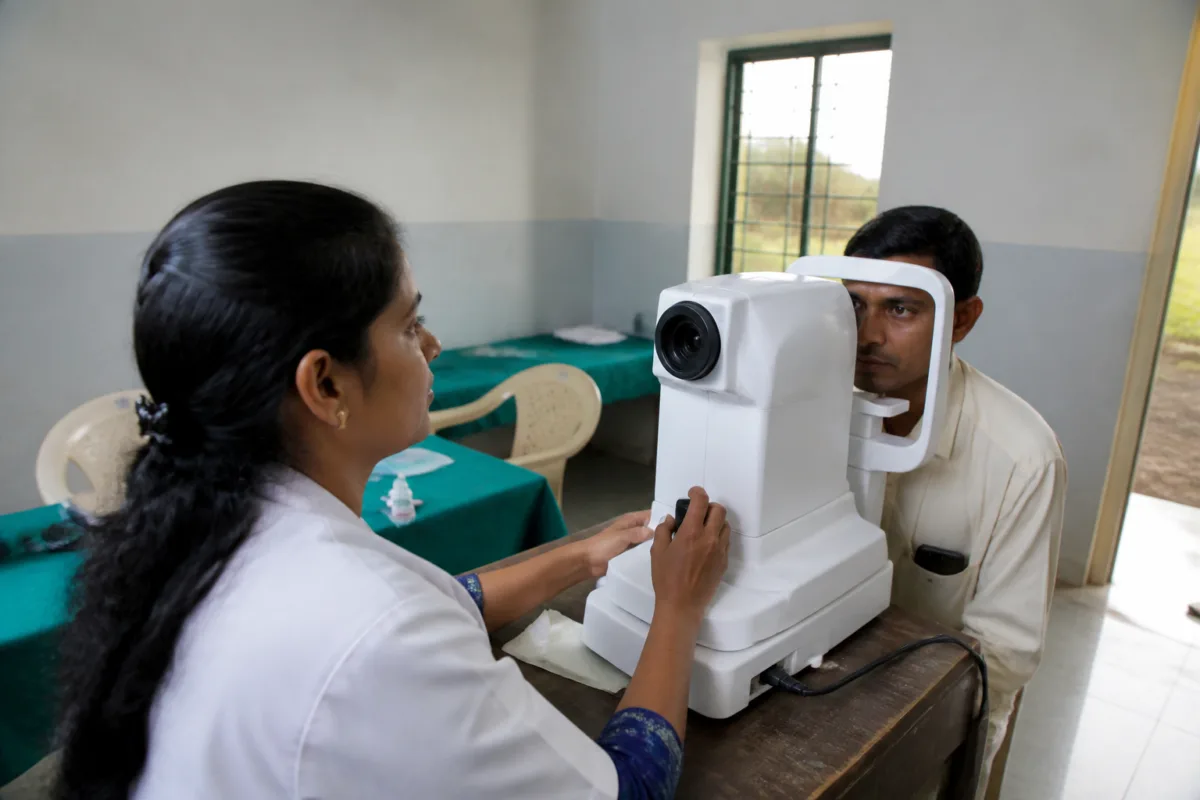
AI retina screening technology is being used in Palghar to identify the risk of heart and kidney disease from a photograph of the retina, according to Bengaluru-based Remedio, the company that developed the system.
The technology is intended to support low-cost preliminary screening for large populations through primary healthcare networks. Remedio representative Anand Shivaraman said the system was already being used at public health centres in Kerala and that work using the technology was under way in Palghar district.
The company’s model uses artificial intelligence to analyse retinal images and flag the risk of conditions that may otherwise require separate medical investigations. The report describes the system as a screening tool for identifying risk; it does not establish that the technology independently confirms a diagnosis or replaces clinical assessment.
The Palghar initiative was discussed after Remedio received the Anjani Mashelkar Award at an event organised in Pune. Shivaraman said the company had first collaborated with the Kerala government to use the equipment. He attributed the initial momentum for that programme to the tenure of former Kerala health minister K. K. Shailaja.
According to Shivaraman, an independent health-economic analysis by the United Kingdom’s National Health Service estimated the cost of screening and necessary treatment at about Rs 350 to Rs 400 per person. The current screening cost is around Rs 300, he said, while the company is developing additional artificial-intelligence systems with the aim of reducing the screening cost to Rs 60.
If achieved, the lower price could make risk screening more accessible in districts where specialist medical services and diagnostic facilities are unevenly distributed. For public-health administrators, the value of such a system would depend not only on the cost of capturing and analysing the retinal image, but also on referral capacity, confirmatory testing, treatment availability and follow-up for people identified as at risk.
The available report does not specify how many facilities or residents in Palghar are covered, the implementation schedule, or the number of screenings completed. It also does not provide the underlying NHS analysis or independent validation of the company’s performance claims. These details will be important in assessing whether the technology can move from a targeted screening initiative to a wider, reliable component of district-level primary healthcare.

