


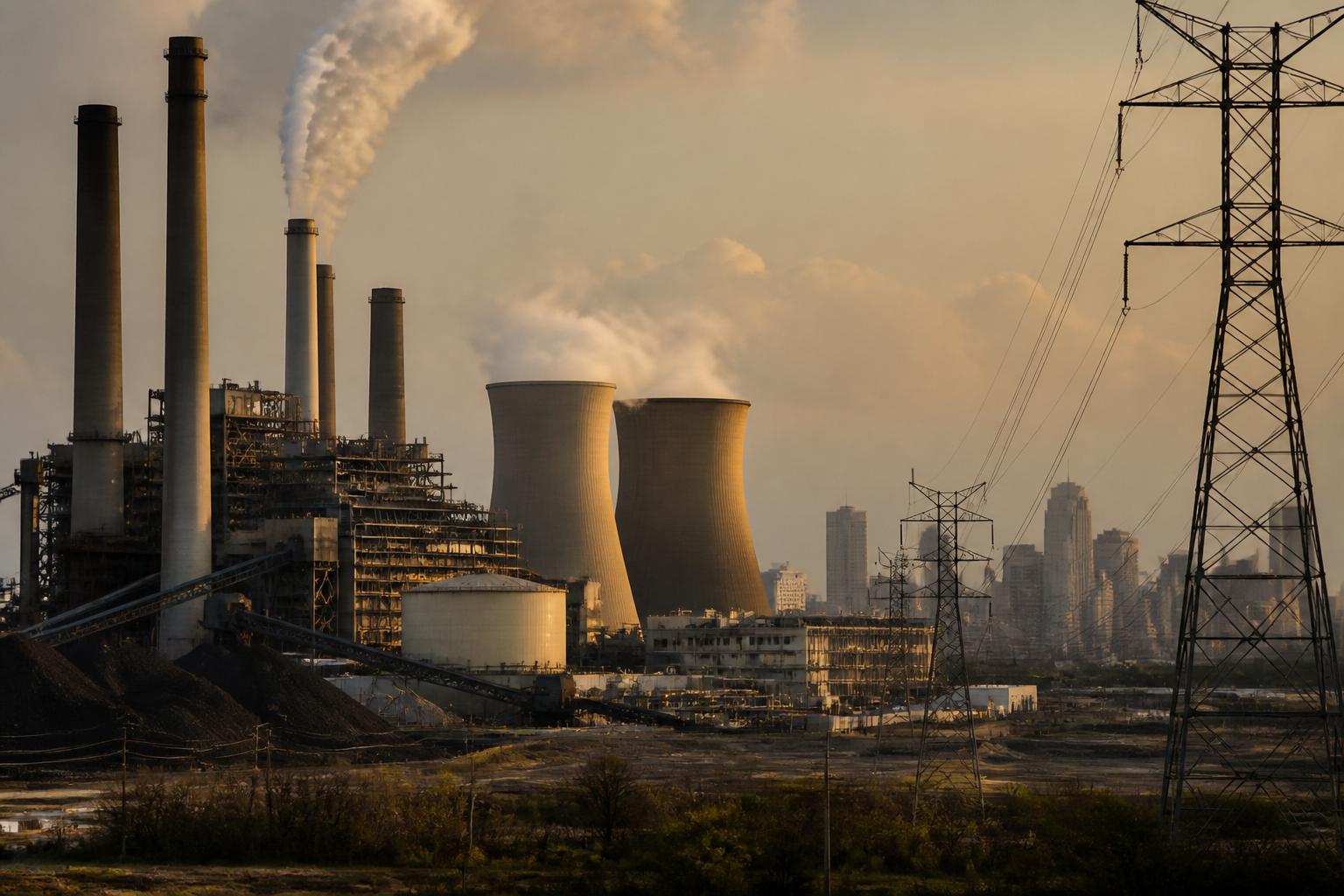
The US EPA’s decision to repeal carbon-emission limits for coal- and gas-fired power plants is being presented by the Trump administration as a way to accelerate new electricity infrastructure, particularly as demand rises from energy-intensive technologies such as artificial intelligence. But the reversal also exposes a deeper policy conflict: whether the cost of expanding reliable power should be measured mainly through compliance savings, or through the public-health and environmental damage associated with higher emissions.
The EPA announced rules to repeal limits introduced under former President Joe Biden and proposed removing remaining greenhouse-gas requirements for power plants. The agency also said it wanted to prevent future climate-focused regulations targeting the sector, arguing that it does not have authority under the Clean Air Act to regulate greenhouse-gas emissions from power plants.
The announcement was made on the sidelines of a gathering of G20 energy ministers in Houston, where officials are discussing energy security, expansion of baseload power and regulatory efficiency. That setting matters because the decision is not only about one set of American pollution rules. It links the regulation of power plants to a wider debate over how governments should build electricity capacity while managing emissions, reliability and the infrastructure demands of a digital economy.
EPA Administrator Lee Zeldin said the changes would allow the United States to build generating infrastructure needed to meet rapidly increasing electricity demand. “That means cutting red tape so we can build new power-generating infrastructure,” he said at a press conference in Houston. The administration’s position is that federal regulation has constrained energy production and imposed costs on utilities that need to add or maintain capacity.
The electricity sector is responsible for nearly a quarter of US greenhouse-gas pollution and is the country’s second-biggest emitting sector after transportation. According to the Energy Information Administration, power-sector emissions rose by 4% last year. That increase gives the regulatory decision an immediate infrastructure dimension: the country is seeking more electricity while its power sector is already producing a larger volume of emissions.
The Biden-era rules were designed to address that tension by requiring coal-fired power plants and new natural-gas generators to install equipment capable of capturing emissions before they enter the atmosphere. The rules were also intended to make zero-emission alternatives, including solar and wind power, more attractive. According to the report, the Biden administration estimated that the measures would reduce greenhouse-gas emissions by 1 billion metric tonnes by 2047.
The Trump administration’s approach reverses that incentive structure. Under the EPA proposal, the direct compliance cost to industry would fall, and coal-fired generation would face fewer federal constraints. Under Secretary of Energy Kyle Haustveit said the changes would support coal-fired electricity, which has been declining steadily because cheaper natural gas and renewable energy have become more available. He described coal as reliable, affordable and secure.
That argument reflects a longstanding institutional divide over the meaning of energy security. For supporters of the repeal, security means ensuring that utilities can add dependable generation without lengthy or expensive federal requirements. For opponents, security also includes protection from heatwaves, storms, wildfires and pollution-related health impacts. The regulatory question therefore extends beyond the construction of power plants to the costs that cities and households may bear when environmental risks are treated as secondary to generation capacity.
The disagreement is visible in the competing estimates of costs and benefits. Zeldin said the proposal would save the industry $370 million in direct compliance costs. Biden’s EPA, however, estimated that its rule would deliver $370 billion in net benefits. Environmental and public-health advocates argue that the new EPA analysis effectively discounts the future harm associated with emissions.
Dena Adler, a senior attorney at the Institute for Policy Integrity, said the EPA had treated the harm as “essentially zero” in recent analyses, including by ignoring earlier estimates based on uncertainty. Maggie Coulter of the Center for Biological Diversity’s Climate Law Institute said withdrawing the rules could contribute to lost lives and greater suffering from intense heatwaves, destructive storms and wildfires. These statements are advocacy positions, but they identify the central methodological dispute: whether uncertain future damage should be assigned an economic value in present-day regulatory decisions.
That dispute has direct relevance for the built environment. Electricity is the operating foundation of urban systems, from buildings and transport networks to water treatment, communications and industrial activity. A policy that makes new generation easier to build may support additional capacity, but the supplied material does not establish how much new capacity will be created, which technologies will provide it, or whether lower compliance costs will translate into lower electricity prices for consumers.
Nor does the repeal create a single national operating framework. While the EPA proposed halting future federal carbon rules for power plants, utilities will continue to face emissions-reduction requirements in some states. The result is likely to be a more fragmented regulatory landscape, with the federal government reducing its role while state-level rules remain in place. The Edison Electric Institute, which represents the country’s largest investor-owned utilities, welcomed repeal of the carbon-capture and storage-based standards but said it would work with the agency to ensure regulatory certainty for the sector.
That response highlights an important distinction between deregulation and certainty. Utilities may support the removal of a costly federal requirement while still seeking clarity over how federal and state standards will interact. Power companies planning large investments need to know not only what rules apply today, but also whether future administrations, state regulators or courts can alter the operating conditions for coal, gas, renewable generation and carbon-capture equipment.
The Houston meeting also places the US decision within a broader discussion about baseload power. The source material does not establish a new G20 agreement or a common position among energy ministers. It does show that energy security and regulatory efficiency are being discussed alongside the need to expand power supply. The American decision therefore arrives at a moment when the infrastructure requirement for more electricity is being used to justify a rollback of climate regulation.
The policy’s evidence base remains divided along the same lines as the political argument. The administration emphasises the $370 million in direct compliance savings and the need to build generating infrastructure for rising demand. The earlier Biden estimate emphasised $370 billion in net benefits and a potential reduction of 1 billion metric tonnes of greenhouse-gas emissions by 2047. Neither figure, as presented in the supplied material, provides a complete account of how the policy will affect electricity prices, local air quality, project timelines or the distribution of costs between utilities, households and governments.
What is clear is that the decision changes the federal government’s role in shaping the future power mix. The Biden rules sought to use emissions standards to push coal and new gas generation towards carbon capture and to improve the relative attractiveness of zero-emission alternatives. The Trump administration is instead seeking to remove what it describes as regulatory barriers to power generation, including future federal greenhouse-gas requirements.
The larger urban question is whether electricity expansion can be separated from the environmental conditions in which cities operate. More generation can support data centres, buildings, transport systems and industrial activity, but the type of generation, the pollution controls attached to it and the location of new facilities determine who receives the benefits and who absorbs the risks. The supplied report confirms the policy direction, but not its eventual infrastructure outcomes.
The next stages will determine how the repeal and proposed rescission are implemented, how states respond, and whether utilities alter investment plans. The EPA’s stated legal position, the competing estimates of costs and benefits, and the continuing state-level emissions rules will remain central to that process. For cities and energy users, the immediate issue is not only whether the United States builds more power capacity, but which regulatory and environmental costs are counted when it does so.
