


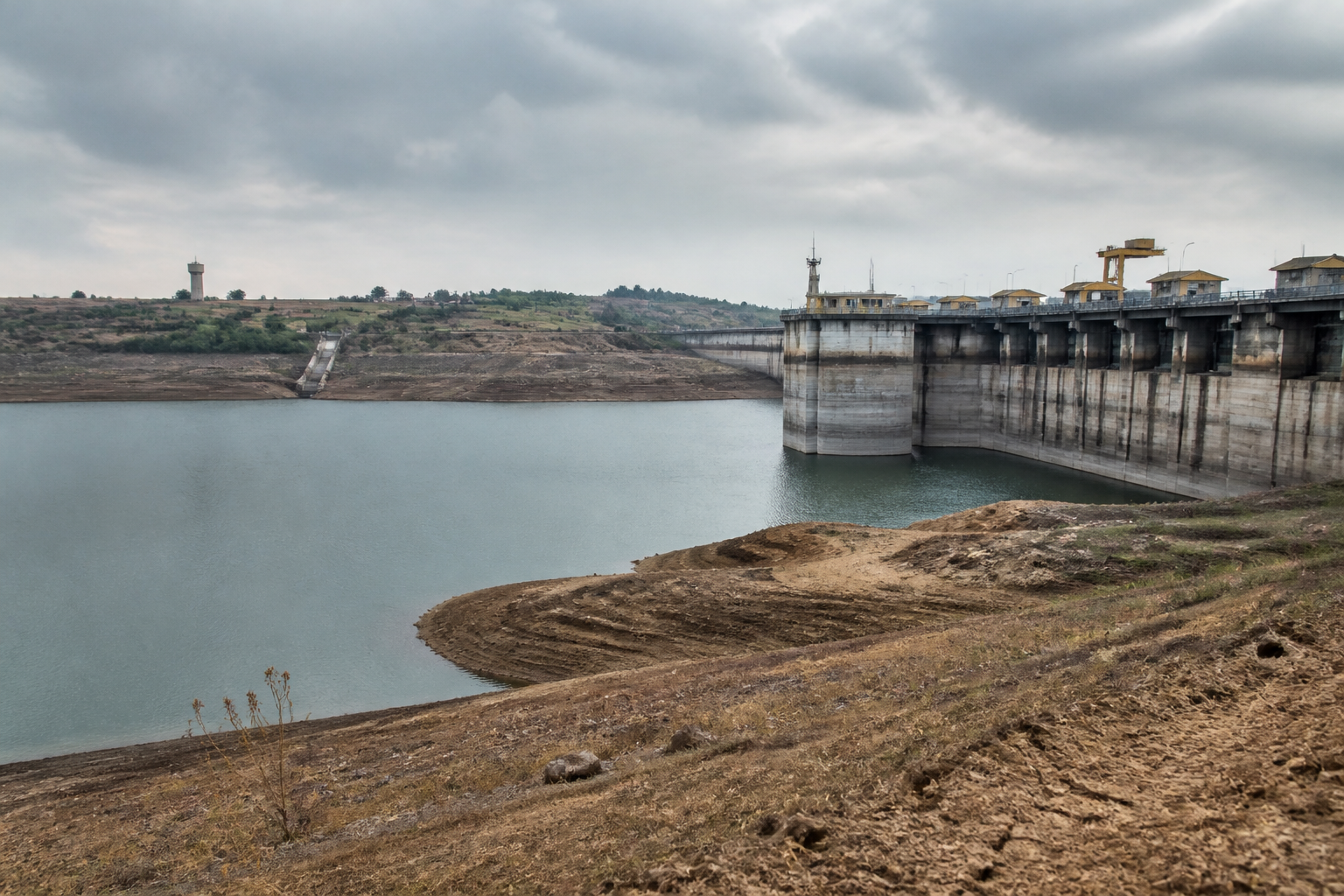
The reported decision to reserve Ujani Dam water for drinking needs until August 2027 has turned one of Maharashtra’s most contested reservoirs into the centre of a wider drought-management problem. The immediate question is how much water will remain available for farms, industry and livestock after drinking-water requirements are protected across Pune, Solapur and Ahilyanagar districts.
According to a report by Pudhari, the administration has decided to keep water from Ujani Dam reserved for drinking purposes for the next year because of drought conditions. The report says the reservoir is currently holding approximately 90 per cent of its capacity, while its dead storage is 63 TMC and live storage is 60 TMC. The decision will reserve 10 per cent of the available storage entirely for drinking water.
The significance of the decision lies in the distinction between water in the reservoir and water that can actually be planned for different uses. A high storage level does not automatically remove the risk of scarcity. The reservoir must serve multiple districts and sectors, and a portion of the water is not available for normal allocation because it forms part of the dead storage. The reported reservation therefore places a defined part of the usable resource beyond routine agricultural and industrial demand.
Pudhari reports that the remaining water may be used for agriculture, industrialisation and other purposes, but that drinking water will receive first priority. The report also says that the planning sequence will place drinking water first, followed by industry, drinking water for animals, fodder requirements and, only if water remains, agricultural irrigation. This sequence is the clearest indication of how the administration is approaching the reservoir: not as a source that can meet all demands simultaneously, but as a limited public resource requiring a hierarchy of uses.
That hierarchy is likely to have its sharpest effect on agriculture. The three districts named in the report have already experienced below-average rainfall, and the report says drought has been declared across all talukas. Kharif crops have suffered significant damage because of the reduced rainfall. The reservation of Ujani water now adds a second constraint: even where reservoir water exists, irrigation releases may be restricted to protect drinking-water supplies through the next monsoon cycle.
The impact will not be evenly distributed across the rural economy. The report identifies the sugarcane belt as the sector likely to face the greatest effect and says the area under sugarcane may decline. Other cash crops are also described as being at risk. This is important because the dispute is not simply between cities and farms. Within agriculture itself, water-intensive crops and less water-intensive crops will face different levels of exposure when irrigation rotations are reduced or stopped.
Solapur’s rabi season is a particular pressure point. Pudhari reports that the possibility of receiving water for rabi cultivation has become uncertain and that agricultural water rotations may be stopped after October. If that happens, the reservoir’s role would shift during the season from supporting planned irrigation to protecting drinking-water reserves. The change would affect not only cultivation decisions but also the timing of sowing, crop selection and expectations about access to canal or reservoir releases.
The reported plan also reveals how drought administration brings different public priorities into conflict. Drinking water is treated as the non-negotiable first use. Industry is placed after drinking water, while livestock drinking water and fodder are also included before any surplus is considered for irrigation. In practical terms, every additional priority reduces the volume and reliability of water available for the next one. The resulting conflict is therefore built into the allocation framework rather than created only by local disagreements.
The report says demands may emerge to stop industrial water supplies and release that water for agriculture. That possibility shows why Ujani is more than a reservoir-level story. Its water allocation connects household security, industrial operations, livestock survival and farm income. A decision intended to secure drinking water can simultaneously affect the rural production system that supports employment and local trade across the dependent districts.
The governance challenge is made more difficult by the time horizon. The reservation is reported to continue until August 2027, which extends beyond the immediate dry season and covers the period until the next monsoon cycle is expected to provide relief. This means the administration is not merely responding to a short-term shortage. It is planning on the assumption that water must be protected over an extended period, even though the source report does not provide a detailed month-by-month release schedule or identify the formal order through which the reservation will be implemented.
The figures cited in the report help explain the scale of the planning problem. Ujani has 63 TMC of dead storage and 60 TMC of useful storage, while its current level is estimated at about 90 per cent. The report says 10 per cent of the available storage will be fully reserved for drinking water. These figures cannot, on their own, establish how much water will reach each district or sector. Actual availability would also depend on release decisions and the way authorities interpret drinking-water, livestock, industrial and irrigation requirements. Those operational details are not provided in the supplied report.
The allocation sequence nevertheless provides an important institutional signal. It gives administrative recognition to drinking water as the first claim on the reservoir during a drought. That principle is straightforward, but implementing it requires decisions about which towns and villages are covered, how industrial demand is measured, how livestock needs are assessed and when irrigation releases are formally curtailed. The source report describes the broad order of priority but does not name the responsible department, publish a notification or set out a district-wise allocation table.
This absence of operational detail matters because reservoir decisions are experienced at the end of a long administrative chain. A reservation announced at the reservoir level must eventually translate into release schedules, local water supply arrangements, canal operations and communication with farmers and industries. Without those details, affected users may know the priority order but not the precise conditions under which water will be available to them.
The drought context also changes the meaning of the reservoir’s present storage. A reservoir holding approximately 90 per cent of its capacity might appear secure in isolation. But the reported decision shows that storage must be viewed against future demand and the length of the planning period. Water retained for drinking needs through August 2027 cannot be treated as immediately available for irrigation simply because it is physically present. The policy question is therefore about timing and protection, not only volume.
For agriculture, the consequences are likely to be felt through reduced certainty before they appear as a complete halt in supply. The report says sugarcane and other cash crops are at risk, and that rabi water for Solapur is uncertain. Farmers may respond by changing crop plans, reducing cultivated area or avoiding crops that require dependable irrigation. However, the supplied material does not establish the scale of any such change, and the possibility of a fall in sugarcane area remains a reported expectation rather than a measured outcome.
For industry, the priority order creates a separate planning risk. The report places industrial water after drinking water but before livestock and fodder requirements. It does not identify the industries concerned, the volume they receive or whether any restrictions have already been imposed. What it does establish is that industrial supply is part of the same drought allocation debate. Any future decision to curtail industrial use would have to be weighed against the need to protect household and livestock water while managing the economic effects of reduced supply.
Ujani’s current situation also raises a broader question about how drought policy manages reservoirs that serve both urban and rural systems. The reservoir is being asked to protect drinking-water requirements across districts while also supporting irrigation, industry and livestock. Each use has a different pattern of demand and a different consequence when supply becomes unreliable. Drinking water requires continuity, agriculture depends on seasonal releases, industry may require predictable volumes, and livestock needs cannot be separated from the availability of water and fodder.
The evidence currently supports three conclusions. First, the administration is reported to have placed drinking water above other uses until August 2027. Second, the decision is expected to put pressure on irrigation-dependent agriculture, particularly sugarcane and rabi cultivation in Solapur. Third, the main institutional challenge will be converting a broad priority order into transparent, district-level operating rules.
What remains unclear from the supplied report is the formal authority behind the decision, the exact quantity covered by the 10 per cent reservation, the district-wise drinking-water requirement and the release calendar after October. Those details will determine how the policy is implemented and how sharply the burden is distributed among farms, industries, livestock owners and households. The next important developments will therefore be the publication of formal allocation instructions, irrigation-release decisions and any district-level measures for managing drinking-water supplies through the drought period.
